


Reality ain’t what it used to be
Synopsis
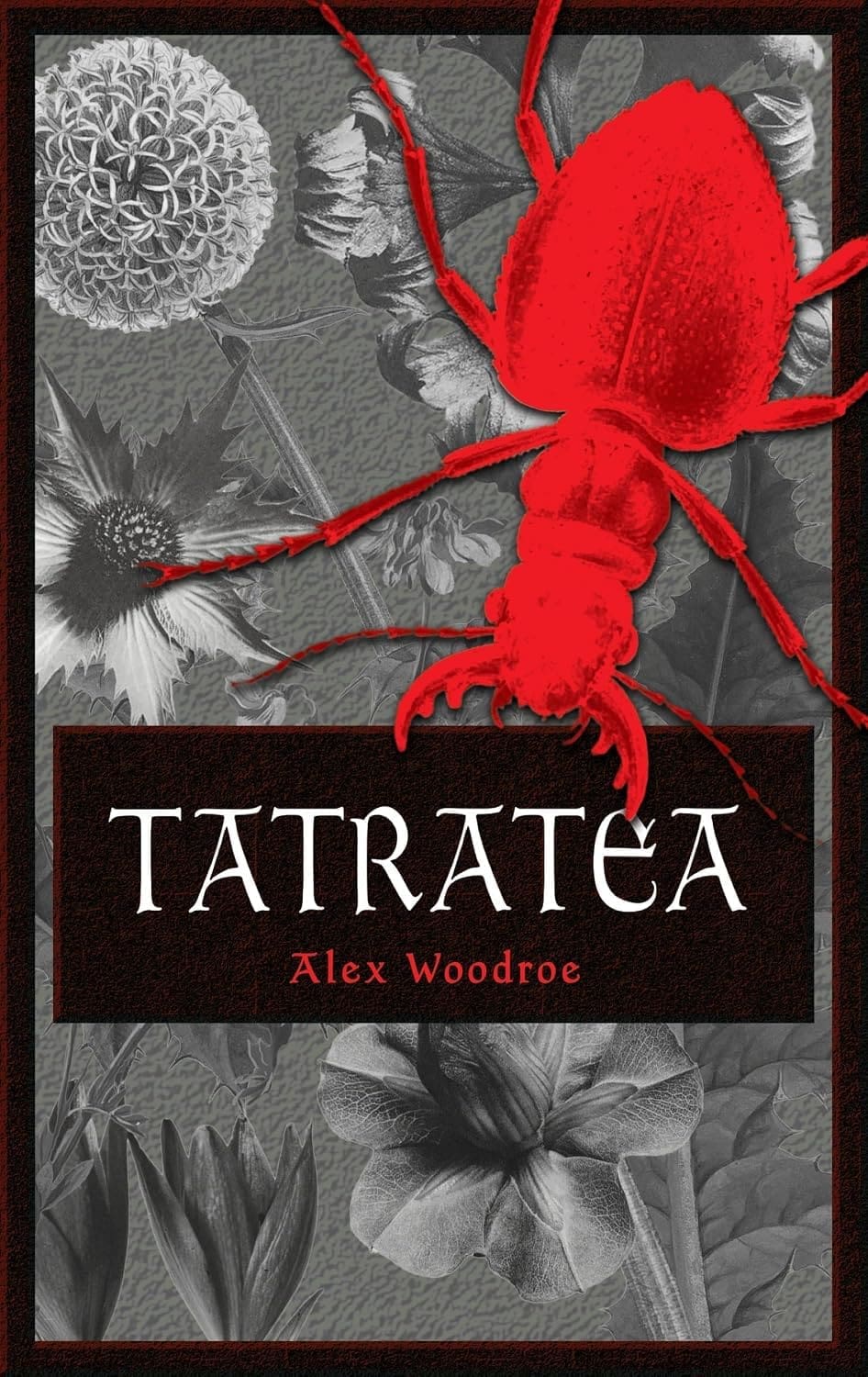
Tatratea, a manor home reclaimed by nature deep in the Romanian wilderness, has stood in isolation for decades. Researcher Errata’s sole mission is to track down the strange signals coming from inside and uncover why the whole world’s gone insane.
With the doors locking shut behind her, and the local flora very much determined to keep her from leaving, her sanity check protocols, voice recorder, and a bit of camping gear are all she can use to figure out what’s crashed in the hedge maze, and why it’s disrupting reality. Relying on her intuition, Errata must solve the mystery and escape Tatratea before it’s too late.
With an unsettling and dread-filled atmosphere, Woodroe crafts a novel about a researcher trying to make sense of the unexplainable and survive the deadly manor.
Review
Take the surreal eco-sci-fi horror of Jeff VandeMeer’s Annihilation, throw in the apocalyptic high concept vibes of, say, Josh Malerman’s Bird Box, and add the simple “creepy mansion” suspense of Resident Evil, and you might, just might, get an approximation of Tatratea, Alex Woodroe’s gloriously original novella from Clash Books, out now, in which a researcher arrives at a creepy Transylvanian mansion with hopes of finding the source of a devastating apocalyptic mind virus. But although trying to find comparisons for the gloriously strange Weird horror (the capital “W” signifying the subgenre) of the Shirley Jackson Award-nominated editor’s authorial work is maybe a fool’s errand, I’m starting to notice some trends: In her first book, the excellent Whisperwood, we had forest creatures from Romanian myth threatening the survival of a nearby village. The stakes rose in her ingenious second novel, The Night Ship, where the whole of Romania was being swallowed by an apocalyptic void. Now we have a whole world apocalypse, and a mansion full of bizarre flora. So: nature and the apocalypse. If we were applying the arthouse rules of giving a name to an unrelated set of books, we’d have to call this the “Romania trilogy”, but more importantly this is Woodroe’s best book yet, at once brilliantly tense and thrilling yet simultaneously gloriously surreal and philosophical.
The plot, as already hinted at, revolves around researcher Errata, who arrives at a mansion deep in the Romanian wilderness that has been seemingly overrun with strangely behaving plants, to put it mildly. Somewhere inside this deadly mansion and its reality-altering gardens is, potentially, the source of a devastating apocalyptic “sanity bug” that has made the world go insane and reduced humanity to a handful of survivors. But if Errata is to uncover the mansion’s answers and save the world, she must navigate its bizarre flora while holding on to her sanity.
This brilliant novella occupies at least two book lanes simultaneously. One is a creepy mystery about the horrors of this mansion set against a pulse-fluttering race against time to solve said mystery before our protagonist goes insane. In aid of this, Woodroe introduces the brilliant concept of the “sanity check”, wherein Errata constantly performs a series of checks to make sure she hasn’t been captured by the sanity bug (as a Doctor Who fan, it vaguely reminded me of the Silence, the aliens who robbed your memory of encountering them as soon as you saw them—the only way to be sure if you’d met them before was to draw marks on your skin). This method becomes an utterly tense narrative device and precedes a series of glorious twists.
But in addition to, and not taking away from, the tense, fast-paced mystery thriller is the surrealist eco-Weird horror. The true nature of the plants, and whether they are friend and foe, is beautifully eerie and strange. The constant questioning of reality, and reality-altering episodes, creates some terrifying and elegiac panoramas. And amidst all these oddities is a bleak, yet strangely hopeful, reflection on what is the point of continuing when all the odds are against you and the human race is virtually wiped out. Errata describes herself as a nihilist early on, and this book often feels like an intriguing exploration into whether the absence of any overall meaning to life can actually be a hopeful attitude in worst-case situations such as these. There’s also some flashbacks to her job at “The Institute”—the researchers who haven’t given up on humanity—and what a lonely life this is; this need for human connection runs through the book, all the more emphasized by our time with just Errata as our human lifeline.
Overall, Woodroe’s latest unique horror novel feels like Jeff VanderMeer has written a Doctor Who episode directed by Salvador Dali. Both heart-poundingly thrilling and fast-paced yet deeply reflective and unapologetically strange, this is post-apocalyptic Weird horror at its best.


Leave a Reply