
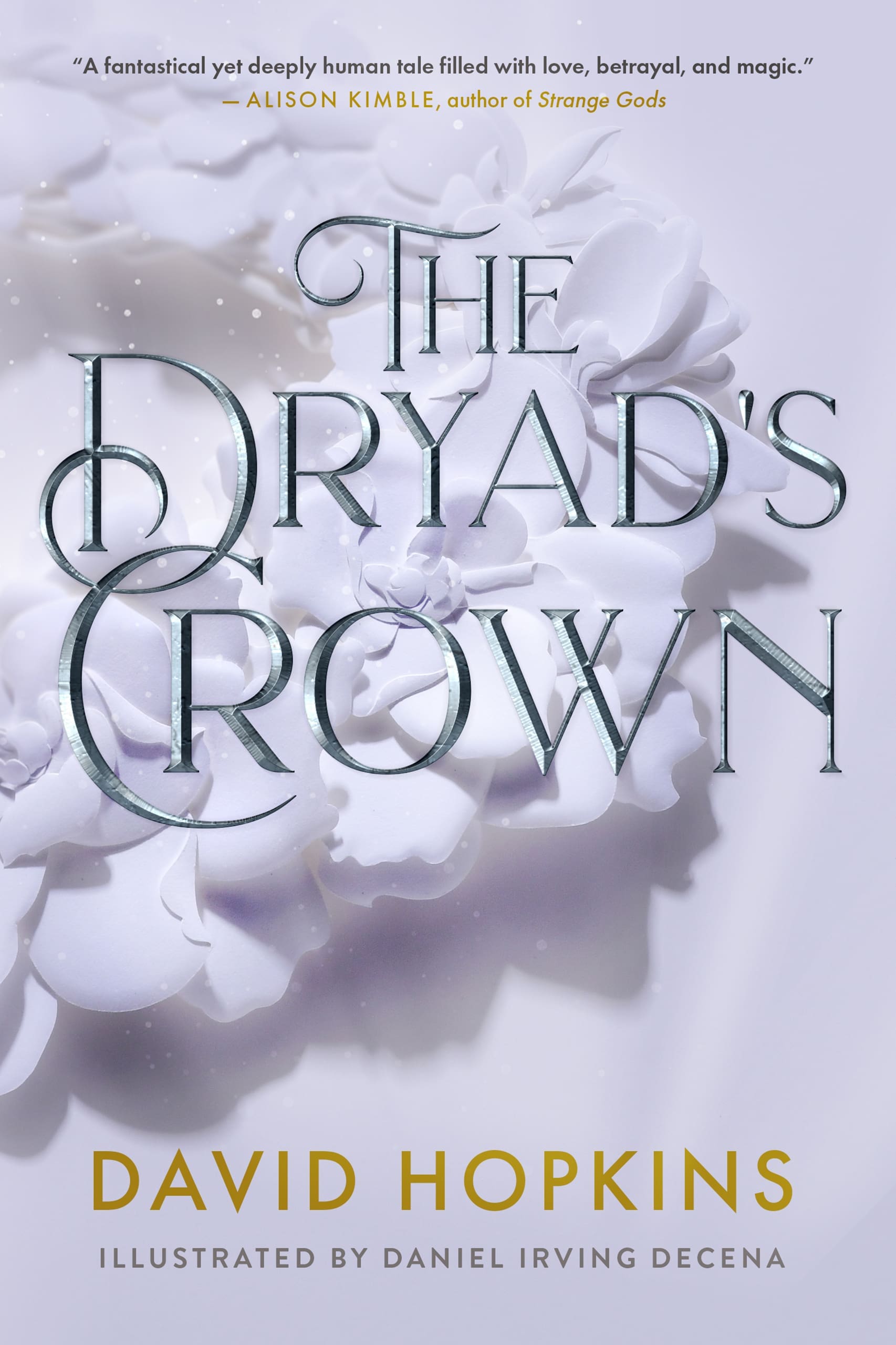


Synopsis
Four titans sleep beneath the earth.
Only one fae can keep them from waking.
Silbrey is an orphaned wood nymph, taken from her forest home and raised in the corrupt city of Penderyn. The fae child grows up unaware of who she is, what she can do, and the calling of her kind.
Under the control of a cruel guildmaster, Silbrey is trained as an assassin. As an adult, she escapes her violent past to start a new life and a family. But a tragic death brings her back to the familiar cobbled streets to seek revenge.
This dark path leads Silbrey to uncover an even darker An ancient evil will wake the titans and break the world. Silbrey must travel with her daughter across a war-torn land to defeat that evil.
What begins as a fairy tale transforms into a multi-generational epic fantasy about love and loss—and a woman with a strange connection to nature.
Review
The Dryad’s Crown by David Hopkins is a story told in the tradition of classic fantasy. Readers who grew up on The Sword of Shannara or The Lord of the Rings will recognize its shape right away, from the sweeping plot to the songs and poems woven through its pages. Tolkien fans especially will feel at home with the verse.
This is a plot-driven tale. The narrator holds the reader at arm’s length and lets the story explain itself as it goes. Narrative summary is the tool Hopkins reaches for most often, and the first chapter hands over a good deal of information up front. Readers who like to sink into a character’s head may need some time to adjust. At times the story also pauses to explain itself. Most of these pauses earn their place by giving useful context for what is happening. A few drift into social commentary that can feel a little preachy.
The book shines in its world. Hopkins builds something mythic and fairytale-like, full of battles, druidic magic, mythical creatures and deep lore, all grounded in the personal stories of its characters. My favorite part is the book’s take on wizards. It offers a fresh explanation for the familiar wizard tropes, and I loved seeing those old ideas given new roots. The rest of the worldbuilding follows the same pattern, staying close enough to the familiar to feel welcoming while still offering something unique.
The prose was an absolute highlight of the story. It is lyrical and poetic, with a storyteller’s cadence well suited to the mythic setting.
I did find the nonlinear timeline confusing at times, and the jump from childhood to adulthood felt abrupt. Readers who enjoy piecing a story together out of order may have an easier time with it.
Fans of Robin Hobb’s Farseer books or The Name of the Wind will find familiar ground here. The ride has some bumps along the way. Stay with it and you will come away with an enjoyable story.


Leave a Reply