

Review: The Bone Maker by Sarah Beth Durst
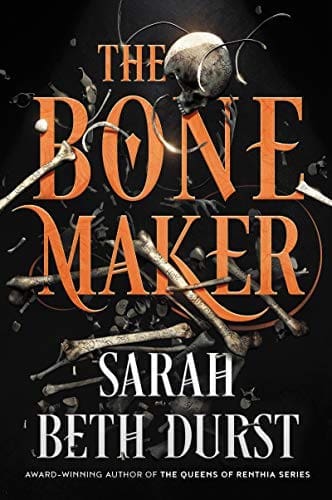
The Bone Maker by Sarah Beth Durst really caught my attention in the beginning. The author uses emotion and adventure to bring the reader in and set up the main storyline.
Review: Among Thieves by M. J. Kuhn
Cover Reveal: White as Frost (The Darkwood Trilogy #1) by Anthea Sharp
Review: Hounded (The Iron Druid Chronicles #1) by Kevin Hearne
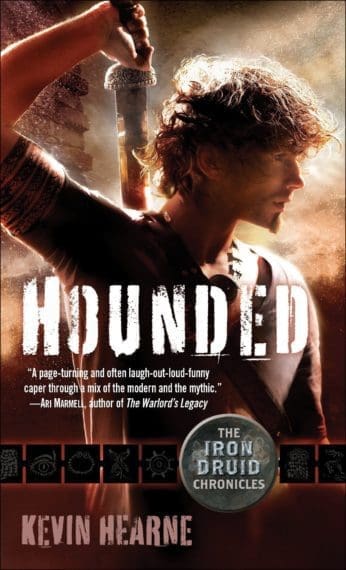
I’ll admit that urban fantasy is one of the genres of speculative fiction that I am the least familiar with. For the longest time, I would see the covers in bookstores and just assume that they were like the fantasy romance novels that I grew up watching my grandmother tear through, one after another. I have since learned that this is not (always) the case.
Review: Inscape by Louise Carey
Review: The Sadeiest by Austrian Spencer

I want to start this review off by pointing out a few important trigger warnings. The Sadeiest is about death and describes people dying in many different ways in detail (including death by suicide, disease, drowning, etc). If that is a trigger or even just an upsetting topic to you, please do not continue.
Review: Good Neighbors by Sarah Langan
Guest Post: How to Write a Character-Driven Novel by Richie Billing
Review: Your Turn To Suffer by Tim Waggoner

Your turn to suffer is the kind of book some people will hate, and others will love. As a reviewer, I go beyond just the overall story; I look at structure, characters, style and the overall plot. If you enjoy Clive Barker-Neil Gaiman’s styles, you’ll love this book. It’s a horror novel peppered with the weirdness of a Lovecraftian tale — sometimes called weird fiction. The overall story wasn’t my typical go-to genre, however I loved everything else about it.
Blog Tour: Dragonfly Girl by Marti Leimbach

Dragonfly Girl is a really interesting story that combines elements of science with political intrigue along with really good character development.
As I mentioned, there is a lot to like about this book. The science-y elements bring a lot to the story. It is not hard science, but there is enough talk about what is being done in this lab regarding life vs death to make one think about the possibilities. Cell regeneration, gene stimulation, neuron reactivation, nerve revitalization, organ regeneration, etc. With a book like this it would have been unfeasible to go into more detail for something that is not scientifically possible right now, but I enjoyed reading about it to the extent that it could.
The best part of the book for me was the character development. The story is told from Kira’s perspective, and being able to experience the ins and outs of things from her point of view allows the reader to get to know Kira really intimately. That is really important for a book like this because the narrative not only focuses on scientific events surrounding her, but also how she feels about them. For that to work the reader has to care about Kira, and Leimbach does a great job of that. There are not a lot of characters, though, with most of the secondary being people Kira works with in the lab and the scientific community (along with Kira’s mom, who also has a presence). As supporting cast each one of them plays their role well and fill out the character card successfully.
One aspect I want to bring up is that I think the story has a little bit of an identity problem. Is it science-y science fiction or is it a political spy novel? I do like the involvement of the international community in the story because it brings an element of depth (and a bit of realism), but I think this part of the story was taken too far toward the end. It almost felt as if the author was pulled in two different directions and tried to split the baby. I would encourage the author to pick a side on this one.
That being said, Dragonfly Girl is a good read. The science talk and character interactions are what kept my interest and make this book worth a read. I recommend for fans of science fiction written in YA style.