
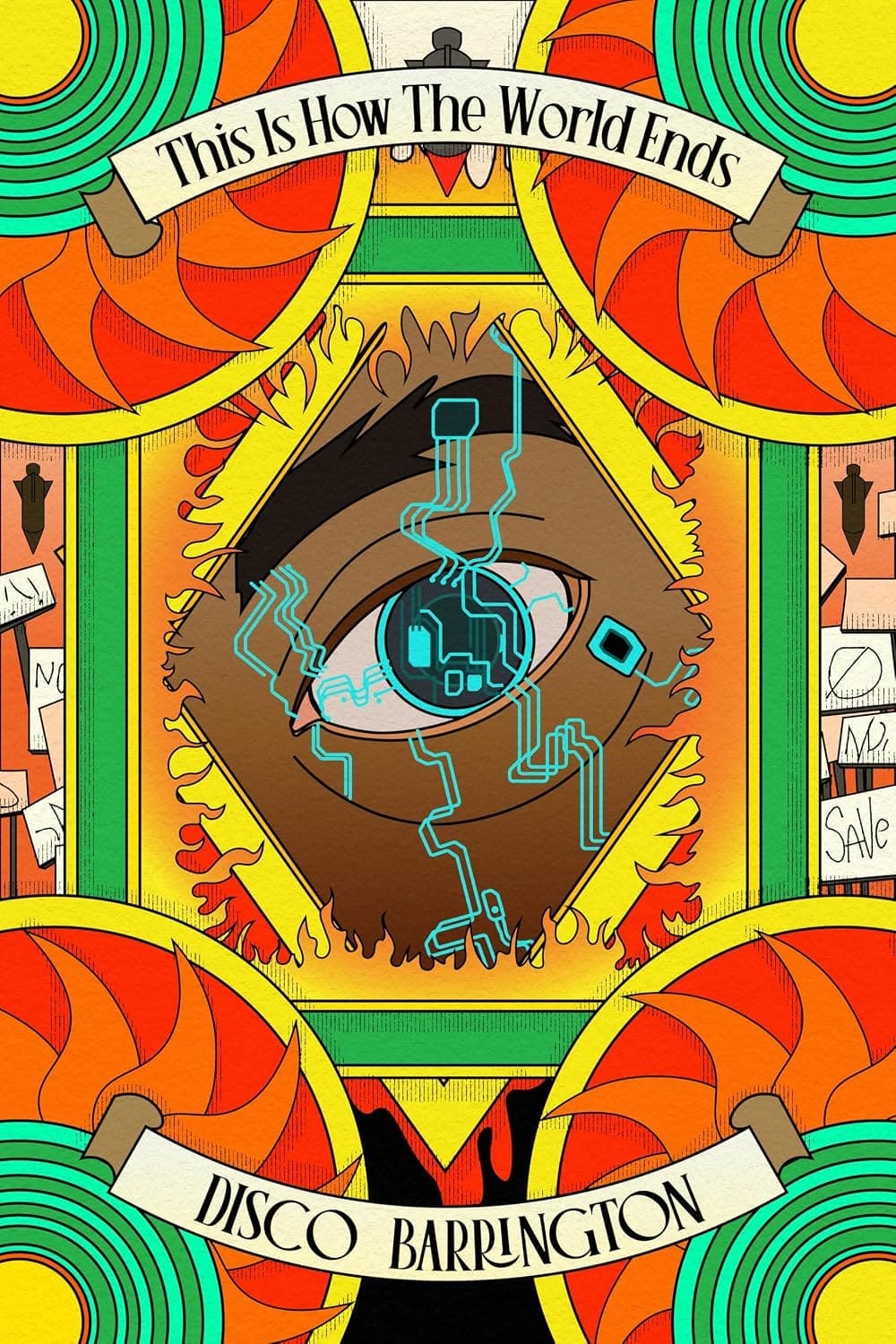


Synopsis
“Through apocalypse, dystopia, and renewal, the throughline of empathy, love, and human determination in Barrington’s THIS IS HOW THE WORLD ENDS keeps the story profoundly human. An impressive debut that leaves the reader with a bittersweet, hard-won hope that feels especially resonant in our uncertain political moment.” – Seth Haddon, author of VOLATILE MEMORY and REFORGED
Run the race. Or die.
Britain is at war, isolated by a digital blockade.
Dissidents run a deadly race for the public’s entertainment, while the flood-ravaged country falls apart. The Cartwright family tries to soldier on, refusing to give in to fear. But when catastrophe looms, Emma Cartwright flees – only to find that life beyond the border is anything but safe.
The fight for survival has begun.
This is how the world ends.
Fuelled by queer rage, THIS IS HOW THE WORLD ENDS is a wild, multi-narrative ride through the last days of humanity and the fight for survival that follows. Perfect for fans of Chain-Gang All Stars and Hell Followed With Us.
Review
The first question that struck me as I was reading Disco Barrington’s This Is How The World Ends was, “How in the hell is this their debut?” The writing and handling of the material was so spot-on, the authorial voice so true and natural, that I can only wonder how many filing cabinets and desk drawers worth of unpublished material Barrington must have squirreled away before plunging into publishing.
The second question was, “How many more days/weeks/months/years do we have before this is our actual reality?”
This Is How The World Ends begins in the near future. How near, exactly, is unspecified, but if you’ve been paying attention to the news, the growing instability of liberal democracy as it’s plundered, sold, and grifted away by a rising tide of far-right authoritarianism in far too may corners of the world these days, it’s easy to believe that Barrington’s dystopian world is only an executive order or two away from happening right here, right now. While the queer, trans, London-based author pens a rage fueled narrative set in England, as well as Trinidad, it’s all too easy for this American reader to recognize the work as a natural extension of current events. This isn’t a story about some imaginary, far-off future – it’s a scarily recognizable apocalypse about what could be, and some of what most certainly is, coming our way in true “ripped from the headlines!” fashion.
The Earth is being reshaped by climate change and the UK is flooding during weeks-long torrential downpours with no end in sight. The politicians, and the people that elected them, have voted in a brand-new dark age, destroying civil rights in a fit of gay and trans panic. People are being rounded-up by jackbooted thugs. Immigration and digital surveillance laws that once targeted the foreign-born for damnation are now being used against the white British population deserting the country they helped usher in a plague of terrors and crises upon. England is at war with both itself and whatever lies outside its island borders. Yep, this all seems pretty goddamned familiar and relevant.
Barrington skillfully introduces us to the complexity of this coming storm through the eyes of an indentured captive that has been forced into running a deadly, grisly gauntlet. We’ve seen, even just recently, how so many of the unwashed masses can be soothed by bread and circuses on the tele. We’ve got UFC cage fights on the White House lawn; Barrington gives us the next evolution with his The Running Man by way of The Long Walk riff. It’s the kind of torturous pogrom Trump might come up with if he were more interested in fitness than in shitting himself while falling asleep in the Oval Office on live TV.
Told through a series of epistolary sources across three future timelines, Barrington paints one hell of a dark future, but one that instantly feels grounded in the here and now. People are starving thanks to climate change, but also maybe because of diarrhea lettuce. There’s a superflu-like bug that rots away vegetation and, eventually, once mankind is decimated, religiously fueled internecine warfare, because in the post-apocalyptic wastelands there’s still no hate like Christian love. One can almost here Pete Hegseth cheering these marauding bandits on from the sidelines while he fails to do a complete pull-up. Even the far-future Barrington imagines in the book’s third act is scarily relevant to today’s burgeoning A.I. concerns.
The sheer scope and messaging that Barrington brings to play throughout the course of this three-act drama belies its short page count. This Is How The World Ends is a slender tome, indeed, with its narrative clocking in at under 120 pages. Although it never feels incomplete, nor do the topics covered ever strike me as shortchanged, I wish it were longer just for the chance to explore these horrors for a little while more. It’s a small complaint, if one must call it that, for a novella that’s all muscle, as lean, lithe, and fleet-footed as the tortured runners we’re introduced to kick things off. Well, the ones who survive, anyway.
This Is How The World Ends is a remarkably assured debut from a voice readers need to hear. It’s a smart, raw, cynical yet hopeful, and clearly a very personal work of social science fiction and political horror. You can feel Barrington’s influences throughout. There’s some Stephen King, a bit of 28 Days Later in broad strokes, and even a little bit of Asimov, among others. Asimov referred to his own works as social science fiction, and it’s certainly no coincidence that I use the term here. Without venturing too deeply into spoiler territory, I do want to properly nod my head and tip my hat at Barrington for his wicked inversion of the Three Laws of Robotics, and the distillation of what it means to be human in the book’s closing segments.
As for this being Barrington’s debut? Wow! I surely do look forward to seeing what he produces as a seasoned publishing veteran. He’s hit the ground running here.



Leave a Reply