


Synopsis
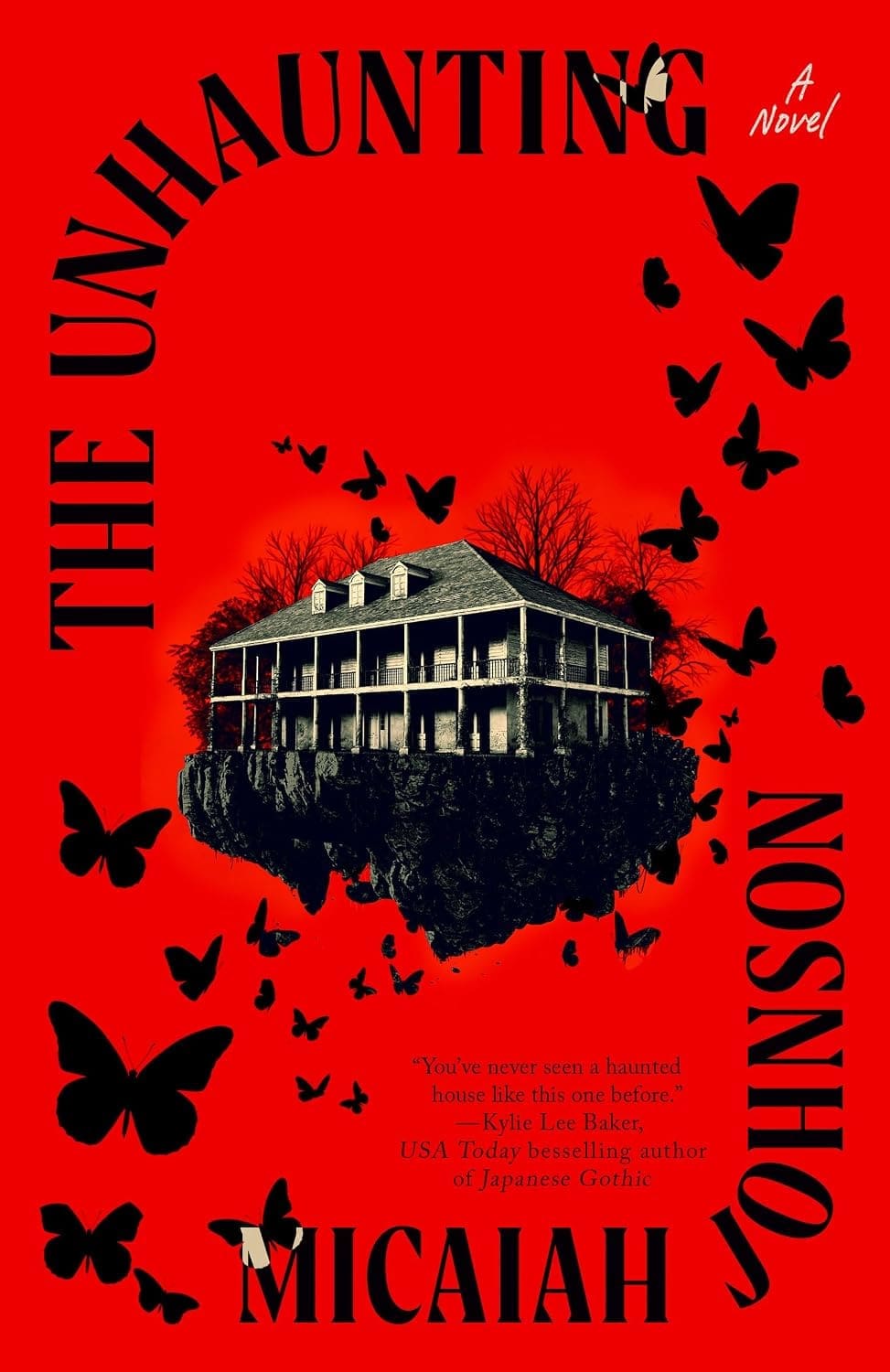
Award-winning author Micaiah Johnson invites you to Abernathy House.
A house, itself, is nothing. It’s not a shelter until it is sheltering someone. A house is a housefire, waiting for its match. A house is a ghost story, waiting for its death.
At the end of the Civil War, a daughter of the Confederacy made what she thought was an innocent wish: to build a house where nothing bad could happen. But peace came at a price, and one hundred and seventy years later Shantell and her friends are about to discover where all that darkness ended up.
When Shantell’s best friend, Avery, tells her he has inherited a house big enough to make their dreams of a sanctuary come true, she’s too cautious to be optimistic. A lifetime of loss — her father to the Iraq war, her brother to police violence, and her mother to suicide — has taught her cynicism, and even though Avery swears the house has never experienced a tragedy, she goes along expecting everything from black mold to evil spirits.
But not only is the house in better shape than they’d expected, it makes them better too: Shantell’s anxiety stops flaring up; terminally shallow Avery is suddenly capable of deeper emotions; and Tobias, Avery’s older brother and the contractor for the job, even quits chain smoking.
There’s an eeriness to the calm, and it’s almost a relief when they realize they do not walk alone in Abernathy House. If nothing bad has ever happened here, where are all these ghosts coming from? As they dig into the house’s history, Shantell, Avery, and Tobias discover that there’s only one thing worse than a house that’s haunted: a house that desperately wants to be.
Review
Micaiah Johnson is one hell of a writer. That much is immediately apparent in the opening pages of The Unhaunting, where I found myself instantly captivated by her storytelling prowess. Her authorial voice is commanding and, right from the outset, demands that you pay attention.
The Unhaunting revolves around best friends since childhood – the Black, neurodivergent Shantell and the modestly wealthy and white Avery. Shantell was never quite sure how rich Avery was, but when he inherits the familial estate in the deep South, she learns pretty quickly. The place is run-down, but the fixer-upper opportunity promises them a refuge, particularly for reclusive Shantell who is becoming a shut-in. Avery swears up and down that the Abernathy House was never a slave plantation, but as the home’s quirks begin to grow and the truth of the Abernathy family and the dark history of the town surrounding them is slowly revealed, the truth is far worse. The estate isn’t haunted. But it sure does want to be.
The older I get, and the more my kids grow, the more I recognize the truth behind the sentiment that every home is haunted. We all have ghosts. Hell, that’s the central metaphor behind ghost horror, right? In The Shining, the ghosts were all about alcoholism and domestic abuse. While there’s some of that here in The Unhaunting, the metaphors get plumbed quite a bit deeper when viewed through the lens of African-American history. Johnson uses the trope of the haunted house (but not really, remember) as a canvas to explore white privilege and the whitewashing of history.
Along the way, Johnson explores the racial politics separating white and Black America, and the commonalities that can transcend those divisions. The question, of course, is whether Shantell and Avery’s friendship can survive the Abernathy House and the horrors it remembers, inflicts, and desires. What the house can offer those who dwell within it, and the toll those promises can take on others, makes for a brutally toxic relationship. For the long familial line of Abernathy’s that have lived there, only the positives have ever been experienced, while the town outside the edges of the property learn loss and sorrow in horrifying fashion. Of course, as one character notes along the way, “there’s a distance from which poverty appears indistinguishable from a curse.”
Shantell’s mere existence as a Black American, let alone one that’s neurodivergent, anxious, and scarred by loss, offers the house all the pain and terror it could possibly crave. Johnson meticulously explores what it means for Shantell and her family to live in the United States, with its history of slavery and present-day racism. Her existence runs in stark contrast to Avery’s, who has only ever known peace and safety. He’s from a world where the passing of a family member means getting a whole damn house unasked for. For Shantell, the death of a family member most often means being saddled with debt, funeral expenses, and potentially the loss of a home, like the one she grew up in.
The social commentary is potent, thoughtful, and provocative. So, too, is the horror. Johnson conjures up some truly nightmarish apparitions, presenting them to us in grisly, garish detail. Even more shocking, though, are the powerhouse revelations Johnson casually drops throughout the narrative. She expertly drops a bombshell in the prologue, one that surprised the hell out of me and ensured my undivided attention. I had to know what was coming next, and I found myself hooked.
The Unhaunting is a masterclass in literary horror. It’s smart, subtle, relevant, and morbidly beautiful. Johnson puts a beautiful twist on the classic haunted house trope, enriching the ghostly narrative with metaphors about mental health and trauma, the price of safety, and the Black experience in America. For my money, it might not only be one of the best horror books of 2026, it just might be one of the best haunted house books ever.



Leave a Reply