


Synopsis
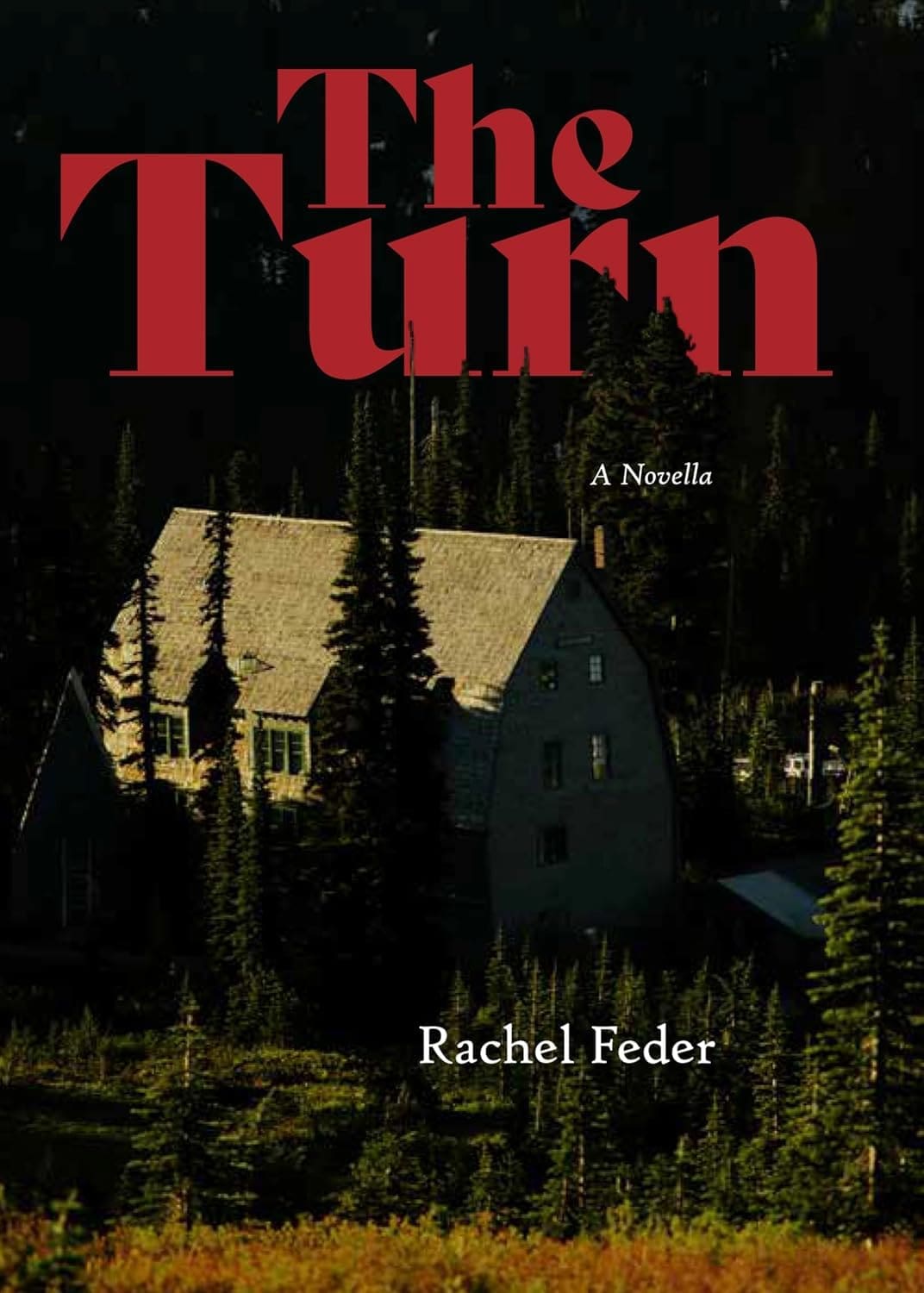
When Baxter, a young writer and recent college graduate, accepts a live-in nanny position for an affluent professor’s family in the foothills of the Rocky Mountains, she rapidly becomes aware of strange happenings orbiting the family and their children, Quinn and Thebes. After the father becomes estranged and the mother disappears into the night with only one child, Baxter is left utterly lost and in charge of the baby, Thebes, as she struggles to make sense of the bizarre occurrences within the family, the house, and even her own body. But the unnatural occurrences are far from over, and as Baxter stumbles in the dark to protect the child, something sinister stalks the night, looking to sink in its teeth.
Review
The gothic, especially in the last ten years, has found itself evolving into so many modern variants that it has become the ultimate horror virus, one we all can’t wait to catch. Which is fitting because (stay with me as my tortured analogy bears fruit) The Turn by Rachel Feder—out from NorthWestern University Press imprint TriQuarterly Books June 15—is set in a very real viral situation, specifically Covid-19. Feder, clearly a close literate student of the Gothic, has taken inspiration from the classic “governess hired to care for children, creepiness ensues” plotline, most famously rendered in Henry James’s iconic gothic The Turn of the Screw, and transported it to a home in the Rocky Mountains during the pandemic, where the new live-in nanny begins to suspect something is very wrong with the family. It’s a perfect claustrophobic setting for such an old trope, and Feder, with economic yet lyrical and unsettling prose, gives us a classic gothic potboiler mystery that, after asking for your patience, rewards it with an explosive, unhinged, twisty and macabre finale in the best fevered gothic tradition, and one that asks a question that resounds in the gothic both old and new: can you be trapped into motherhood or can you defy those who seek to control you and write your own story?
The plot centers around Baxter, a young writer and recent college graduate who accepts a live-in nanny position for an affluent professor’s family in the foothills of the Rocky Mountains. It’s already a setting fraught with unease, as we’re in the thick of the 2020 pandemic (the “real world” is mentioned but only hazily, the Biden-Trump election debates are in the background, but no one is ever named) but things start to become genuinely creepy when the mother starts acting strange, the father goes awol, and Baxter starts to develop worrying cuts and bruises on her body. After one night when she’s left completely alone with the baby, she must unravel the nightmarish puzzle of the deal she really entered into, and the sinister thing stalking her and her newfound family.
This a very quick read, a mere 130 or so pages, and it’s a novel of two halves. In the first half, we are in true dreamy, gothic puzzle land: nothing can be trusted, including memory or the senses, and as Baxter stumbles upon one enigma after another, Feder’s sparse but effective prose layering unease upon unease, I started to wonder where all these loose ends were going. And then the plot explodes in the second half denouement, and I was pleased as sinister-flavoured punch to discover that not only was every single question answered (a rare treat in GothicLand) but that I’d actually been reading something entirely different and more monstrous than I could have guessed. You might well see what’s coming (maybe the current heatwave has just melted my brain, like the pandemic melted my youth) but I certainly didn’t and the gonzo, slightly unhinged ending left me extremely satisfied, though some might wish for more exploration of it despite the small page count.
Thematically, this is meaty for its small length: examining the idea of motherhood, especially the involuntary kind, as either a trap forced on you by those who seek to control you or the making of you, and how the controller can find their power reflected back at them. As well as reinventing the classic governess gothic for a new age, I also saw a bit of Rachel Harrison feminist rage horror in there: reclaim your destiny from the monsters that control you, or forever hold your peace, that sort of thing. There was even the occasional witty deadpan line amongst the dripping unease that made me laugh out loud like a Harrison novel. On this basis, I hope we see much more of Feder.
Overall, The Turn is a short, sharp, deliciously written gothic potboiler that simmers along right up until the moment it explodes in your face; an excellent demonstration of how the classic gothic can teach us modern-day lessons about family, power dynamics and motherhood, and why it remains a terrible idea to ever accept a nanny position anywhere.


Leave a Reply