
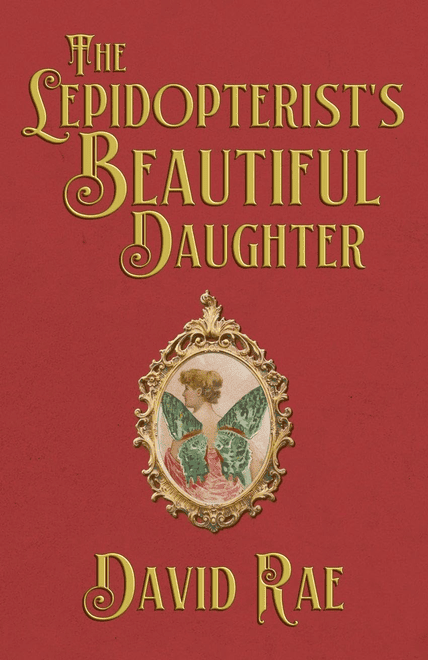


Synopsis
Born to wealth and stifling privilege, Tito lives a cocooned life of luxury and dull Edwardian convention. Groomed to follow a career in the church, he finds joy in the unlikeliest of places: Vanessa Agnew, the daughter of a once renowned professor who studies butterflies and moths.
Yet, just as Tito wins her hand, he breaks a vow to her and a terrible secret rips her from his arms. Heartbroken, he follows a trail of bread crumbs left by his former tutor seeking his bride. His attempts to recover Vanessa take him across England and Europe, ensnaring him in a devious plot to find the birthplace of angels, led by a seductive darkness that challenges his faith and his love.
Can Tito stay true to himself in the face of evil and his own failings? Or will his mistakes keep him forever from happiness and the woman he loves?
For readers who love Susanna Clarke’s historical depth, A. S. Byatt’s emotional clarity, and P. G. Wodehouse’s playful wit.
Review
Wildly imaginative, dense with meaning, and confidently playful with prose and structure, David Rae’s ‘Sun Thief’ trilogy marked him as an author to watch. His new book, ‘The Lepidopterist’s Beautiful Daughter’ retains many of these elements, and is an engaging, easy to read, and humorous tale.
Set in an alternative Edwardian era, the book is about Tito, the youngest son of a wealthy and powerful man. Designated the intelligent child out of his five siblings, Tito is sent to study under Professor Agnew. He promptly falls in love with the professor’s eponymous daughter, Vanessa. His love reciprocated, Tito is a man elated. However, his fall from grace leads to a tragic occurrence on his wedding night. Desperate to prove himself worthy of Vanessa, Tito endures various perilous adventures to find her and win her back.
Tito is a wonderful character. He is sweet and somewhat clueless, which makes him all the more endearing. Rae has perfectly captured the adventure novels of the early twentieth century, and Tito as a narrator stands equally with Doyle’s Edward Malone of ‘The Lost World’, and Rider Haggard’s Horace Holly of ‘She’.
The rest of the characters are delightfully witty and eccentric. Dr. Dee, an Oxford Don, speaks only in Limericks. Tito’s siblings provide plenty of humor and social commentary. His violent brother (and member of parliament), Alexander, is thoroughly entertaining.
The antagonists are equally bizarre. There is a goddess like temptress. A cult whose members bear a remarkable resemblance to zombies. And various people whose names hint at their interesting true nature.
The book superbly replicates the Edwardian tradition of novels providing first person accounts full of acts of daring do. Rae’s writing is complex, yet accessible. There is plenty of word play, and hidden meanings in the character names. The author’s scientific knowledge permeates the book. His rich prose and detailed descriptions capture the imagination and inspire a sense of wonder in the world, which is often lost in modern literature.
The main theme is the redemptive power of love, and the ability of true, selfless love to raise mere mortals to the heights of the divine. Tito’s journey is spiritual as much as physical. His internal and external struggles are shown through his sleep – both in his dreams, and his troubles sleeping. There is a biblical element to Tito’s journey. Having known the divine, his fall from grace sets him on a journey of forgiveness, desperate to recover what he has lost.
Rae sprinkles many comments about society and its customs throughout the novel. After failing to get a First at university, Tito is condemned to religious life, because clergymen shouldn’t be too intelligent. The author also takes the opportunity of this alternate history, Gaslamp fantasy setting to remark upon the real-life occurrences of the era.
There is a great feel of this story being set in our world, yet in a world that is not as we know it. There are familiar names and places (Oxford, Darwin, Doyle) but everything is a little peculiar, slightly offset, which provides a beautiful dream like quality to the story.
The novel is separated into four parts. Within each part Tito has a different adventure, while also moving forward with the main plot of the book.
It is easy to love Tito and hope for him to be successful in his mission. There are many awe-inspiring moments throughout the book. Rae is adept at lifting the comical, mundane aspects of life to an almost mythological level.
For lovers of romantic adventures, they will find a satisfying story that nourishes their brain as it warms their heart and tickles their funny bone. ‘The Lepidopterist’s Beautiful Daughter’ is a gem to be preserved and studied.




Leave a Reply