
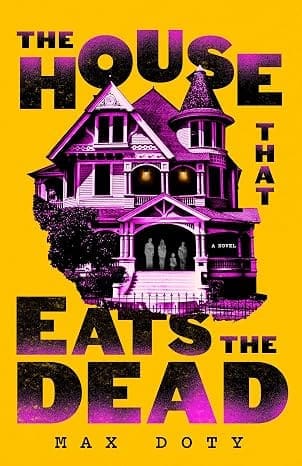


Synopsis:
The new house is a fresh start for Claire and her family. It’s a move away from the cityscape of a declining San Francisco and towards the quiet suburban life she has craved since her turbulent childhood; a step up the corporate ladder for her husband, Tom; and a safe haven for their two children.
Yet as they unpack their boxes, she senses something is wrong. Fresh flowers dry up, store-bought eggs are inexplicably hollow, and her daughter’s favorite toy disappears. Claire soon confronts a series of impossible truths: The house is hungry. It’s devouring anything that was once alive. And only Claire and Tom, the owners of the house, will remember that this “food” ever existed.
When Claire exploits the house’s power in a moment of weakness, she and the house forge a fragile bond. But as its hunger intensifies and Claire loses control, she fears who else might be drawn to her home—and what sinister appetites they’ll bring.
Review:
In his introduction to Robert Marasco’s “Burnt Offerings,” Stephen Graham Jones argued that there are two types of haunted house, that which simply wants to be left alone, and the hungry house. Max Doty gives new life and meaning to the latter in his ravenous horror debut “The House That Eats The Dead.” With the grisly, irreverent fun of a grown-up Goosebumps or perhaps Grady Hendrix anchored with a Pet Sematary-esque moral temptation, this one is nothing short of an absolute pageturner. I inhaled this novel in a manner its house would be proud of. This utterly consumable tale of suburban horror about trauma, how we cope with it, digest it if you’ll humour me, and what we might be willing to do to erase it entirely… is also essentially what it says on the tin- Doty’s haunted house is one driven by hunger, one which…eats the dead, and all of the unethical ways in which us humans might put a paranormal garbage disposal to use. Wacky, wicked, and a little gangsta, this one is out from Tor Nightfire in the UK August 13th and Bantam in the US August 18th.
We follow Claire, her husband Tom and her kids Derek and Grace. The Morgans. They’ve done rather well for themselves, and purchase their four and a half million dollar dream house (an absolute steal) after a personal letter to the previous owner from Claire. They may have won the property lottery but it doesn’t take long at all for things to go pear-shaped, for domestic bliss to curdle. Moving boxes go missing, food, including well-earned pizza, goes rotten, and treasured childhood toys disappear. It’s almost as if the house is helping itself to whatever it fancies and Claire has a bad feeling about it all, but it’s not one shared by the rest of her family. However, after a grief-stricken impulse and a little more information about the house, its origins and quirks, how the house can serve them, and what could happen if it falls into the wrong hands, Claire realises that this house has to be hers.
This house is one of the most fun I’ve ever read. We don’t read from the perspective of it, it doesn’t have a single line of dialogue, but the way it responds to Claire, who at one point tries to train it like it’s some sort of dog, makes it feel like a character. It misbehaves, tests boundaries, sulks, but it has a strange sincerity to it too. It’s a golden retriever house. Doty imbues this brick and mortar and plumbing with a distinct personality, a sense of humour, real charm. In addition of course, to its unique ability.
When the hungry, hungry house does eat, aside from Claire and Tom who own it, any memory of what is consumed also disappears. It is erased not only from this plane but also bleached from the minds of those left behind. This is a great plot device in terms of practicality- it means that the house would make for the ultimate cosmic accomplice for those who might have need to dispose of dead things, or indeed people, but it also allows for some poignant commentary. Is it truly better to forget or pretend otherwise? Can these emotions be stifled by the supernatural, or are they something we simply have to process the good old fashioned way? It’s certainly a tempting fantasy, but if it is true that grief is simply the eventual trade-off for love, is grief not our burden to carry? The house can offer concealment but not closure, and that tension is at the heart of the novel- loved it.
For fans of Clay McLeod Chapman and Chris Panatier’s “Worry Box,” Max Doty’s horror debut is a novel that I had wandered willingly into the jaws of before it sunk its fangs into me. Deeply original, thought-provoking if you’d like it to be, and ridiculously entertaining regardless, “The House That Eats The Dead,” has left me incredibly satisfied, full even, but with room for a second helping still. I’ll be back for more.


Leave a Reply