
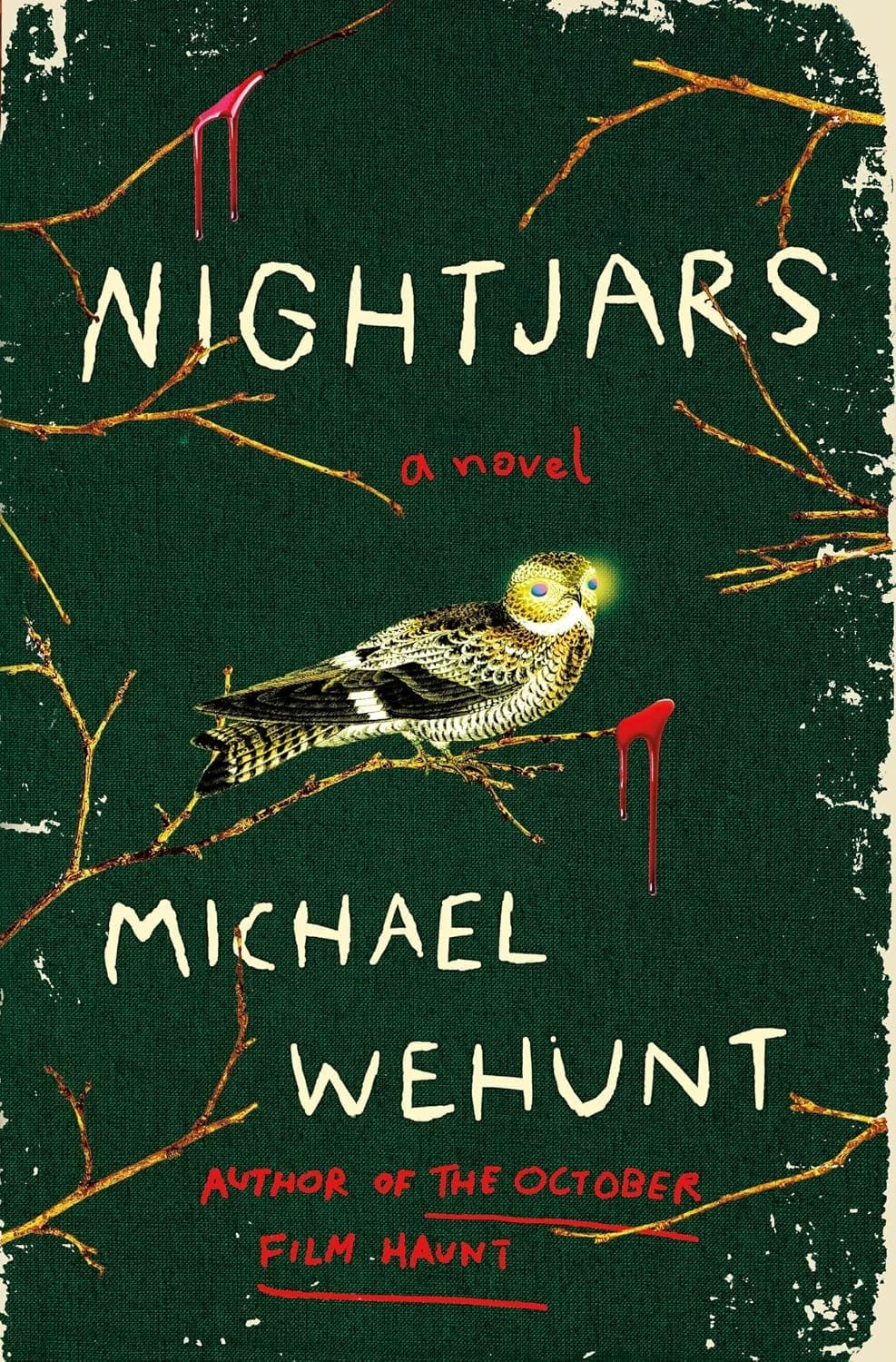


Synopsis
Memento meets Dracula in this heart-thudding, unpredictable, and beautifully crafted novel of a man exposed for crimes he doesn’t remember committing, and the monsters that dwell at the heart of us all, from celebrated and critically acclaimed author Michael Wehunt.
On a rainy night, Luke Oshel gets stood up halfway through dinner. But before his date walks off to the bathroom and never returns, she leaves an old photograph under her napkin—Luke as a child, a dead body in the shadows of his bedroom, and a terrifying masked man. He has no recollection of this event.
Then more photos disrupt his life—Luke posing with murder victims, covered in blood—and he falls back into the deep paranoia and repressed memories he’s tried to leave behind. All the drugs and alcohol, therapy, and hypnosis sessions have never conquered his deepest fear—that he hasn’t escaped the hidden legacy of his late father, who killed his victims by blood loss. But now there is a new string of serial killings, and the evidence all points to Luke.
As his journey to uncover the truth unfolds in the North Georgia Appalachians, a threat arises that will risk everything he holds close, including his ex-wife and their young daughter. Now Luke must chase his father’s darkness through a centuries-old secret and learn what monsters truly are. And decide if he’s one of them.
Review
I would say, in general, I’m not much of a fan of vampire horror. While these creatures of the night are a tried and true staple of the genre, they also strike me as a bit of a too-easy shortcut for horror writers, which has made vampire horror books a dime a dozen these days. I certainly cannot deny, though, that I have indeed dug the hell out of these types of stories when done right. Take for example Stephen King’s classic, Salem’s Lot, or the instant contemporary classic, and a book I am certain will become the defining work of 21st Century American vampire horror, The Buffalo Hunter Hunter from Stephen Graham Jones.
I don’t envy Michael Wehunt for so willfully stepping into such an overcrowded field with Nightjars, but he not only has the balls to pull it off, he produces a work that stands neck and neck with the best of them. I shouldn’t be surprised, of course, given that his debut novel, last year’s The October Film Haunt, was amongst my best reads of 2025 and took home the Bram Stoker Award for Best First Novel. And, of course, there’s his much-lauded short story collections and novellas (I was a big fan of his Everything is Beautiful and Nothing Bad Can Ever Happen Here, too). Wehunt’s a hell of a confident prose stylist, and clearly a life-long horror fan. He knows what works, intimately. As for me, I think part of what makes Nightjars work so successfully is that it drives headlong into the vampire genre rather obliquely, attacking both its subject, its characters, and its readers asymmetrically. You know the rough outline of it all, the general shape of the beast, going into it, but it’s Wehunt’s approach that really makes it special.
Wehunt builds toward the vampirism stuff slowly but surely, tackling the subject from the perspective of trauma and addiction. Luke Oshel is a recovering alcoholic and drug user, and his brain is stuffed full with repressed memories that he’s only recently begun to face in therapy. His vices, or perhaps more gamely, his curses, have cost him his marriage. He’s on a better path these days, running his own business in the form of the Portable Books bookstore, which has even helped him score a first date with the beautiful Collette. Unfortunately, she ditches him on said date, leaving behind only an old photograph of Luke himself, which has captured a disturbing moment from his childhood.
Other photographs begin appearing showing scenes of grisly murders with Luke as the obvious perpetrator. Only he doesn’t have any memory of the crimes, either those recent or in his distant past. The bodies of women, drained of blood, are starting to pile up, and the police are taking an active interest in Luke’s comings and goings. He’s begun drinking again (booze, I should perhaps specify) and cannot properly account for his whereabouts during the nights in question.
Nightjars draws you in with its shades of conspiracy and crime, not to mention a wonderfully dark and oppressive atmosphere, and initially reminded me more of Thomas Harris than Bram Stoker. If you somehow didn’t know Nightjars was a vampire book going into it – and I don’t think it’s much of a secret given this book’s marketing that it is – you’d be forgiven for thinking it’s a psychological thriller of the highest order. There’s a wonderfully intriguing air of mystery about it all as Luke tries to figure out just what in the hell is going on, and I was right there with him. I needed to know.
Wehunt does here what only the rarest of those great vampire books have done for me in the past. He gave me a reason to care. A reason to feel invested. The first half of the book, or thereabouts, is front-loaded with mystery and a number of questions I desperately wanted answered, not only for my own sake for but for Luke’s, too, as well as his ex-wife, Kristen, and their daughter, Sophia. The threats against them only deeps further as they uncover the long and storied history Wehunt builds, giving vampirism his own Appalachian-centric mythology shored up with supporting documents in the form of an old self-published book and some hand-written notes.
Typically, I’d turn to a vampire book simply to satisfy more primal urges and let the lizard part of my brain enjoy all the guts and gore authors like Brian Keene or Nate Southard would bring to the table with works like With Teeth or Lights Out, respectively. And make no mistake, Wehunt certainly does deliver on the bloody grotesqueries here, but it was the characters that really drew me in. I wasn’t turning the pages just to see who was going to get got next, but because I was worried Wehunt was going to do the unthinkable to this small group of people I had really come to care about in only a handful of days.
Nightjars is a vampire book right down to its core, but more importantly it’s an empathetic look at fractured families and generational trauma, all wrapped up in a grisly (at first) serial killer thriller. Wehunt’s writing style, the atmosphere he imbues his stories with, the sheer humanness of it all, supersedes any appetites for mindless violence and bloody carnage. Although there’s plenty of that, too, particularly as the mystery surrounding Luke’s past and present deepen and the narration shifts to Kristen, as the book builds toward its urgently frenetic inevitabilities. And while Wehunt relies on the usual vampire tropes and lore we’re all so familiar with, he somehow manages to make it feel fresh and exciting by filtering and grounding it through contexts we don’t often see, let alone see done quite so well.



Leave a Reply