
Synopsis:
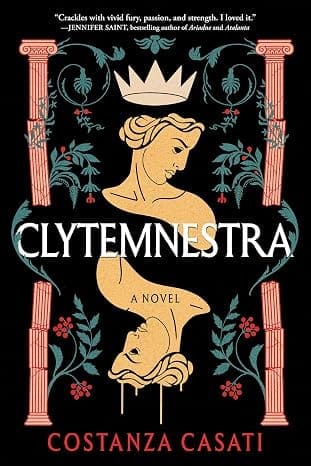


She’s been called a murderer, a monster, a villain. But the truth was never hers to tell―until now.
Born a Spartan princess. Married to a tyrant. Forced to watch her child sacrificed to appease the gods. In a world where women are used, silenced, and discarded, Clytemnestra does not mourn―she waits. And when her moment comes, she rises not as a consort, but as a force of reckoning.
This stunning debut offers a radical reimagining of a woman long cast as villain. With immersive, poetic prose and a vividly rendered ancient world, Clytemnestra delivers a fierce, emotionally charged portrait of a heroine who reclaims her story from myth, fate, and the men who tried to write it for her.
Review:
Clytemnestra’s story (at least in this portrayal) is one of grief, suffering, and ultimately, vengeance. She refuses to bend to anyone, which wins her as many friends as it does enemies, but I loved her character for that reason alone. And I loved this book.
Before I get too much father into the review, I need to preface it by saying that it has been many years since I last read the Iliad. Many of the events in this book follow those of the Iliad, and as such, a number of those characters are also featured in Clytemnestra. Most of this book aligned with what I recall of the Iliad, but I’m not planning to reread Homer’s work any time soon so the purpose of my review is not to compare the classic tale to this book.
I recall having the impression that I didn’t like Agamemnon in the Iliad, but I couldn’t recall specifically why. In Clytemnestra, he is ruthless, ambitious, cruel, and arrogant. He loves no one but himself and always takes what he wants—no matter how it affects those around him. He is, without a doubt, the primary villain in Clytemnestra’s story. He is a character designed for a reader’s utter dislike, and I was waiting for his fall.
Helen was portrayed a bit differently than I expected. She was more vulnerable and uncertain of herself for much of the story. She was the topic of vicious gossip in Sparta long before she ended up in Troy, and she wasn’t liked by the Trojans either. In short, Helen never really fit in with anyone but her siblings. Clytemnestra was protective of her, as were their twin brothers, Castor and Polydeuces. But Helen’s support system didn’t really extend outside her siblings, and more often than not, I felt sorry for her.
But the book’s focus is on Clytemnestra. She is a strong woman, both physically (she’s Spartan) and emotionally. Her life is full of hardships and grief. She loses people she loves, time and again, but she keeps moving forward. And for those who wrong her, she’s a force of nature they’ll one day wish they’d never crossed.
If you’re seeking a book with a strong female lead capable of overcoming the worst life can throw at her, Clytemnestra is an excellent choice. I highly recommend it.


Leave a Reply