
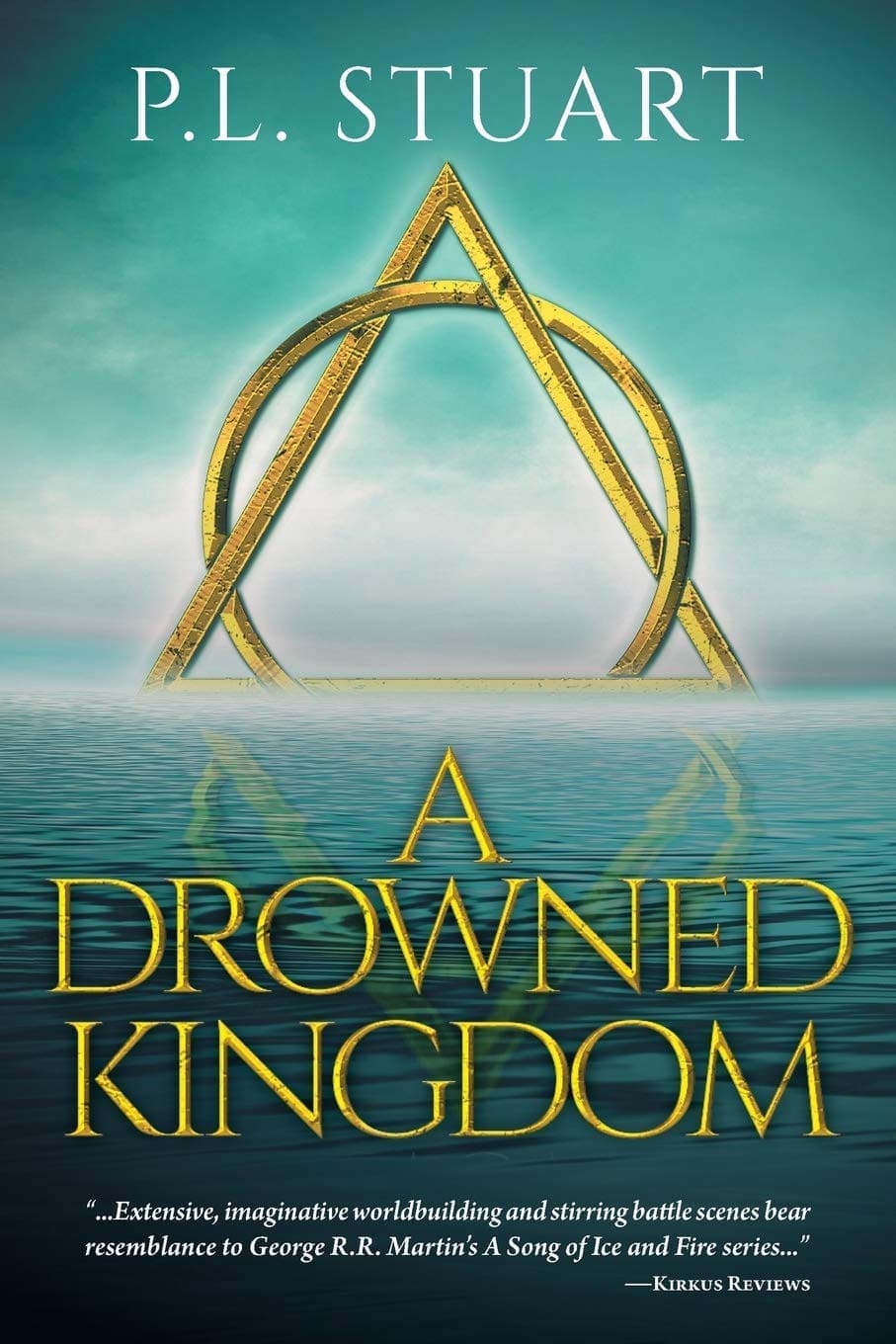


Synopsis
Once Second Prince of the mightiest kingdom in the known world, Othrun now leads the last survivors of his exiled people into an uncertain future far across the Shimmering Sea from their ancestral home, now lost beneath the waves. With his Single God binding his knights to chivalric oaths, intent on wiping out idolatry and pagan worship, they will have to carve out a new kingdom on this mysterious continent―a continent that has for centuries been ravaged by warlords competing for supremacy and mages channeling the mystic powers of the elements―and unite the continent under godly rule.
With a troubled past, a cursed sword, and a mysterious spirit guiding him, Othrun means to be that ruler, and conquer all. But with kingdoms fated on the edge of spears, alliances and pagan magic, betrayal, doubt, and dangers await him at every turn. Othrun will be forced to confront the truths of all he believes in on his journey to become a king, and a legend.
When one kingdom drowns, a new one must rise in its place. So begins the saga of that kingdom, and the man who would rule it all.
Review
“A Drowned Kingdom” by P.L. Stuart is an ambitious start to a multi-volume Epic Fantasy series. It is vast and sprawling in scope, yet tightly contained due to the single POV, first-person narration. The plot and character arcs take us to unexpected places, yet at the same time bring us full circle in a masterful execution by the author.
The first thing that struck me about this book was the classical prose style. Sometimes stiff and formal, sometimes poetic and lyrical, it took me some time to get used to. Midway through the book, I no longer noticed it, as it reflects the personality of our protagonist well. The prose also serves to position “A Drowned Kingdom” as a timeless, classical fantasy work. The tone sets the story in another time and place, where kings and mages rule. You believe that you are in another world, because the prose style takes you there.
Partly due to the first person point of view, the storytelling is more introspective than immersive. Plenty of action happens, with earth-shattering events, battles, and epic journeys. The real story, however, is told through the lens of Prince Othrun. The way he sees the world shapes the events, and how he develops as a person bends the narrative. He spends a lot of time analyzing politics and players around him. He also struggles with his self-image. It brings to mind a Buddhist teaching, that humans spend a lot of energy “creating and defending the self.” Othrun does this in spades. He is trying to understand his place in the world, wanting to live up to his own and others’ expectations while not being trapped by them.
The tropes are familiar but uniquely told. Othrun is a “Second Prince.” His older brother gets the title, power, and glory, while Othrun exists on the periphery, receiving whatever crumbs Second Princes are left. Othrun is expected to stay out of the way, yet he knows he will need to serve his brother directly once their father passes the crown to the first born. Let’s just say the two brothers are not the best of friends, and the king is not a warm soul. Social hierarchy, court politics, religion, alliances, and factions define Othrun’s world.
Although Othrun is sometimes unsure of his place and dissatisfied with his lot in life, he holds a high regard for himself. One could call it arrogance, although the insecurity we see through the first-person narration casts him more as someone who is forced to adopt a certain persona, defined by his royal bloodline. Othrun clings to his religious faith and morality in the face of opposition. We get to witness the strength of his beliefs early on in the tale, when a trip to another land sets off a chain of cataclysmic events. Some of these events are personal and political, some are supernatural, and some manifest in the physical world.
Othrun considers himself a devout man, believing in the Single God. Distant kingdoms worship several gods and are considered pagans by Othrun’s people. The druids and mages of those lands are believed to be evil, to be scorned and feared. Othrun is unbending in this regard, as he is with many of his views of the world. He is quick to determine right from wrong and judge who is worthy of his respect. He is not afraid to be decisive and take action, at no small risk to himself. His brother tests Othrun’s character, and the friction between them festers and grows. His uncle, another Second Prince, tries Othrun’s patience. The main area where our protagonist shows a soft side is with his wife. His loyalty and devotion are beyond reproach.
Then everything changes.
His beliefs, his world view, his place in the world—they are all challenged. The plot takes a sharp turn, and the truly epic nature of this story unfolds. The supernatural and magical elements slowly come to the fore. Othrun is given the chance to become the person he secretly always wanted to be. It is satisfying to watch his progression as he matures and makes monumental decisions. It is also interesting to see how he responds when his presumptions and beliefs are put to the test.
This is a solid work of fantasy. Stuart has laid the foundations for a grand and glorious epic. I look forward to continuing this journey with the other books in the series.


Leave a Reply