

The Rise of Nobledark Fantasy, an essay detailing the origins and future of this unique fantasy sub genre.
This essay is part of the Crownfall digital book tour. You can find the full tour HERE.
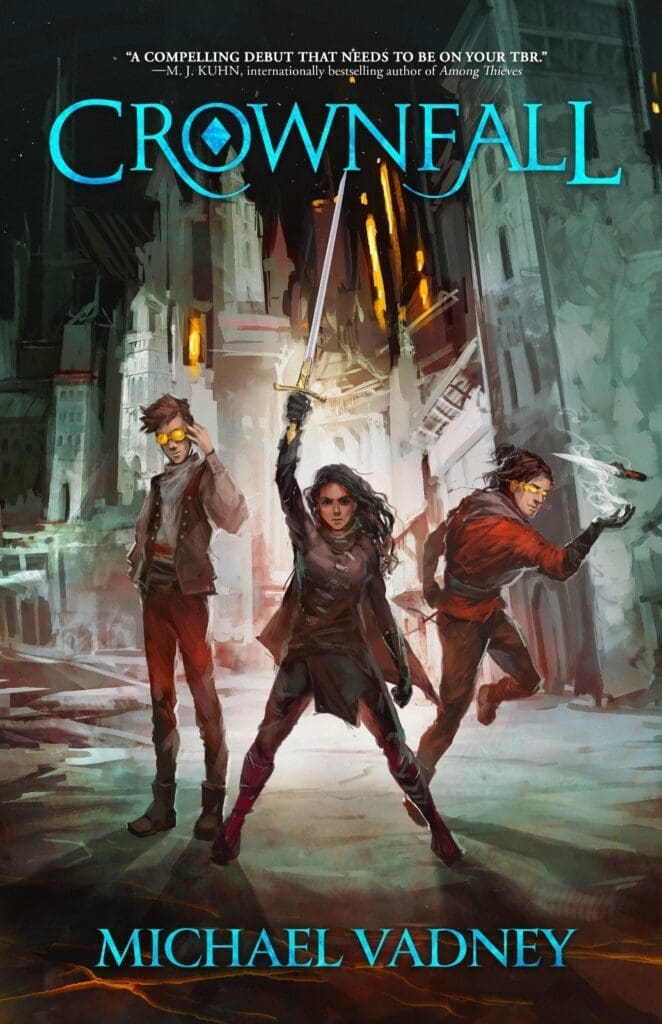
BOOK INFORMATION
Book/Author: Crownfall by Michael Vadney
Cover Artist: Katerina Belikova – Instagram
Typography/Cover Design: Adrian M. Gibson – Portfolio
Genre: Fantasy / Nobledark / New Adult / Political Fantasy / Action & Adventure
Release Date: April 28, 2026
Available formats: Paperback, Hardcover, EBook
Preorder: MichaelVadney.com/store
ARC Sign Up: https://rb.gy/kd4l0n

For a while fantasy got very good at breaking our hearts, kingdoms fell, heroes died pointless deaths, and morality blurred into shades of gray so muddy you couldn’t tell whether anyone was worth rooting for at all.
For a time, that felt right.
Grimdark fantasy—bleak, violent, and unsentimental—felt honest in a way older heroic stories didn’t. Popularized by writers like Joe Abercrombie and shaped in the long shadow of George R. R. Martin, it stripped away the comforting architecture of destiny. No farm boy secretly crowned by fate. No prophecy guaranteeing that the light would win in the end. Power was transactional, institutions were corrupt, morality was slippery, and when good people tried to do the right thing, they often paid for it.
Grimdark rejected the illusion that virtue is rewarded simply because it deserves to be. It interrogated systems instead of sanctifying them. It asked who benefits from war, who suffers for ambition, who gets crushed when empires rise. It looked at power and said: this is what it really costs—blood, compromise, complicity.
In a world that often feels unstable and unjust, that candor resonated, but lately, something has shifted.
The settings are still harsh. Kingdoms still rot from the inside. Magic still maims. Empires still exploit. The victories, when they come, are partial and hard-won. Yet within that same brutal landscape, more stories are doing something quietly radical.
In the middle of all that darkness, characters are choosing kindness and hope anyway.
They’re protecting strangers when there’s no reward for it, keeping promises that cost them dearly, and refusing to become monsters—even when becoming monsters would be easier, safer, or smarter. Characters are acknowledging the corruption of the world without surrendering their moral agency to it.
This isn’t a return to naivete. The darkness hasn’t lifted and the costs haven’t disappeared. If anything, the stakes feel sharper because the choice to be good is no longer guaranteed by narrative law. There is no prophecy insulating the hero from consequence. When someone acts with mercy, it isn’t because the genre demands it. It’s because the characters decide to.
That decision is the point.
Where classic grimdark often asked, “What happens when power corrupts?”, these emerging stories ask, “What happens when someone refuses to let it?” They still understand that systems are broken, they still recognize that violence leaves scars, but they explore a different tension: not whether the world is dark, but whether people must be to survive in it.
The result is a tonal evolution. Cynicism is no longer the final word. Compassion is not framed as weakness. Loyalty is not automatically foolish. In fact, the most subversive act in a corrupt world becomes simple decency.
There’s a reason this resonates now. Many readers don’t want to be told that everything is doomed and everyone is selfish. They already know the real world is complicated and often cruel. What they’re hungry for is proof—however fragile—that integrity is still possible inside that complexity—not guaranteed, not triumphant without loss, but possible.
This shift doesn’t erase grimdark’s legacy; it builds on it. The genre taught us to distrust easy answers and shining myths. It forced fantasy to confront power honestly. Now, newer stories are asking what we do with that honesty. If we accept that the world is harsh and flawed, what kind of people do we choose to be within it?
Call it what you like—hopepunk, brighthammer, dawndark, or something else entirely—but many readers and writers have started using the term:
Nobledark.
And its rise says something important about where we are right now.

At its simplest, I like to define it this way:
The world is cruel. The characters refuse to be.
Nobledark doesn’t promise the empire will fall or the tyrant repent. Virtue isn’t guaranteed reward, sacrifice isn’t guaranteed recognition, and heroes aren’t flawless. They lie, hesitate, and fail. They compromise—and sometimes regret it, but when the easier path is cruelty, numbness, or self-preservation at any cost, they choose restraint. They choose mercy. They choose loyalty—not because it wins them power, but because it’s who they decide to be.
This isn’t cozy fantasy. The stakes are high, people die, systems remain broken, revolutions fail and trauma lingers. The world stays structurally unjust, but integrity still matters. Doing the right thing still matters—even when it doesn’t fix everything.
That’s the distinction.
Where grimdark often argues that morality is a luxury and power the only truth, and traditional heroic fantasy bends toward restoration and rightful rule, nobledark lives between them. Victories are partial, fragile, temporary, but real.
In nobledark stories, you’ll find:
- Moral courage over dominance: The hardest act isn’t killing the enemy, but refusing to become them.
- Loyalty over conquest: Bonds matter more than thrones.
- Principles preserved, not purity untouched: Scarred, tested, but intact.
- Good chosen at a cost: Mercy that endangers you. Honesty that isolates you.
The hero may not overthrow the empire, but they might smuggle children to safety. They’ll stand between a mob and a stranger or refuse to betray a friend when betrayal would guarantee survival. They may save one village while others burn—and carry that grief without surrendering to nihilism and the story treats that choice as meaningful.
Nobledark assumes the world is broken—corruption ambient, violence cyclical, institutions compromised. It rejects only one conclusion: that this reality makes virtue pointless.
Its claim is quieter, and more radical: Even if you cannot save the world, you can refuse to help it burn.
It doesn’t promise you’ll win the war, but it will insist the war is worth fighting.

So why does this flavor of story feel so resonant right now? I believe it mirrors how many of us feel about the real world. We’re not starry-eyed optimists anymore. Most of us don’t believe one charismatic hero is going to fix everything—we’ve seen too much for that—but many of us are not pure cynics either.
We still help our neighbors, still donate when we can, still check on friends, still try to be decent people inside systems that feel far too big to change. We don’t believe we can save the world, but we want to believe our choices still matter.
That’s exactly what nobledark offers. It doesn’t sell the fantasy of total victory. It offers something quieter and, in many ways, more realistic: The fantasy of not losing yourself.
Not becoming cruel just because the world is.
Not giving up your humanity just because it’s inconvenient.
Not surrendering to apathy or depression.
In other words, it reflects resilience rather than dominance, and right now, resilience feels more honest than triumph.

When I talk to readers—and to other writers—the same words keep coming up.
- connection
- meaning
- catharsis
People don’t necessarily want lighter stories—they want stories that hurt for a reason. Stories where suffering leads to growth, sacrifice, or love—not just more suffering. Nobledark has a particular emotional flavor that’s hard to define but impossible to miss: the sense that goodness is fragile, yet real.
That decency is difficult, but worth it, even if the world doesn’t reward you for doing the right thing, doing the right thing still matters. It’s deeply comforting in a way endless cynicism can’t be because cynicism requires nothing, while hope requires courage.
As both a debut indie fantasy author and a podcast host who interviews other writers, I’ve had a front-row seat to hundreds of conversations about craft and storytelling, and I’ve noticed a pattern. Even authors writing very dark books rarely describe their work as hopeless.
They talk about endurance. About protecting one small thing worth saving. About characters who keep going when quitting would be easier. They talk about found family, sacrifice, and mercy. They talk about hope. Not the shiny, destiny-driven kind, but the stubborn kind. The kind that says, I know this probably won’t fix everything, but I’m doing it anyway.
That feels like nobledark to me. It’s not idealism, but defiance—kindness as rebellion.

Fantasy has always reflected the emotional needs of its era. Sometimes we need escapism, or catharsis. Sometimes we need to stare directly at the darkness and give it the middle finger. Right now, I think many of us are looking for something else.
Not stories that tell us everything is fine, and not stories that insist everything is broken, but stories that say:
Yes, it’s broken.
Yes, it’s hard.
Yes, you might lose.
But you can still choose who you are and try again.
Nobledark doesn’t promise that light will win, it just insists that carrying a candle still matters, and maybe, for this particular moment in history, that’s the most honest kind of hope we have.
ABOUT THE AUTHOR
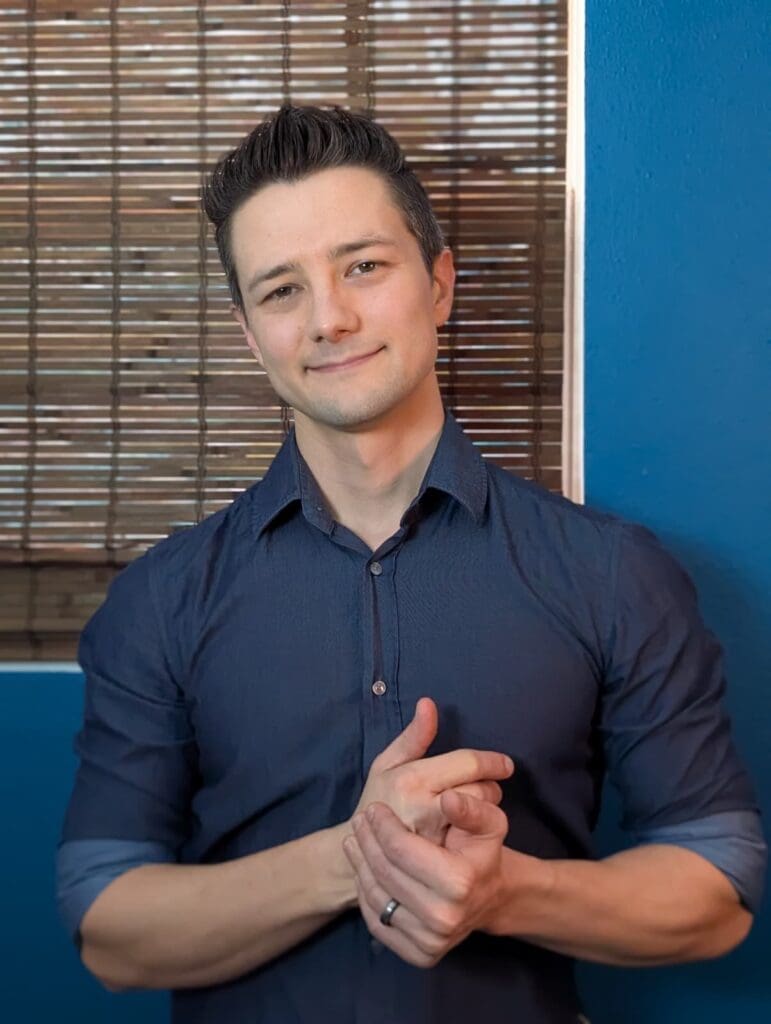
Michael Vadney is an American author and podcaster. He was born in the Florida Keys and raised in the woods of Pennsylvania. Classics like The Hobbit and Redwall sparked his love of fantasy and inspired him to imagine worlds of his own.
In his early thirties, he returned to the dream he’d carried since childhood. He dedicated nights, weekends, and many dawns to writing, teaching himself through trial and error, online resources, and the broader writing community.
Through his writing and the Author Adjacent podcast, Michael explores who people are, who they want to be, and the space between. His storytelling blends layered characters, purposeful world-building, and grounded emotional truth—fantasy shaped by the realities that define us.
‘AUTHOR ADJACENT DISPATCH’ NEWSLETTER
Get regular updates on new book releases, cover reveals, special editions, and upcoming projects—so you’re always in the loop. Stay informed about new podcast episodes, featured guests, and conversations you won’t want to miss.
You’ll also receive behind-the-scenes insights from the writing journey: early concept notes, worldbuilding deep dives, character explorations, research discoveries, and honest reflections on the challenges and victories of drafting and revising a novel. From first spark to final manuscript, you’ll see how the story evolves—and what it really takes to bring a book to life. SIGN UP HERE
SOCIAL LINKS
Website: MichaelVadney.com
X: x.com/Michael_Vadney
Instagram: instagram.com/michael_vadney
Threads: threads.com/@michael_vadney
Facebook: facebook.com/profile.php?id=61585969951139
Bsky: bsky.app/profile/michaelvadney.bsky.social
Youtube: youtube.com/@AuthorAdjacent
Online Store: MichaelVadney.com/store


Leave a Reply