
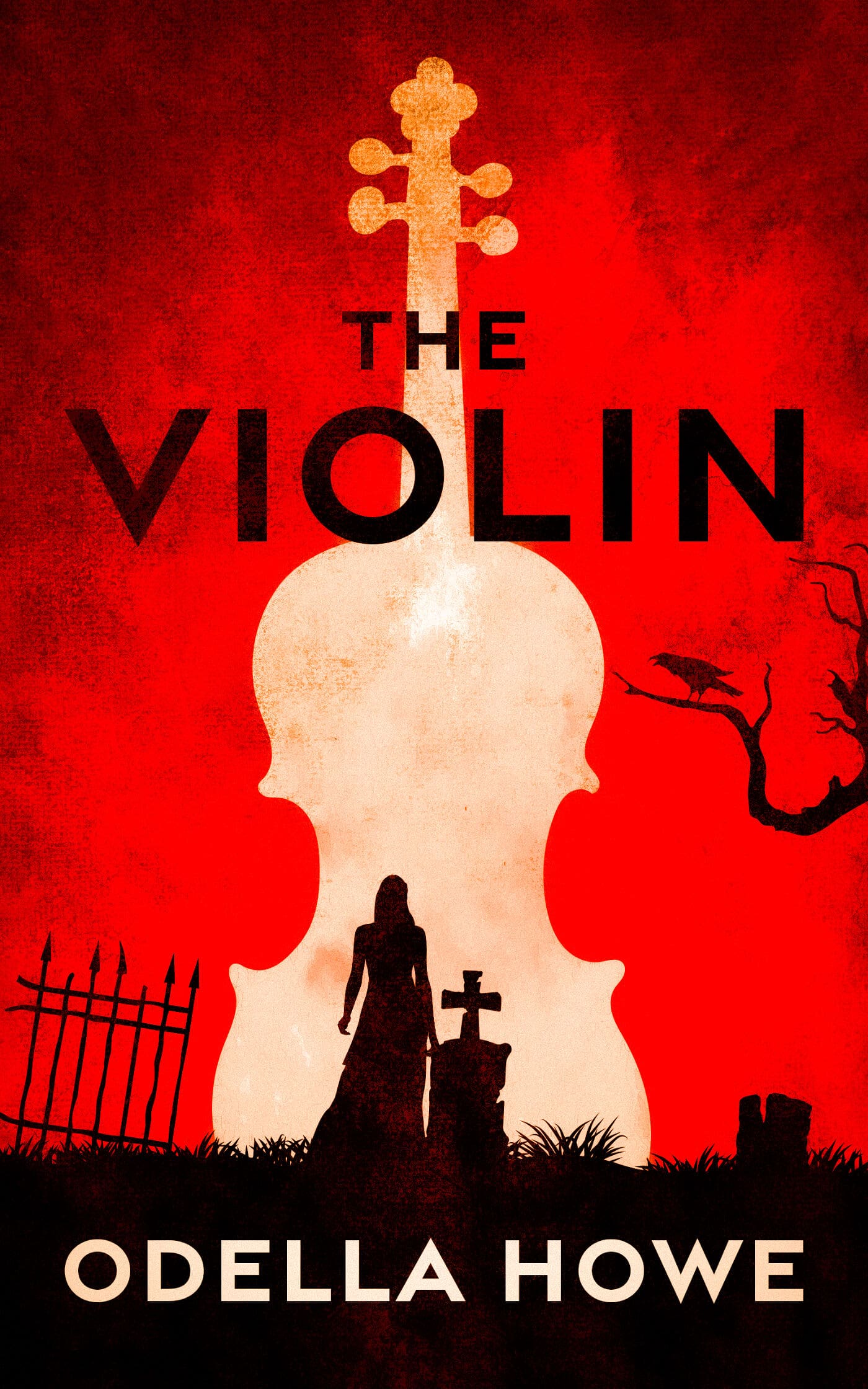






When Elise’s fiancé dies, she would do anything to get him back—even if that means striking a sinister bargain with Cassius McCalmont, an exotic collector whose oddity exhibit is downright astonishing. After seeing Cassius’s otherworldly flute work its magic, Elise begs her father for an apprenticeship, eager to make the seemingly simple sacrifice required to bring her beloved back from the grave Cassius a violin of her own making. But before she can finish, Elise’s father falls deathly ill. Even Cassius’s elixirs can’t restore his health for long, and her father’s dying wish may very well be Elise’s undoing. Now she faces a grim choice: obey her father and let him pass in peace, or trust the man who promises her power over the grave. The Violin draws upon classic stories and Medieval themes, giving this gothic horror a uniquely timeless feel. It’s mixed with a lightly paranormal plot in which death is a constant companion. There is something incredibly charming about Odella Howe’s standalone gothic horror novel The Violin. It feels like a tale ripped out of the 19th century—in the best ways. Its prose reminds me of Mary Shelley’s Frankenstein, or the many works of Edgar Allan Poe. In fact, Howe lists those authors as direct inspirations, alongside a symphonic poem. “Danse Macabre, Op. 40” was originally written in 1872 intended to be performed by a vocalist with a piano accompaniment. Two years later, the composer Camille Saint-Saëns reworked the piece, and replaced the vocals with a solo violin. The piece wears its inspiration on its sleeve, the “danse macabre,” an artistic theme and a cultural view of death that emerged around the Late Middle Ages in Europe. Spurred on by plagues and wars, it was a reminder of mortality, and how people of all social classes were mortal. Across European art, the living were depicted alongside the dead, often dancing together. Perhaps this is why The Violin feels timeless, to me. Howe is pulling upon English and American classic literature, but the events of this novel pull from much older themes than that. This style of prose is not without some awkward moments. I often felt as though I was held at arm’s length away from our main character, Elise. The feels like it is being told to me, rather than trying to immerse me in its tale and setting as so much modern fiction strives to do. The characters also don’t get much room for growth, even those very close to Elise. This is not inherently bad, but it is a style that took some time to get used to. In retrospect, this might have been a clever move from Howe, mirroring the way in which Elise doesn’t have much agency over her own life. So too, the events of this story have a kind of pre-determined feel to them. A macabre inevitability, if you will. Central to the story is the titular violin, which plays an essential role. Howe put extreme care into not just describing the music but also the instrument’s construction and its relationship to the maker / violinist. It—and Cassius, who prompts the creation of the violin—acts almost as a genie in a bottle. Together, they grant wishes, skewing them in that classic way of “ah, but I did solve your problem, you just weren’t specific enough about how you wanted it done.” Synopsis
Quick Review
Full Review

Leave a Reply