
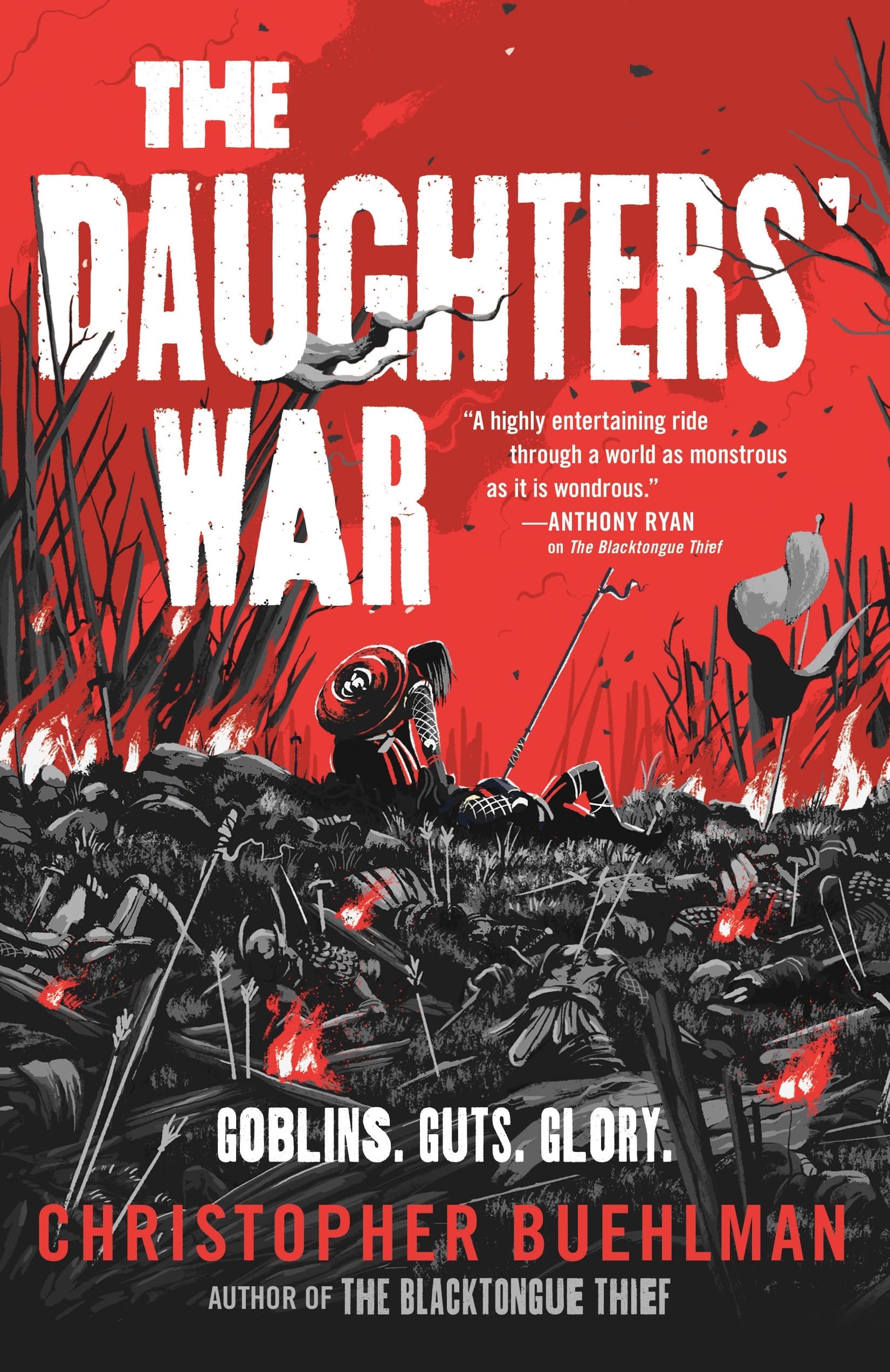


Synopsis
Enter the fray in this luminous new adventure from Christopher Buehlman, set during the war-torn, goblin-infested years just before The Blacktongue Thief .
The goblins have killed all of our horses and most of our men.
They have enslaved our cities, burned our fields, and still they wage war.
Now, our daughters take up arms.
Galva ― Galvicha to her three brothers, two of whom the goblins will kill ― has defied her family’s wishes and joined the army’s untested new unit, the Raven Knights. They march toward a once-beautiful city overrun by the goblin horde, accompanied by scores of giant war corvids. Made with the darkest magics, these fearsome black birds may hold the key to stopping the goblins in their war to make cattle of mankind.
The road to victory is bloody, and goblins are clever and merciless. The Raven Knights can take nothing for granted ― not the bonds of family, nor the wisdom of their leaders, nor their own safety against the dangerous war birds at their side. But some hopes are worth any risk.
Review
As with my last review, I’m rereading both The Blacktongue Thief and The Daughters’ War in the run-up to the release of The Thrice-Bound Fool. (I know it has released now, but I’m running behind.)
Galva’s story is a different one to Kinch’s. Though his is fraught with danger, it is told from a witty, oh-well-things-could-be-worse tone of voice. It’s funny, comedic, and there’s hope there. Albeit slim hope. In The Daughters’ War – being the backstory of Galva and marking the story of the war we heard about in the first book – is not a story of hope. That is gone. The Goblin Hordes have decimated Gallardia and stand to sweep across Manreach if they are not stopped here. In the Thresher’s War, they lost 9/10 men, and their last line of defense is female soldiers and their war corvids.
This is a story of the brutality of war, of facing a foe so tremendously terrible and overwhelming that there’s little hope to come out of it unscathed; Buehlman does an absolutely stellar job of showing the reader the very depths of despair that war can be. The main theme running through this book for me was grief, and I grieved every step of the way.
Galva is a warrior of few words; stoic would describe her best, but here we see her a little green, inexperienced in comparison to her journey with Kinch. Though I will not go into much of the plot now, I will emphasise it’s fraught with sadness. And I will keep saying it, but this book broke my heart. We meet her two war corvids, Dalgata, who we already know, and … sweet Bellu. I’m endeared to Ms Dom Braga, having spent an entire book with just her, as it read so dearly personal and sad. There are so many little moments of love in this dark book, but it’s all the more authentic for it. The way the author paints the tapestry of her life, of her brother Amiel and Pol, and the wayward Migaed. For whatever pleasure you can find in a book so raw and bloody, those bits of the book really drew me in and stay with me. I think of those characters, well, a few of them, fondly. That is not to say I do not adore this book, but I adore the masterful way Buehlman made me feel throughout this book over what happens in it.
We see the enemy introduced to us in Blacktongue as a horrific beast of war: the goblins. We’ve heard the tales, listened to the stories in the first book, but seeing the goblins fight here in all their atrocity is almost too much to bear. So alien from us, they think of kynd as nothing other than food to be conquered, butchered, and eaten. I often wonder whether there’s more of a motive to the carnage than carving chunks of meat out of a land of livestock, but that’s what makes it even more harrowing. There isn’t an ultimate goal here that we know of. They are just there to wage terrible war.
There’s a moment in this book that takes a piece of my heart every time I read it, cuts it out so cleanly and keeps it forever. I will not spell it out here because that would spoil it, but be warned, the very excellent and authentic writing that Buehlman employs will readily pluck your heart out of your chest. That’s the problem with reading such a brilliantly written book: it can hurt you so very deeply.
World-building is incredible as always; we get to see Fulvir Lightningbinder and his menagerie of spells and beasts in all of its glory. Goblin Juggernauts decorated in human skins, war corvids, bull men. Treebinding – convincing trees to let you travel long distances through them. Goblin Moth Knights which worship the moth and wear human skin as masks, with priests that blow the spores of nightmare caps and rattle human teeth. It’s grim, immersive, and horrific.
Overall, this reread had me all over the place. I love the book, but it’s a tough read because it paints the very carnage of war so well. When I first heard the author was not writing the sequel straight away but instead went for a prequel, I was bemused. However, I was very wrong. Galva’s story is an excellently told, raw and visceral account of a soldier thrust into the horrors of war.


Leave a Reply