


Synopsis
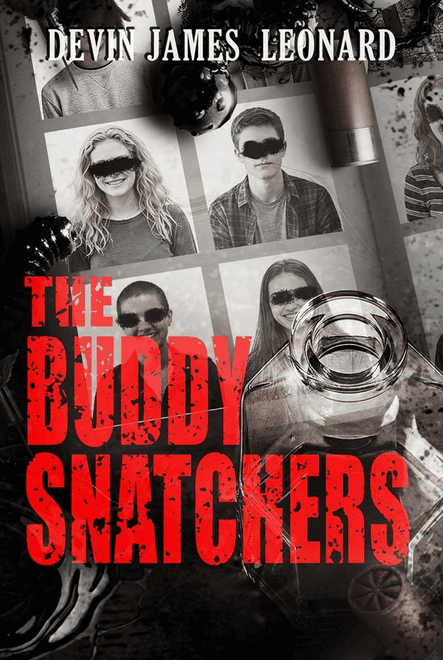
Alcoholic man-child Cal McCarthy wants one thing: to stay sober long enough at his ten-year reunion to win back his high school sweetheart.
But reconnecting with old friends reveals he isn’t the only one pretending to be someone he’s not—almost everyone in town seems different.
Something has infiltrated Cal’s tiny Adirondack village and found its way inside the residents, altering their minds and taking control of their bodies. After a decade apart, Cal must rely on fading memories of his friends to figure out who’s been infected, who’s simply lying—and who’s just grown into someone he no longer recognizes.
A paranoid, character-driven small-town horror novel about addiction, identity, and the terrifying possibility that the people you used to know might already be gone. Perfect for readers who love Invasion of the Body Snatchers-style dread and horror that hits as hard emotionally as it does viscerally.
Review
This essay by the author, published on Crystal Lake’s Patreon prior to release, provides an intriguing look at the unconscious inspiration behind ‘The Buddy Snatchers’, and how well we know those around us.
The book centers on Cal, a 28-year-old alcoholic, who is not eager to catch up with his former friends at his ten-year high school reunion. However, for Meredith, his high school girlfriend, he is willing to face the horrors of sobriety if it will win her back. When strange happenings in the small town make it back to Cal’s house, it is up to him and his group of friends to do something before it is too late. But what can be done when his friends are no longer what they seem?
Leonard does a great job of depicting Cal’s alcoholism. His denial, selfishness, and random logic will ring true to anyone familiar with addiction. This can make spending time with Cal frustrating and unpleasant, and difficult to read about for those with experience of such people.
Alicia, Cal’s best friend, also finds him difficult to deal with. She continues to give him chance after chance, despite his actions. It is obvious she cares for her friend and is frustrated and infuriated by him in equal measure. It is a nice touch that her friendship with Cal ripples out to damage her business and marriage.
The rest of the buddies are comprised of Harris, who was overweight and unsuccessful in his teens, and Sutherland, the stereotypical jock. The theme of hiding in plain sight is explored with Cal and his friends long before anything paranormal happens. Ten years is long enough for each of the buddies to have become different people, but how much of their change is real and how much is a performance?
Three girls from their class also appear at Cal’s house before the reunion. Gina, her friend Lexi, and Meredith, the love of Cal’s life.
The much older Kalvin provides a lot of comic relief. His annoying and creepy behavior is believable, no matter how ridiculous his actions.
The writing style is straight forward. At times the narrative strains under the constraints of Cal’s first-person point of view, most notably in the chapters where he recounts a scene in great detail while announcing he was blackout drunk at the time and couldn’t remember anything.
Any story dealing with the idea of body snatchers has a strong theme of deception and paranoia. Sometimes people change and have a reason for it. This book explores the lies we tell ourselves, and others, to project the person we want the world to see.
A small village in the Adirondacks is the perfect setting for a claustrophobic tale. Booker, Cal’s probation office, provides some local color, and the setting is fleshed out with the AA meeting Cal attends and the man he meets there. As the reunion is the main drive for most of the characters to reconnect, readers might expect much to be made of the actual event. Unfortunately, the night of the reunion is rushed.
The book makes a bold move by introducing the creature in the opening chapter. Apart from a few hints, it isn’t mentioned again for over half the book. Instead, the focus is upon Cal and introducing the other characters. The pace picks up in the latter half of the book, rushing towards an ending that leaves a lot open.
The creature is suitably gross. Its life cycle is reminiscent of real life parasites. The method of infection is described in gory detail. While the ways to defeat it are fun, they contradict several other details, and might leave an attentive reader scratching their head.
Body snatcher stories play upon the dread of evil hiding in plain sight. How well do you really know anyone, even those you love and trust the most? What if the group you feel part of suddenly changes, and you are now the outsider? Perhaps the most terrifying of all is the fear of being taken over and losing control of your life.
‘The Buddy Snatchers’ contains these elements but transforms pivotal scenes into dark humor rather than leaning into the horror. This will appeal more to some readers than others. There was certainly the potential to make the book terrifying. The decision to play certain scenes for laughs highlights the moronic actions of the characters, and risks making already insufferable people even harder to read about.
Despite the play on the title, this book has more in common with ‘The Faculty’ than Jack Finney’s novel or its subsequent adaptations. There are also similar thematic elements to the Irish comedy horror movie, ‘Grabbers’. Fans of the premise won’t want to miss out on this book.
‘The Buddy Snatchers’ dares to ask the question: What if the most immature, self-absorbed people were the only ones to notice creatures taking over their town? It is not good news, I’m afraid. We’re all doomed.


Leave a Reply