


Synopsis
“An astonishingly good novel…Fans of the earlier Talisman novels will absolutely love this one, and because King is a wizard at providing backstory, new readers can thoroughly enjoy it.” —Booklist (starred review)
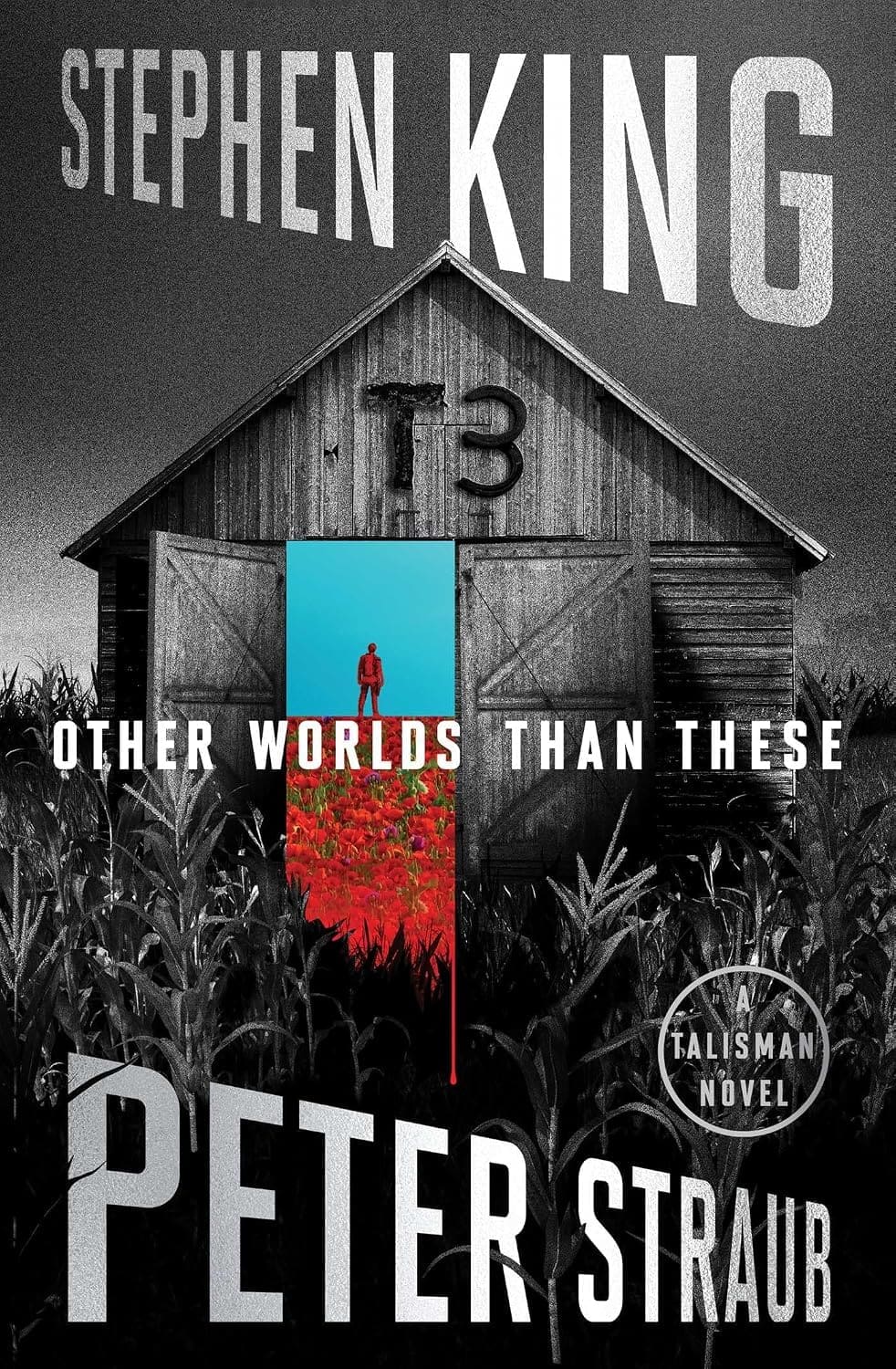
“Constant Readers Rejoice!” (The Baltimore Sun). Jack Sawyer, a beloved and enduring King protagonist, returns in the final book in the Talisman Trilogy, the #1 New York Times bestselling collaboration between “master craftsmen” (The Washington Post) Stephen King and Peter Straub.
“I wanted to go back to Mid-World, which was always the Territories by another name.” —Stephen King
This is Stephen King and Peter Straub’s epic and unforgettable finale to the Talisman Trilogy (including the novels Talisman and Black House) and a wrapping up of the fate of the worlds in King’s iconic, fiercely beloved Dark Tower epic. It is also a magnificent stand-alone novel, that will appeal to new readers, as well as to King’s Constant Readers.
Other Worlds Than These is the story of Jack Sawyer, whom readers first met when he was twelve, crossing America and “the territories” to save his mother’s life, and met again in Black House, where Jack faces a child killer and the Crimson King (among other evils). In Other Worlds Than These, Jack must stop a rampaging gang of infected teenagers from America-side, and the forces of the mysterious Gullet at the edge of Mid-World, before it destroys our world and all worlds. Jack is older now; his Ka-tet (echoing the world of Roland) is fraying; and his task, nearly impossible.
Magnificent, riveting, full of heart and humor, Other Worlds Than These is a spectacular, propulsive adventure that features thirty-six exclusive black-and-white illustrations by artist Gabriel Rodriguez. The title instantly announces to readers who already know these other worlds that King has returned to them. Other Worlds Than These will appeal to new King readers and his Constant Readers.
Review
Time works strangely in Mid-World. It runs funny America-side, too, where it’s been – somehow – 25 years since we last met up with Jack Sawyer in Black House. When that book concluded with Sawyer retreating to Mid-World to save his life after being shot in the heart, the natural question was “when’s book three?” Stephen King and Peter Straub began teasing the grand finale soon after Black House’s publication, anticipating that work would begin around 2005 or so, before pushing plans back to 2010, then postponing further and promising it wouldn’t be too much longer.
We always think there’s going to be more time for us than there ever really is. Unfortunately, time ran out for Straub and he passed away in September 2022. The authors had not begun working on The Talisman 3, but Straub left behind notes and had shared his ideas with King in the intervening years. King, 79, certainly wasn’t getting any younger, and began working on the book that would eventually becoming Other Worlds Than These, the concluding chapter to the Talisman trilogy, based in part on Straub’s ideas, along with plenty of King’s own.
Although it’s been over 40 years since the debut of The Talisman, a length of time those in Mid-World, or what Jack once called The Territories as a kid, would describe with the catch-all term of “delah” and a wave of the hand, it sure doesn’t feel like it to me. I didn’t begin reading King until the 1990s, as a teenager, and although I don’t remember many of the book’s specifics, I do recall reading Black House in my 20s, in the wake of 9/11. Reading Other Worlds Than These, all those decades were washed away. Suddenly, I was back in my teens and 20s, journeying through Mid-World alongside a gunslinger named Roland and his ka-tet, instead of closing in on my 50th. Roland and his companions from The Dark Tower series figure in to Jack Sawyer’s journey here, too, as part of the mythological tapestry of Mid-World. Time has moved past the line of Eld and Gilead. Jack Sawyer’s older, too, in his late 60s. But then and now feel at odds with each other, as if happening at once and twisting back upon one another like a Möbius strip. Or maybe that’s just ka, moving like a wheel, if ya kennit.
Other Worlds Than These made me feel young, although I’m one of the Constant Readers King talks about in his afterword, one of the ones who started reading him as a kid but are now “getting gray.” That it’s easily one of King’s best books in a long while, and certainly far better than last year’s Never Flinch, a low bar to clear to be sure, helps ease me back into those earlier years. I think a lot of those years slipped away for King, too, and his writing here reminds me more of a younger man putting the finishing touches on his Dark Tower opus.
Which all makes a sort of sense, I suppose, given that Other Worlds Than These is all about echoes, with its themes of time’s circularity, history repeating itself, reincarnation, all that jazz. Mid-World has moved well beyond Roland (although there’s a nice statue in his honor), but a new danger has awoken in the form of what’s basically a big ol’ supernatural sinkhole that some refer to as The Gulch or The Gash, and it promises to bring Discordia once again. In his travels to investigate The Gulch, Jack is forced to return to America-side, where he learns of a pair of red-headed youths wreaking havoc upon the Midwest with a spate of thrill kills that mirror the grisly work of Charles Starkweather. The two evils are connected, of course, and soon the threat of a red-haired cult of murderous children sweeps through Mid-World, creating a deadly portent for what’s to come of Jack’s world if he fails to seal The Gulch and stop all these goddamned gingers from destroying the world, and all worlds with it.
Although Other Worlds Than These reminded me a lot of King’s earlier works, it’s also informed by a lot of King’s own experiences. This is not a young man’s book. Almost right from the get-go there’s a sense of loss that permeates the entire narrative. Jack is older and scarred, and haunted. There are ghosts everywhere, from the sweeping passage of time’s hand as he’s forced to recall his exploits as a child in Mid-World and the ruins that have become of places he once knew, to the bitter losses of friends, family, and home. Even Straub’s name on the cover, put there rightfully, mind you, is a reminder of loss. King said he tried his best to channel Straub throughout the book, and one can’t help but imagine his co-writer and friend looking over King’s shoulder the way Jack’s own ghosts sometimes do. I don’t know how many more books King has left in him (another Holly Gibney book is due out next year, and he’s apparently working on another title set in 1968), but if this is one of his last, and I certainly hope it isn’t, it’s a high note to end on with King, as he puts it, “tidying up.”
Other Worlds Than These isn’t perfect, of course, but for my money it gets awfully close. I didn’t quite buy into the “contagion” inflicting Mid-World’s teens and compelling them to murder. You can probably look at the intent a few ways, whether it’s an attempt by King to say something about teens seeking to carve out their own identities through idolization of counter-culture radicals, the evils of malicious influencers, or the destruction of worlds by red-topped cultists in deference to a cult leader a la MAGA, it ultimately feels a bit too flimsy of a plot point. The idea is certainly neat enough, but it’s a shoddy rough patch of magical handwaving over the story rather than something that’s been deeply thought through to withstand scrutiny. I suspect, too, that readers who complain about King’s unsatisfactory endings will find this book’s climax dissatisfying, too. It’s grown on me in the week-plus since I finished reading and writing this review, but I still wouldn’t have minded a few extra pages myself, if only just to spend a bit more time in Mid-World.
While there’s a few nits I can pick, I can also easily overlook them for simply how good Other Worlds Than These made me feel, even when it pushed me damn close to tears towards the end (I’m usually indifferent to violence inflicted upon animals in fiction, but I’ll be goddamned if it doesn’t break my heart to see a billybumbler get hurt), and how damn satisfying this experience felt the whole way through. Entire decades fell away from me. Hell, damn near the entire world fell away from me, I was so engrossed in reading and picking up on the echoes and Easter Eggs King laid for his Constant Readers. I dug the hell out of the Mad Max vibes, and King’s extended riff on one of his favorite films, William Friedkin’s under-appreciated Sorcerer (itself a remake of a French film, The Wages of Fear), which carries the book through its conclusion. Mostly, I was just glad to be back in Mid-World one last time, reconnecting with and remembering old, lost friends, while King closed the loop (if it ever truly closes) on some long-standing business between both the Talisman and The Dark Tower books. Now I find myself in the uncomfortable position of wanting to re-read these sprawling tomes all over again, and putting on my copy of Sorcerer, and trying to find the time to juggle it all… But there’ll be time for all that later… right?


Leave a Reply