
“It feels a lot like empty spectacle.”
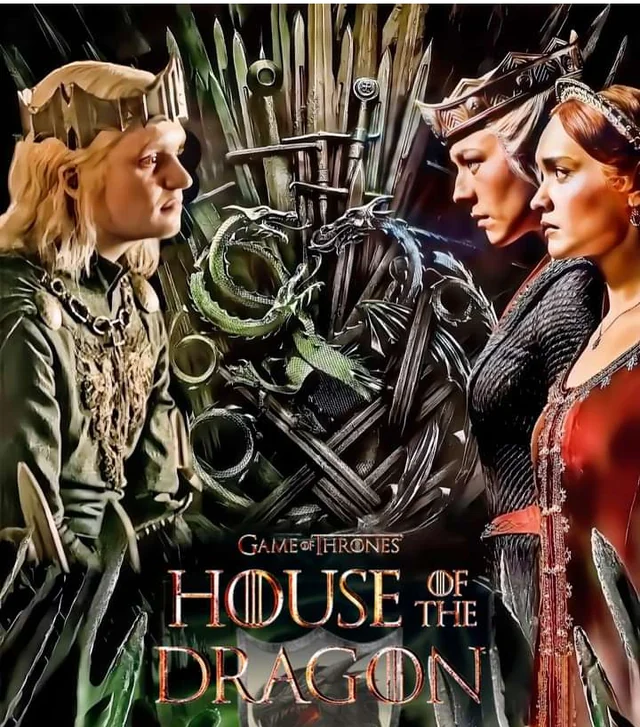
House of the Dragon Season Three was a controversial subject among Game of Thrones and A Song of Ice and Fire fans even before it was released because George R.R. Martin wrote a blog post criticizing the changes that showrunner Ryan Condall made to the story described in Fire and Blood. George has since taken down that post but nothing is ever forgotten on the internet.
House of the Dragon’s premise, for those unfamiliar, is that it is a prequel to Game of Thrones set two hundred years before the events of Game of Thrones. House Targaryen splits in half over a succession dispute loosely based on the Anarchy where Empress Matilda fought against King Stephen for rulership of England with the addition of dragons.
Season Three picks up with Rhaenyra launching an invasion of King’s Landing from the sea and air simultaneously in the Battle of the Gullet that was supposed to be the climax for Season Two. These are some of the best episodes of the series and probably would have made the somewhat underwhelming action of the second season far better. There’s plenty of deaths and character development as Rhaenyra gets to learn the eternal mainstay, “be careful what you wish for.”
House of the Dragon Season Threes best bits are those that deal with Rhaenyra becoming aware that while she felt entitled to ruling Westeros, she’s not actually that interested in ruling nor very good at it. Daenerys and Jon both show a willingness to cut through the red tape of bureaucracy that Rhaenyra is unsteady about. She’s neither ruthless enough nor compassionate enough to really win over any faction and vacillates between them all.
Rivals Aegon the Second and Aemond also go through their own character arcs at this juncture. Aegon is forced to confront the fact he’s not just a terrible king but a terrible person. Aemond, unfortunately, has his mommy issues become full-blown incestual feelings that the show seems far too interested in exploring. Still, they emerge stronger while Rhaenyra proves to be weakening in her moral fiber.
The series has several minor antagonists who get disposed of or overhyped while its main cast undergoes its journeys as well. Ser Criston Cole, after having been wasted by season two, gets a short time to shine as he’s become both suicidal as well as driven by disgust to his former employers. We also get introduced to Lord Ormund Hightower, who apparently has no loyalty to Aegon or Aemond and wants to do nothing so much as replace them with his own puppet in Daeron Targaryen.
The acting is pretty good this time around and the series has a lot more forward momentum than season two. However, I strongly object to some of the changes that were made. Ryan Condall replaced Nettles from Fire and Blood with Daemon Targaryen’s daughter Rhaena. Not only does it remove one of the few commoner experiences in the entire saga, but Rhaena just spends the entire season traumatized and not using her massive dragon to affect events.
Overall, House of the Dragon Season Three does a fair job with the asisgnment of adapting Fire and Blood. Still, the immense amount of compression is noticeable at every point and the fact this series is only eight episodes per season now severely hurts the narrative. We don’t have time for the kind of character building and development that made Game of Thrones so great. Which is a shame because I think I’d have liked this series a lot more with ten or twelve episodes per season. As is, it feels a lot like empty spectacle. Pretty spectacle, but empty spectacle.


Leave a Reply