
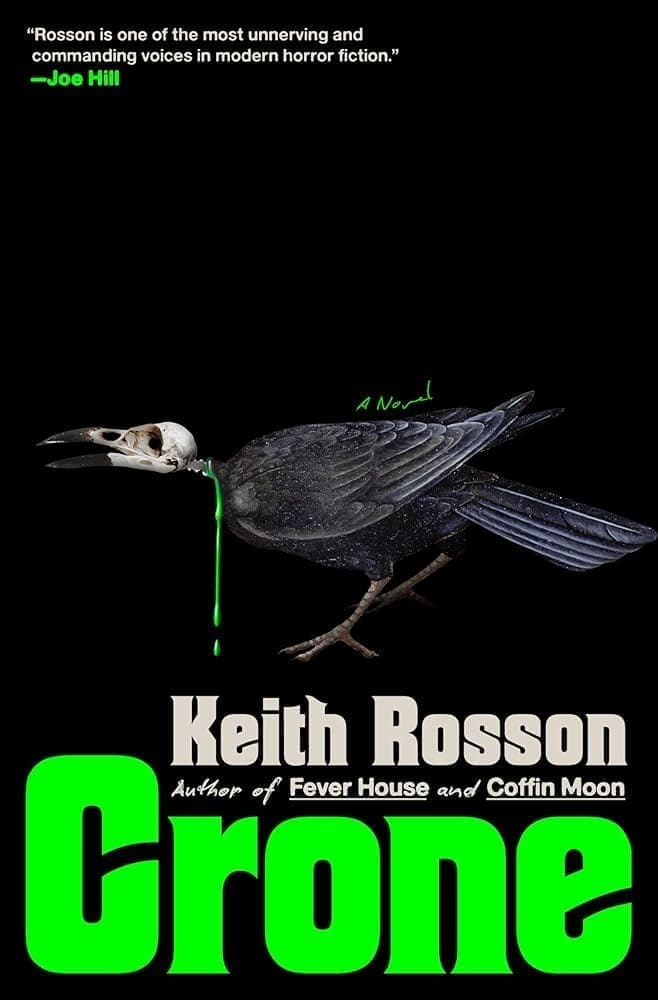


Summary:
Eli Lamp is a broken man. An ex-detective, ex-addict, and long-grieving father whose daughter, Hannah, disappeared a decade before, Eli decimated his old life investigating her abduction and is now indebted to the Crooked Wheel, a local drug gang, as an enforcer. He lives in a rundown trailer at the edge of the woods, where he keeps Hannah’s room in pristine condition and tries to make it through one day at a time.
But when the son of the Crooked Wheel’s boss is found viciously murdered in a crime scene that doesn’t seem to add up, Eli receives a new order: Find out who the killer is and your debt to the Crooked Wheel is clear forever. You’re free. This pursuit brings him into the orbit of Avery Bryant, Hannah’s best friend and the last person to see her before she went missing. Soon, Eli and Avery are entwined in a hunt for answers that spans decades, stretches the realm of possibility, and brings churning to the surface a conspiracy linking not only these current tragedies but the buried sorrows of Eli’s past.
And though none of them dare say the word witch, at least not out loud, something lurks in the woods, bent-backed and black-eyed, clawed and vengeful, looming ever closer. . . .
Review:
Crone introduces us to Eli Lamp, a former cop and drug addict who is now a lackey for a local biker gang. Thirteen years before, Eli’s daughter climbed into a van and was never seen again, and this event has shaped Eli’s life ever since. He wants answers, but more than that, he wants revenge. So far, neither has been forthcoming. When Abby Bryant, his daughter’s best friend, rolls back into town, a series of events leads to an endless dominoing of bad turns, finding Eli on the hunt for his final revenge and Abby deep in a strange world of elemental magic. Oh, and more revenge.
I look forward to a new Keith Rosson novel like it’s my birthday, and there’s a lot to celebrate about Crone.
Rosson continues to build out his extended universe as a nightmare Pacific Northwest of biker gangs and people forever on the edge. This paranormal noir universe feels like a known place now, and it’s clearly a fruitful sandbox within which Rosson can play out these dark dramas.
Not content with playing around with traditional horror tropes (zombies, vampires, witches), Rosson is also getting more playful with his world-building, inventing the fictional drug, “wire,” and turning it loose within his story. On the one hand, wire could be any drug, but the descriptions of users pushing hanks of crystal-razored wire under their finger and toenails is both stomach-churning and almost Cronenbergian in its horror.
The horror-noir of Crone delivers on both genre’s expectations. The characters here are pitch black, with just the smallest glimmer of light buried down under decades worth of guilt and resentments. And they’re are all trapped within a world of crime and violence too deep to ever hope to really get out. Oh, and there’s also a horrifying crone-thing that will rip people in half with its bare hands. Crone contains scenes of violence that are downright lyrical, all with enough blood to fill seven books.
But it’s Rossen’s character work that continues to carry the day. He manages to make Eli Lamp—an absolute piece of wet dogshit—into a character who is not only compelling but sympathetic. Eli doesn’t really grow or change over the course of the novel. What growth he might have experienced happened earlier, before the story’s opening, but we watch him suffer like some kind of martyred saint, and like the story of some martyred saint, there’s something moving about the shape of his pain.
Abby Bryant is a little less well-drawn, and maybe that’s because her traumas are a little less obvious. But she also points to a larger question about the novel as a whole. For a book that is essentially a gritty, blood-soaked “Good for her,” extravaganza in which a vengeful witch tears through a couple of biker gangs and one sheriff’s station worth of bad dudes, it feels weird to have Eli as our main entry into the book. Which is just another way of saying that Crone walks a thin line between holding up a mirror to a particular type of violent masculinity and reveling in it.
It needn’t be that way. Abby’s point of view gives the reader a much clearer view of this warped world of chest-pounding “alpha” sociopaths. For her it is utter terror, and it follows her—literally—everywhere she goes.
Rosson’s take on the vampire in his excellent Coffin Moon is mostly familiar, but with a kind of quiet feral quality that feels new and exciting. These monsters might be viking warriors or they might be a house full of pale children. Either way, they all seem to exist both right in the center of everyday life and just outside of view.
The crone, however, is more singular. She is a monster. She may be a kind of mother-monster, but we see very little of the human in the witch. And maybe there’s something to that. Maybe the soul-squandering nature of revenge is what the book is really all about, and maybe Eli Lamp and the Crone are just two different versions of the same song, but I truly wish that there was something more to this potentially rich figure.
Those concerns aside, if you love Rosson’s earlier work, there’s plenty more to love in Crone. Because Keith Rossen knows how to show you a good time while having a very, very bad time.




Leave a Reply