


Synopsis
A new world is emerging, one parthenogenetic birth at a time.
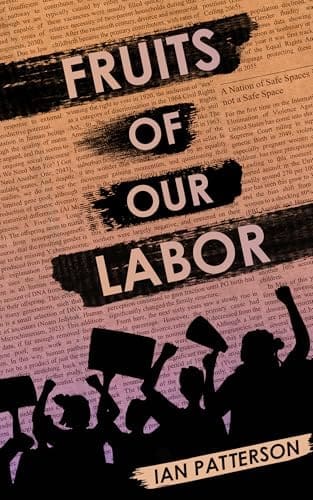
In a near-future America where women have just achieved asexual reproduction, Samara yearns for freedom from her dying relationship, and a child of her own—fully her own.
As parthenogenetic birth takes hold and the role of men in the survival of the species diminishes, protest and outcry sweep across the nation. Sierra, one of the first “partho babies”, is bullied relentlessly as she grows up and seeks her place in this new pressure cooker of changing gender roles and norms.
And in the aftermath of the “Days of Horror”, a period of violent backlash from displaced men, a professor of history looks back on the rise of PG birth in an attempt to understand the impact of this era of upheaval on the world.
Together, these three converging perspectives tell the story of a profound societal transformation that asks who gets to have autonomy, who gets to write the future, and who that future is for.
Review
Fruits of Our Labor opens with a striking premise. In the near future, women discover a way to have children without needing men. From that single change, Ian Patterson builds a speculative exploration of sexism and of the roles that women, men, and families play in society. What happens to a society when men are no longer required to continue the species? The book sits with that question and invites readers to consider who they are as a man, a woman, or otherwise, and where they fit in the world around them.
Ideas take center stage here. The scientific “how” questions are waved away, leaving room for the questions the story most wants readers to ponder. Situations are wrapped up neatly throughout the book, each one placed to bring these conversations to the forefront. A few moments read as blunt as a result, and they are easy to forgive, since the book accomplishes everything it sets out to do.
The prose is well written and thoughtful. Descriptions of the physical world are sparse, and the writing spends its energy on a roomy, in-depth space where ideas can grow and be debated. The whole book reads like a blend of philosophy and history. It pulls from our own past, adds a biological curveball, and speculates on where that recipe might lead.
The structure adds a great deal. The story follows three timelines of the same family, showing the generational effect of the inciting incident. Patterson also works hard to represent as many opinions as possible on a complicated subject. While some portrayals are almost comically stereotypical, they each serve a point the story wants to make.
Fruits of Our Labor invites readers to examine themselves, and it offers a different experience from the escapism common in fantasy and science fiction. Lovers of philosophy, history, and anthropology, along with students of culture, will find a lot to chew on here. It is a very good book, and it gives you plenty to think about long after the last page.


Leave a Reply