

Rae Wilde (she/her) is a queer woman and author of dark fiction who has also published under the pen name Rae Knowles. She is the author of I Do Not Apologize for My Position on Men, Happily Ever After the Murders, The Stradivarius, Merciless Waters, and I Can Fix Her, among other works. Rae is represented by Carleen Geisler at Britt Seiss Creative.
We caught up with Rae to chat about her latest novel, Happily Ever After the Murders, coming Nov 3 from Legacy Lit, and discuss the incredible story of the relatives this story was (kind of) inspired by, why her version of a fun getaway romp adventure might not be the same as yours, why she’s interested in “unlikeable” damaged characters, how far she’d get if she went on the run herself, and much, much, more.
Your latest novel, Happily Ever After the Murders, gloriously described as The Golden Girls meets Bonnie and Clyde and Thelma and Louise, is another wonderful book that I feel only you could have written: a larger than life, witty story yet one grounded in unapologetic violence, a deep sense of rage, injustice, heartbreak, pain, a sense of fuck that—but contrasted with moments of unexpected beauty and pure, unqualified love. Can you briefly summarize the basic plot for us?
Of course! Our story picks up with Ida and Jean having gotten away with the murders of their late husbands for forty years. Although they’ve never come out of the closet for fear of the backlash from family and friends, they’ve lived a relatively quiet life in their HOA community and have enjoyed their love story in private. Life seems to be winding down for the pair as they plan a Christmas visit from their grown children and Jean grapples with her health—until the electrical lines in the yard need replacing. Ida and Jean know that digging up the yard will uncover the bodies of their late husbands, and after a series of attempts to divert the digging fail spectacularly, the couple sets out on the run with their cat in an attempt to evade law enforcement and get away with their crimes. On the road, Ida and Jean must confront the secrets of their lives: not only the murders, but also their forbidden love story and how each has driven wedges between themselves and the outside world.
There’s a long, sad, sometimes heroic history of queer couples who’ve had to live their love lives in private, both famous historical examples, and millions of ordinary people. What made you decide to write about this topic, and what gave you the idea to base yours around an elderly husband-killing queer couple who decide to go on the run? Apart from it being the most Rae Wilde story ever, obviously.
Haha! It is possibly the MOST Rae Wilde story ever. My writing mentor says I have to stop killing men with shovels in my books, but I disagree. This story was inspired by my late grandmother, Minnie and her life partner, Ev. While I only knew Minnie briefly at the end of her life, I grew up listening to my dad’s stories about his mother who he lovingly described as “a chain-smoking rage-a-holic”.
He had an unorthodox childhood, being a decade younger than his two other siblings. My dad was born after Minnie and her husband had already divorced and remarried. By the time he was aware of his surroundings, Minnie and her husband were already separated and in the process of their second divorce. It was around then that her husband, my grandfather, died unexpectedly. He was in his 40s at the time. Minnie and my dad then moved into an apartment over her best friend Ev’s garage. Ev’s husband also died young and unexpectedly around this time.
When the city came to tear the apartment down because it wasn’t permitted, Minnie asked, “Isn’t there some way we can work this out?” She was notorious for trying to bribe people, although it never worked. For a time, she ran a 24-hour diner. She and Ev also drove around with a shovel in the trunk. If they saw landscaping they liked, they would pull over, dig it up, and bring it home to plant it in the garden. My dad remembers the two women sitting around, smoking, referring to their late husbands as the dirty bastards. He says, “you would’ve thought dirty bastards was their names”.
Minnie and Ev lived together for the rest of their lives. When they became elderly, they moved into an assisted retirement community and had townhouses next door to one another. They are now buried beside each other in New York. To be honest, I have no idea where my grandfather is buried.
Minnie was iconic. As a queer woman, I felt so inspired by her life, which was incredibly unusual for the time period. I wanted to pay homage to my family’s queer history and fictionalize my wildest imaginings of what Minnie might have been up to.

I was fascinated by the tone of this book. I have to admit, maybe because of the title, the cover, the comparisons, I was expecting a more tongue-in-cheek, crazy getaway fugitive story. Don’t get me wrong it’s incredibly tense at times, and also very funny in moments, but I was really struck by the constant tone of rage and regret and grief and injustice—this is a book laced with the tragedy of a love life forced to be lived in secret, and how this has deeply affected their children, and the anger and regrets it’s sown in them. It’s frankly fucking emotionally grueling on an almost constant basis. Was this an intentional rug pull, or was this just demanded by the characters and the situation?
I think I might be incapable of writing happiness. When I sent this to my agent I described it as “fun” and a “romp”. Sources close to me have since pointed out that it is, in fact, quite emotional.
In all seriousness, I think the characters deserve the gravitas we landed on with their arcs and story. It would’ve been more commercial to lighten the tone. Some inside baseball is that a different editor at a different house was very interested in the story but wanted to do just that. I went back and forth on what direction to take Ida and Jean in edits, but ultimately I think it’s important to honor our queer elders and their struggles with the kind of emotional weight their stories warrant. It’s not easy to be gay in America now, but it was certainly much more difficult in the U.S. in the 1950s. Those challenges had far reaching implications, and it was important to me to really explore how those tendrils of secrecy would impact every facet of life, even into the golden years.
For an author who primarily writes horror, this is my version of a fun, getaway story (said with a wink). Your milage may vary.
Ida is an incredible character, and a very Rae Wilde one, what a trilby-wearing patronising male detective from their youth might have called a real firecracker. She’s stubborn, frequently making their getaway more difficult, constantly boiling over with rage and having to be stopped by the calmer Jean from doing something stupid… but while you don’t skip over her flaws you also make it clear that Jean loves for her it just as much as her strengths—and there’s moments where you realize these supposed flaws can come in damn useful. Why was it important for Ida to be like this?
I pull Ida’s defining character traits directly from the stories about my late grandmother, Minnie. I love writing complicated women—what some people might call “unlikeable” women. For me, it’s hard to love someone without seeing their flaws. That’s how I connect to people and to characters too. For me, when I can understand a person’s hurt and what makes them act out in the ways they do, that is where I find empathy. Love. I can’t relate to Superman. I’ve made too many mistakes, and I think most other people have too. So, I’m not interested in writing simple, uncomplicated characters. Show me all the beautiful damage.
Amongst all the anger and regret there’s some beautiful moments in this book, some significant moments in their relationship which might not have happened had they not gone on the run. This idea of momentary beauty in the face of people’s worse moments is a frequent theme in your books, where does it come from?
Wow, deep question! When I reflect on this, I suppose it is a deep belief of mine that our values and character are revealed in crisis. In my life, I’ve discovered how strong I can be when I was presented with an opportunity to be strong. Same with patience, courage, and integrity. I like to think about who a character is when all the trappings of life are stripped away. What is the core of a relationship when everything is on the line? If those tough moments don’t happen, then we never find out. And I prefer we do.
I’m one of those annoying people constantly looking for patterns between authors’ books, and I notice that your previous novel, the electrically brilliant I Can Fix Her, is about a modern day young queer couple who are terrible together but keep trying, whereas this one is about an elderly queer couple who are perfect for each other. Were you purposefully writing an opposite book here—couple great, it’s life that sucks? Or is that just me, once again…
What a fascinating observation! I will say it wasn’t deliberate, but you do point out a real pattern here. I tend to write something lighter after writing something very dark. I didn’t write this book directly after I Can Fix Her. Believe it or not, I wrote a much darker book in-between. Hopefully you get to read that one someday soon! I find that after being immersed in a brutal world for as long as it takes to write and edit a book, I need to change things up. As I mentioned, this book is my version of “fun”. Granted, it is still not exactly a typical beach read.
I’m really interested by the time period you chose for this book, 1999. At first, I was wondering why they were so concerned about coming out as a queer couple in the modern age. Then it occurred to me that I was doing that classic aging Millennial thing of forgetting that my (very early, ahem) teenage years is no longer the modern age, and compared to where we are now LGBTQ rights wise this may as well have been the 60s. This feels like the tragedy of this book: if they’d been born a little later, then these days they could be out and proud (albeit only in certain parts of America, to be fair). Was making the time period hauntingly close to the cusp of the modern age a purposeful choice?
I set the book in 1999 because if my grandmother and her partner had gone on the run, this is the time period they would have done it in. I have a deep nostalgia for the 90s, as a lot of people do. It seems like such an innocent time, in retrospect, a simpler time. I think there is a misbelief with some portions of the American population (and possibly in the UK too), that the fight for LGBTQ equality is over. In the U.S., often the right to marry is cited as some kind of end of LGBTQ struggles, but as many know, that is far from the truth. I feel it’s important to look at the challenges queer people have faced throughout history. When we do, we see that the attacks waged against our community today are recycled from those used previously, and we can feel inspired by the courage of those who fought for equality before us. To me, there’s merit in showing the challenges of being LGBTQ in every time period. It’s educational as much as it is comforting. We’re not new, and we’re not alone.
Related to the previous question, there’s a real question looming over this novel, which Jean and Ida both confront frequently: would life have been so bad if they had come out? Did they have to live their love in private? Did they hurt their children by not being braver? What’s your thoughts on this – or is it meant to be up to the reader to decide?
It’s a great question, and one I earnestly don’t know the answer to. Each reader can decide for themselves whether they think it would’ve been better for Ida and Jean to come out way back when. For me, the question at the heart of the novel is: How will we face our choices when it comes time to pay the cost? Every choice has a cost. I hope when it comes time for me to look back at mine, I can accept what I’ve done and look forward with bravery.
If you went on the run from the police, how far do you think you’d get? I can’t decide if you’d go up in flames after five gun-fire fueled minutes or frustrate the authorities for years with enigmatic Instagram reels
Haha! Oh, as much as I might like to think I could be evasive, I wouldn’t get far. I’m a very picky eater. There’s only a few foods I like, so I’d be easy to track down at a grocery store.
You’ve written a fair few books now, and your career seems to be entering a really interesting, exciting, stage. How do you feel about where you are now at this stage, and how hard has it been to get here?
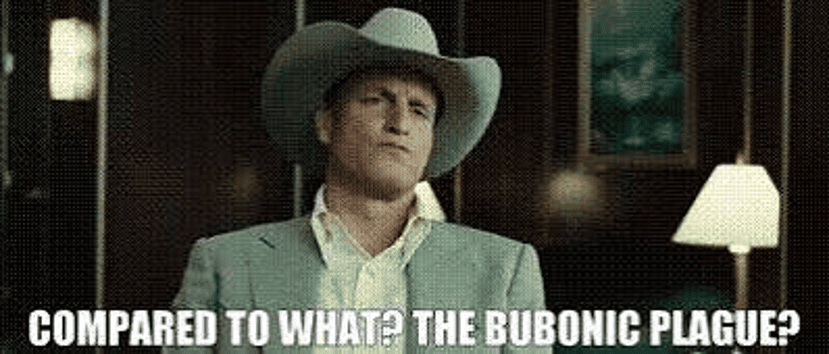
Thank you for saying that! I do feel like I’m at an exciting stage and one I have been working toward for a very long time. The publishing industry requires more patience and persistence than I could’ve imagined. I’ve written nine books now. This will be the fifth one published (if I’m counting right). I have a few amazing irons in the fire, and I should be able to announce my next book pretty soon. To answer your question, how hard has it been, I think about that No Country for Old Men line. Compared to what? The bubonic plague?
If I’m extremely honest, any success I’ve found has been a combination of the following:
- I have a lot of privilege (always important to acknowledge)
- I work extremely hard
- I have made incredible connections in the writing and publishing community
- At times, I have been lucky
You’re probably one of the funniest authors I see on socials, and you’re not afraid to really go for it online (including a cinematically entertaining period of waging war against AI bros) using wit to translate your rage. Does it ever get exhausting, and how do you cope with the perils of public exposure, especially as a queer woman in the age of incels and the manosphere?
I so appreciate that! Being funny is very important to me (LOL). I get extremely exhausted. There are times I will go a month without posting on social media. I just don’t have the energy for it, especially if I am in the middle of a project. I have gotten better about dealing with terrible comments I get online. There are so many bots now, it’s hard to know if they are even real. So, that helps. My best advice for dealing with that kind of thing is just to block and keep it moving. If it’s particularly egregious, make a video about it. Free marketing!
Finally, what can you tell us about the next Rae Wilde project?
The next Rae Wilde project is dark and weird and sexy. I am SOOOO excited to say more. Sadly, I can’t quite yet, but I promise, it is VERY Rae Wilde.
You can pre-order Happily Ever After the Murders here
Find more from Rae at her website and on Instagram and Tiktok


Leave a Reply