
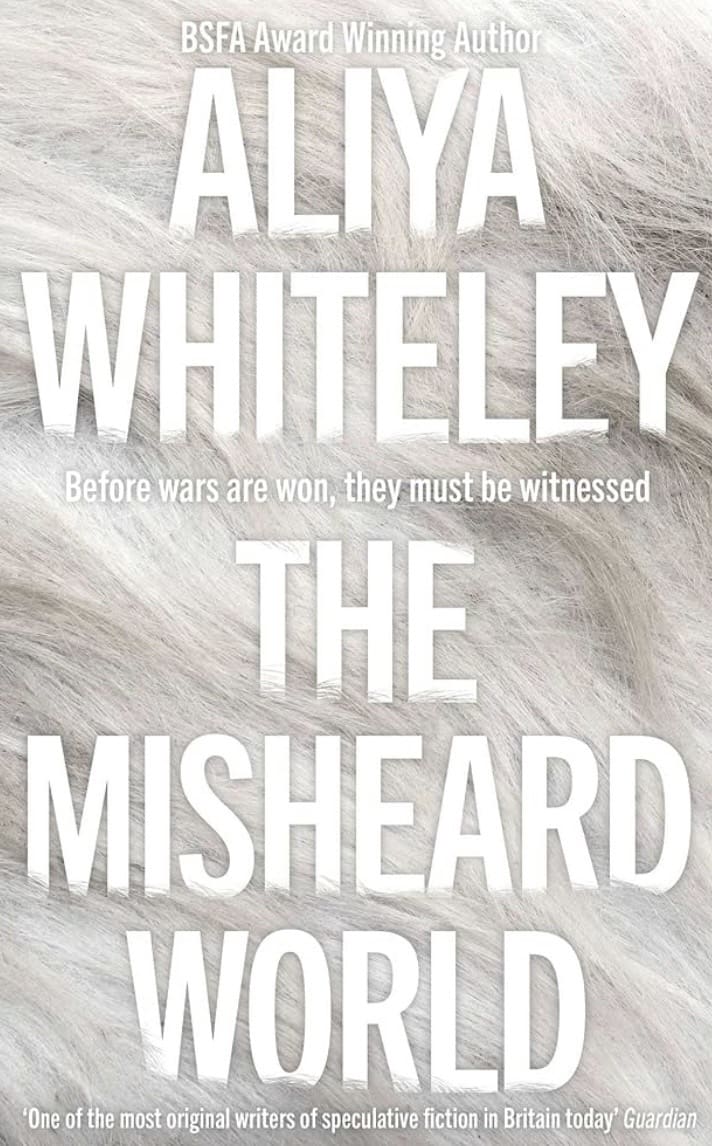




Synopsis
Before wars are won, they must be witnessed.
Elize Janview is a soldier, one of the few survivors of an unimaginably terrible weapon, which ended the long detente between the North and the South and plunged them back into all-out war. She enlisted with a dream of finding those responsible, of somehow getting revenge for the deaths of everyone she knew, but was posted to guard the prison at Crag, the fortress of the South, which has never fallen to the enemy.
Janview’s life is transformed when a rough wooden box is delivered to Crag, holding the performer and spy Marius Mondegreen, agent of the North: the Misheard Word, who can read minds, breathe fire, and make objects appear and disappear. Janview is to witness Mondegreen’s interrogation by his captor, the beautiful and cruel Allynx Syld, who promises the end of the war. As recorder — and by degrees participant — in the interrogation, Janview comes to question everything she knew about the war, and the very world she lives in . . .
Review
The Misheard World is an ode to the power of storytelling, how the things we hear can shape our identities, our loyalties, and our very realities. It’s a stunning work of speculative fiction that left me changed for having experienced it.
If the act of telling stories makes us teachers, then you can’t find a better professor than Aliya Whiteley. She’s written some of the most beautiful, interesting and exquisite speculative fiction, weird and wild, imaginative and illuminating. But this is by far her most accessible book, while also being one of her lengthiest offerings to date.
It all surrounds the repercussions of a conversation between two characters from either side of a long-laboured war. To say anymore than that would be to spoil the surprise and the nuance of the way this story unfolds. Sufficed to say, just as a conversation builds, so too the book grows and expands, shifting in unexpected and mind-altering ways.
Expect changes in perspective and direction, mysteries raised and solved, and an atmosphere about the world that will captivate you (rather appropriately, I might add). Holding it all together are the three participants in this huge conversation: the questioner, the answerer, and the listener.
The book is framed from the viewpoint of the listener, raised as a soldier, she has the most to learn about the reasons for the conflict that has been her life. She’s strong-willed, capable, and intuitive. But most of all, despite the thirst for revenge that burns inside her, she’s a gentle soul embroiled in the needs of a violent world. I loved how her quietness permeated the entire book, how the wildness simmering inside of her patient heart is also acting as an undercurrent that drives the narrative forwards.
Then there’s the illusionist. He’s the one with all the answers, and his intrigue is matched only by his flamboyance. What an enigmatic character! From the moment he becomes the target of interrogation, you can’t look away. His words drip with magic, and the secrets he’s hiding are every bit as fantastic as you hope them to be.
And finally, the questioner. The interrogator. A woman who commands authority and respect, whose fierceness is tempered only by the fur she wears. She’s written with the presence of a predator, and you’re never sure whether she’s about to pounce.
Each character is so strong in their own right, but when they all come together, the story comes alive. It acts as an absolute masterclass in how to create drama from dialogue, how to make a conversation epic, and how to imbue power into words. You don’t know who to trust. You don’t know what games are being played and by whom. And as the answers begin to come, you won’t believe how many layers are peeled back.
The unfolding plot will take you to new places and give you so many things to ponder. It’s a conversation starter, and you’ll find yourself wanting to talk about the themes it raises: the nature of conflict, the consequences of control, the accountability of knowledge, the yearning of discovery, the dynamics of loyalty, and the shifting balance of our relationships with ourselves, each other, and the worlds we build.
The prose is beautiful. The structure is sublime. The world-building is incredible. The craft that has gone into this story is second to none. Aliya Whiteley has always been a master of her own peculiar brand of weird fiction, but this feels like something new, something broader, something with a scope that is altogether more intimate and infinite at the same time.
And as for the ending, well, I’ll leave you to decide on that one.
Let the conversations commence. Let the stories be told. But let them all reflect the achievement that is The Misheard World. Aliya Whiteley strikes again. This is a masterpiece. Yes, I said masterpiece. And no, you have not misheard.

Leave a Reply