



Synopsis
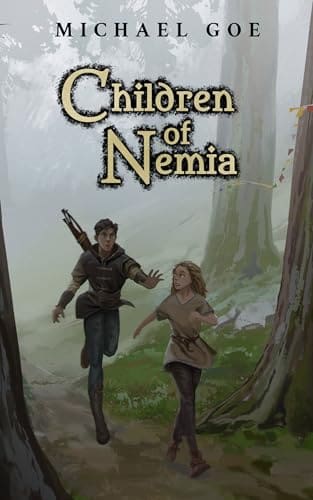
On the eve of Nemia’s Journey of Patronage, fifteen-year-old Van is determined to prove himself by returning home as a blooded member of his tribe–assuming he survives the ordeal. As the chieftain’s son, Van will strive to earn his father’s respect by extending a hand in friendship to Simon, a fast-talking sorcerer from a land across the sea, and Shale, a mysterious visitor dubbed a dread omen by the tribe’s shamans.
What begins as a simple act of generosity blossoms into a connection that will shape Van’s future and reveal dangerous secrets about what he was raised to believe. With help from his new friends, Van will seek the truth behind his ancestors’ ancient conspiracy and the present-day schemes of the four tribes, all while privately healing from the heartbreak of unexpected first love. Together, can they save Nemia? Is the cost of salvation worth paying?
A shadow darkens Nemia on the year of the pilgrimage. Forces conspire to extort the outcome of the once-peaceful Journey of Patronage. Deadly beasts, treachery among the tribes, and a cosmic evil referring to itself only as “Anathema” align to threaten the harmony of Van’s life as he knows it. Or perhaps all of life itself.
Review
I read this book as a judge for FanFiAddict during SPFBO XI. These opinions are entirely my own and don’t necessarily represent the views of the rest of the team.
Children of Nemia is a coming-of-age fantasy that wears its heart on its sleeve. Centered on fifteen-year-old Van and his first steps into adulthood, the novel blends tribal tradition, mythic danger, and quiet emotional growth into a story about choosing hope, even when the world feels poised to fall apart. Van’s desire to return from Nemia’s Journey of Patronage as a blooded member of his tribe—and, more importantly, with his father’s respect—grounds the story in a very human motivation that will feel familiar to many readers.
The opening portion of the novel is largely dedicated to setup, introducing the characters, cultures, and belief systems that shape Nemia. While this early section moves at a measured pace and can feel dense with worldbuilding, it clearly reflects the care Goe has put into constructing his setting. As the story progresses, the plot begins to sharpen, shifting from broad exposition to stakes that feel both deeply personal and impressively large in scope. When the narrative leans into its mysteries—ancient conspiracies, tribal politics, and the looming threat of Anathema—it becomes much easier to see where everything is heading and why it matters.
The supporting cast is a particular strength. Simon of the Mists and Shale are engaging, memorable companions whose presence adds energy and contrast to Van’s more reserved perspective. Their outsider viewpoints naturally invite explanations of the world, sometimes a bit directly, but they also help make Nemia feel accessible and lived-in. Van himself fits comfortably into the tradition of YA coming-of-age protagonists: thoughtful, uncertain, and still discovering who he wants to be. While his motivations aren’t always fully clear, he serves as an effective emotional anchor for the story, especially as he grapples with loss, loyalty, and first love.
Worldbuilding is another highlight. The tribes, nations, and magical elements are easy to follow, and there’s a sense of genuine enthusiasm behind their creation. The setting feels a bit like a lovingly crafted tabletop campaign—rich with ideas, cultures, and mythic flavor—and that sense of fun and creativity comes through on the page. While not every element is explored in depth, the variety adds texture and invites curiosity about what lies beyond the edges of the story.
The prose is serviceable and clear, if occasionally uneven, and the pacing tends to linger on quieter moments while rushing past some major events. Still, the novel’s sincerity carries it forward. There’s an earnestness to Children of Nemia that makes its themes of forgiveness, self-discovery, and choosing hope resonate, even when the execution isn’t perfect.
Overall, Children of Nemia is an enjoyable and heartfelt read, particularly for fans of YA and coming-of-age fantasy. Despite some pacing and clarity issues, it offers an imaginative world, engaging side characters, and a story driven by emotional growth. It’s a book that feels written with love—and for readers who enjoy watching young heroes find their place in a complicated world, that love makes all the difference.

Leave a Reply