
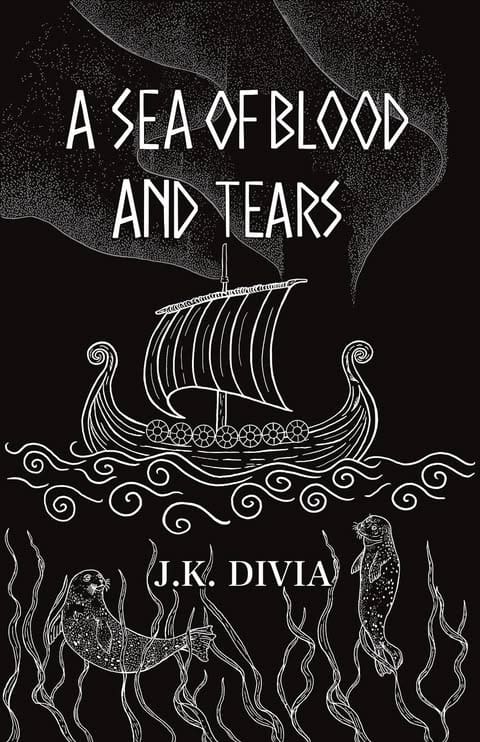



Synopsis
Ionna is a selkie torn between sea and shore. She has waited years for the chance to find the son stolen by the mysterious woods on her island.
When Viking raiders threaten her village, she must choose between returning to the sea, saving one of her children, or risking everything to protect them all.
Forced into an uneasy alliance with a Viking berserker, Ionna races to escape a ruthless warlord who needs one of her children to reshape the world to his vision and discovers that survival may demand more than sacrifice, but trust.
Review
I read this book as a judge for FanFiAddict during SPFBO XI. These opinions are entirely my own and don’t necessarily represent the views of the rest of the team.
A Sea of Blood and Tears is a striking blend of folklore, myth, and deeply personal stakes. From the very first pages, J.K. Divia makes it clear what this story is about: a mother caught between worlds, forced to choose how far she is willing to go to protect her children. Ionna, a selkie torn between sea and shore, is immediately compelling, and her long wait to reclaim the son stolen by the island’s mysterious woods gives the novel a sense of aching urgency right from the start.
The plot wastes no time establishing its central conflict, which is refreshing. Viking raiders, ancient magic, and a looming warlord with world-altering ambitions quickly collide, creating a story steeped in old-world folklore and mythological strangeness. The narrative asks the reader to lean into the weirder, more symbolic side of storytelling, but for those willing to do so, the payoff is rich. Beneath the fantastical elements lies a grounded emotional core: a woman determined to protect her children and a warrior wrestling with guilt and the scars of past violence. That balance between mythic scope and intimate emotion is one of the book’s greatest strengths, and at times it recalls the emotional weight found in works like The Sword of Kaigen.
The characters are another highlight. Ionna stands out immediately as a layered and memorable protagonist, driven by love, loss, and impossible choices. Many of the supporting characters are similarly well developed, with complex backstories that make their motivations feel authentic and earned. Even when alliances are uneasy, particularly between Ionna and the Viking berserker, the emotional tension feels real and purposeful, reinforcing the novel’s theme that survival often requires trust as much as sacrifice.
Divia’s worldbuilding is conveyed with impressive clarity. By the end of the first chapter, the reader has a strong sense of the setting, the rules of the world, and the mythological influences at play. The Old Norse folklore woven throughout the story is rich and evocative, lending the novel a timeless, almost mythic quality that suits its themes beautifully.
The prose is immediately engaging and shows clear talent, especially in its ability to establish mood and atmosphere. While there are some rough edges—particularly a reliance on repetition for emphasis, heavy use of first-person internal narration, and extended time spent inside the characters’ thoughts—the strength of the voice and vision shines through. Importantly, the pacing remains strong, moving quickly without skipping over moments that matter.
Overall, A Sea of Blood and Tears is an ambitious and emotionally driven fantasy rooted in folklore and myth. Despite some noticeable prose issues, it is a compelling and imaginative story, anchored by a powerful protagonist and a deeply human core. The opening is especially strong, and while the ending stays true to the spirit of its folkloric roots, the journey itself is what lingers. For readers drawn to myth-inspired fantasy, morally complex characters, and stories about love, loss, and survival, this is a book well worth exploring.

Leave a Reply