
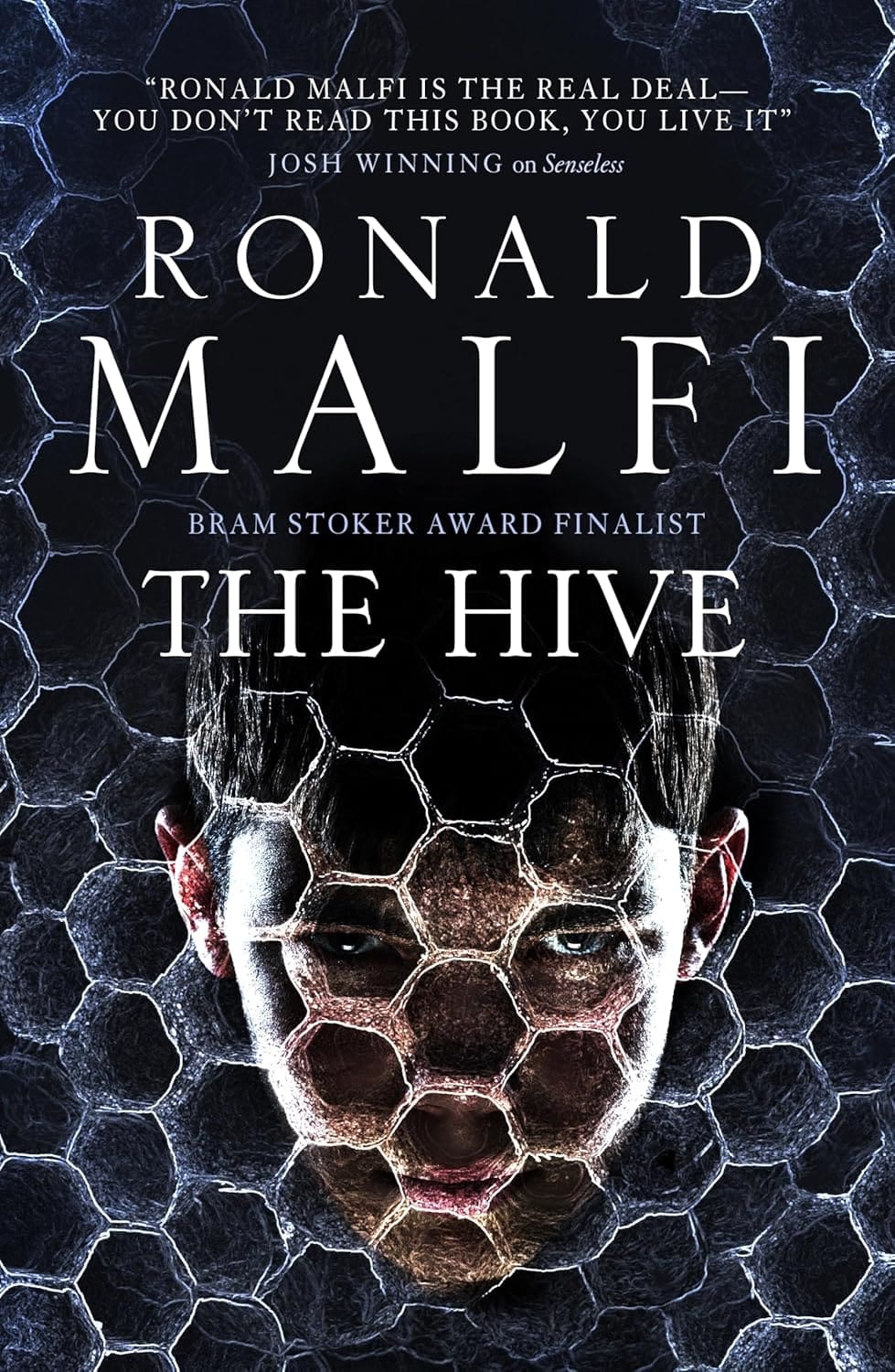






Synopsis:
The residents of Mariner’s Cove are changing…
In the aftermath of a violent storm, a collective obsession is rapidly developing among the people of this quaint suburban neighborhood. Random, everyday items left scattered upon the lawns, the streets, and the shoreline all seem to call out to them. There is an item for almost everyone, and each item has a certain hold over the person who finds it—a hold that soon turns into unwavering infatuation. They hide their items from each other, obsess over them, and they will do anything—anything—to protect them.
The collective hum of bees’ wings…
A young boy finds himself the possessor of a strange and inexplicable power. Is the arrival of this power linked to the increasingly odd and dangerous behavior of the residents of Mariner’s Cove? Has he been granted this power in order to thwart whatever is about to happen in this small, bayside community, or is there a more sinister purpose?
All hail the Dragon…
All eyes are on him now.
The residents of Mariner’s Cove are watching.
They move as one, like a solitary organism, and will do anything to succeed in their single-minded purpose.
They will not be stopped.
Review:
Malfi’s “The Hive,” crackles with an electrical dread- it will make your ears ring and your molars ache and imprint strange symbols on the insides of your eyelids. Doors, chairs, dragons, metal spiders and conceptual gnomes, Malfi’s latest is a gloriously massive descent into something buzzing and insistently sinister. This novel manages to capture that particular brand of sprawling, ambitious horror that is rarely found outside of a dog-eared 80s paperback. There’s an almost forgotten one called “Greely’s Cove,” by John Gideon that springs to mind, plus Peter Straub’s Blue Rose trilogy, Dean Koontz’s “Night Chills,” and King’s “Needful Things.” This doorstop, which can be used too as a dumbbell at your convenience, is really a sprint disguised as a marathon though- propelled by our need to know what the hell is going on in Mariner’s Cove. This bad boy is out April 14th from Titan, and, just to warn you, is so heavy it necessitated the deployment of my bed-desk, lap-table thing.
We begin with a dark and stormy night, and that is where things start to go wrong for the coastal town of Mariner’s Cove. A door is discovered wedged upright in the sandbar, and a retired heart surgeon finds himself obsessed with it. A colander washes up on shore and a little girl insists it’s a helmet. Strange markings are chalked onto pavements, and then spray-painted. Some of the residents in Mariner’s Cove are acting very erratically indeed, and the town, completely out of tune with itself, is all but helpless. Except- Cory McBride, our Danny Torrance, Matilda Wormwood-esque protagonist, who has found himself with some incredible powers and the same inclination as us: that something is very wrong.
“The Hive,” boasts a cast that could be fairly described as absolutely gargantuan. It’s the sort of size that normally makes for a rather difficult first 100 pages or so, but pretty inexplicably, this novel has a strange clarity to it from the very beginning. Perhaps it helps that everyone is rather wrapped up with their own lives and obsessions before orbits collide. The other concern that turned out to be completely non-existent is development- nobody is really short-changed. My favourite of course would be Cory who reminded me very much of Henry Thorne from Philip Fracassi’s “A Child Alone With Strangers,” but I also found Michael Danver and Brian to be perspectives I looked forward to.
Those afflicted in Mariner’s Cove suffer with obsession and addiction, to some pretty random objects to be fair- coat hangers being an example. It sounds faintly ridiculous, especially when crudely summarised here, but it curdles into something deeply unsettling when Malfi writes it- dammit. “The Hive,” does involve bees and various, just delightful passages about stingers and green entrails and stuff, but the novel more examines the idea of the “hive mind.” The dissolution of self is one of my most reliable pressure points in horror, and I found it all to be very insidious indeed. There are parts of it that read like a cult horror novel, others that read like a possession story and that distinction grows to feel almost irrelevant as surrender and control are smooshed into one. It’s a persistently unnerving aspect of the story that had me biting my nails between furious page turns.
That high-pitched, dual-toned, dizzying ringing in my brain has only just subsided. I am thoroughly rattled, thoroughly nostalgic- and thoroughly impressed. Big books for the win- peace.

Leave a Reply