
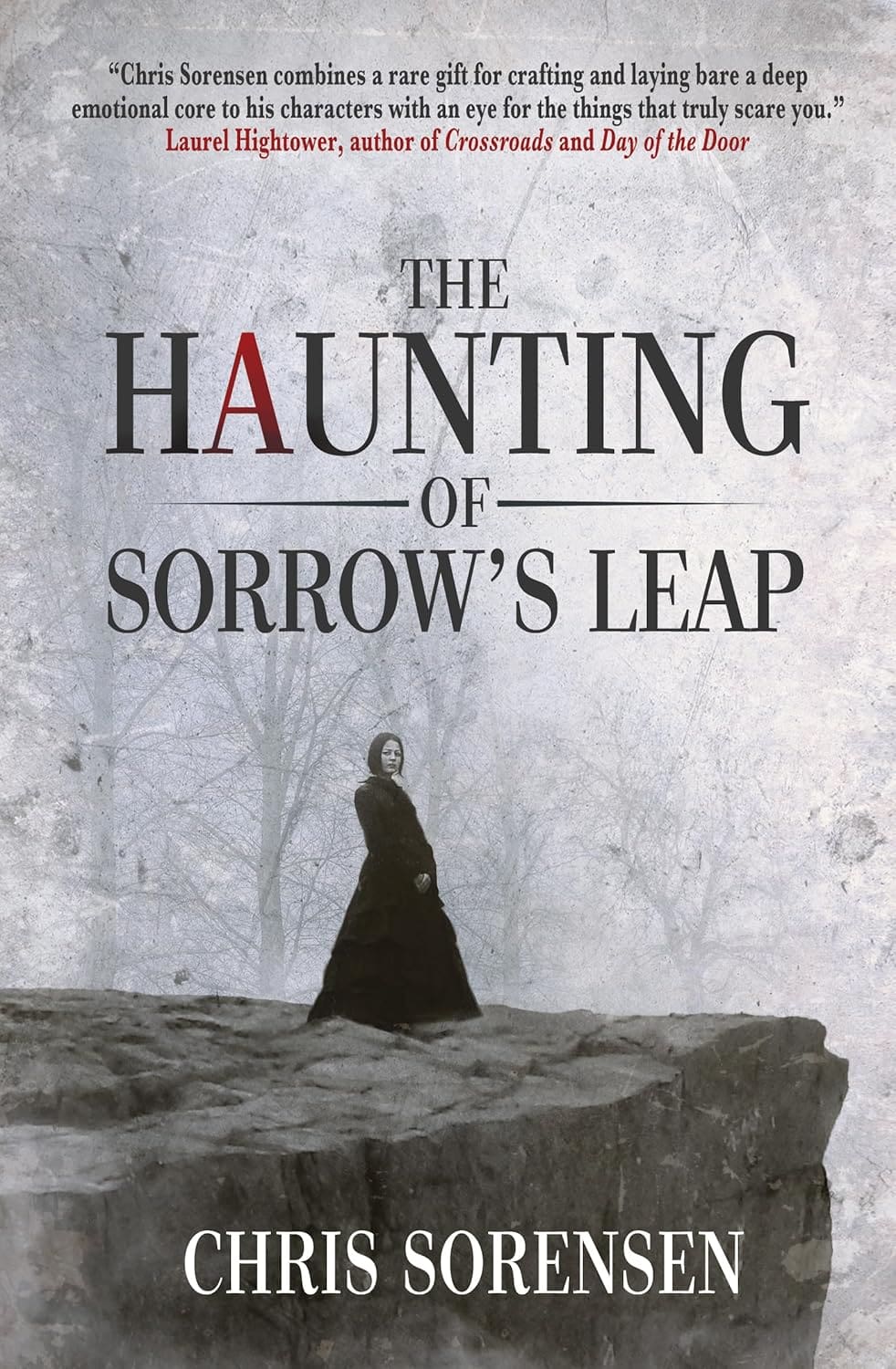



Synopsis
Ellen Marx used to talk to the dead. Now they’re ghosting her…
With her psychic gifts on the fritz, she’s been demoted to hawking discount crystals at third-rate paranormal conventions. But when she inadvertently solves a supernatural challenge at New Jersey’s Hooky Spooky Convention, she catches the eye of the event’s reclusive sponsor: a washed-up horror author with a haunted mansion in need of a serious cleansing.
Reluctantly, Ellen joins his ragtag crew of psychic misfits (a near-death survivor, a paranormal tech bro, and a woman who may or may not be possessed) to investigate the mystery lurking inside his crumbling Hudson Valley estate.
But as the haunting escalates, Ellen realizes that to uncover the truth behind the manifestation, she must first confront some ghosts of her own…
From the bestselling author of The Nightmare Room comes a darkly humorous journey into a haunted heart.
Review
“Whatever happened to simple hauntings?” one character asks late in The Haunting of Sorrow’s Leap. It’s a fair question, and one readers might find themselves asking too, as author Chris Sorensen twists the usual gothic ghost story and its central figures into irregular configurations. Not that Sorensen has exactly offered up anything in the way of simple hauntings before…
Ailing author James Utter has gathered together a misfit group of individuals with unique powers – we’ve got a psychic whose talents failed her the day her mother died, a reality TV guy who communes with the dead, a colorful lady with an intriguing case of multiple personalities, and another who briefly died as a child. Utter has brought them into his manse to corral and put an end to the dreadful spirit, The Dark Lady, who has brought utter hell to Utter Hall.
What at first feels like a far less-rapey retread of Richard Matheson’s Hell House soon goes into some unexpected directions as Sorensen finds himself back on familiar haunted grounds after writing a pair of fun, gory, B-movie-inspired creature features to follow-up The Messy Man trilogy. Sorrow’s Leap has a nifty hook that fans of those Messy Man books will appreciate – I sure did – but his attempts at filtering the darker elements of a serious-minded ghost story through the fun-loving mood of his much lighter Bee Tornado or Suckerville books make for uneasy bedfellows.
Our central tour guide through Utter Hall is the traumatized Ellen Marx, whom Sorensen puts readers directly in the shoes of with his first-person narration. While we’re mucking about in her head and dealing with insecurity and anger management issues, we get to learn about her strained, oftentimes abusive, relationship with her mother, and why her psychic talents failed her in the wake of her mother’s passing – only to reemerge at Utter Hall. Sorrow’s Leap is about facing and dealing with one’s trauma and the risk of letting that trauma consume you, and possibly those around you, with its all-encompassing darkness. Sorensen handles it nicely, but that in itself is the book’s central problem. Sorrow’s Leap is just too damn nice.
While there’s plenty of deep shadows within Utter Hall, Sorensen is careful not to step too closely to those dark corners. Which isn’t to say Sorrow’s Leap refuses to confront those issues, simply that it does so in a half-hearted attempt to keep things playful. Ellen’s background involving her dying, verbally abusive mother hit awfully close to home for me and perhaps clouded my view and expectations of her story. Having had an awful lot of vitriol hurled my way, as well as a number of hollow threats aimed at, and disgusting things said about, my wife and children by my own narcissistic, verbally abusive, dementia-addled, cancer-riddled father on his deathbed, not to mention all the years prior, I find some things are simply unforgivable and inexcusable. Now, I’m not about to get in a pissing match with Ellen about whose parental abuses were worse or who the bigger victim is, but my own inner rage demon was hoping for more of a cathartic victory than what amounted to some spectral gaslighting and victim blaming. I will simply say, instead, that it is not the job of the abused to forgive their abuser or absolve them of their sins in order for the abused to heal. This mindset is absolutely toxic, and I found Ellen’s reconciliations with her past to be not just a disingenuous Hallmark moment but downright ugly despite Sorensen’s efforts to paint it as a victorious and shining moment of Ellen being the bigger person.
I’ve been reading Sorensen since his debut on the indie horror scene back in 2018 with The Nightmare Room. I was such a fan of that book that, when asked by the author, I happily blurbed his second novel, The Hungry Ones. The familial grief at the heart of The Nightmare Room was honest and raw, but never saccharine, and I wish I’d been able to find more here with that same kind of potency. I dig Sorensen’s body of work as a whole, but I bounced hard off the mood generated in Sorrow’s Leap.
With its themes of trauma and grooming, Sorensen’s sprightly tone bellies the seriousness of these issues. He’s too focused on crafting a feel-good beach read populated with kooky characters that his refusal to truly plumb the dark depths of these topics is a disservice to the material itself and the end result lacks an appropriate gravitas. Sorrow’s Leap is too springy and airy for its own good, and the mood it generates is oftentimes at odds with the subject matter its confronting. While I liked Sorensen’s protagonists well-enough and found them charming in their own quirky ways, I never felt like they were in real peril due to both the overall tone of the book and the lack of consequences for either the heroes or villains. With each of their lives in his hands, Sorensen plays it too safe throughout, and I found myself wishing he was more ruthless and willing to raise the stakes in more permanent ways. There are serious issues at the heart of Sorrow’s Leap, but they aren’t handled with the seriousness they deserve.
That’s not to say this book needed to be unremittingly grim. There are ways of telling stories like this, where the darker subjects underpinning the narrative are explored in cozier fashion – TC Parker excels at this in her Hummingbird Universe books – but Sorensen doesn’t quite find the right balance here. Playful silliness works well in a book like Bee Tornado thanks to its riffing on SyFy Channel shlock, but it’s not a tone that carries over well to a book steeped in more grounded, earthly affairs. Sorrow’s Leap succeeds in its efforts at being an inconsequential popcorn kind of read that offers a neat wrinkle on a familiar trope, and will likely be welcomed by many, but I found it to be too weightless and too eager to kowtow to dangerous stereotypes regarding the relationship between the abused and their abuser when it should have been upending them entirely, preferably in horrifically violent ways and with more pathos than is given here.


Leave a Reply