
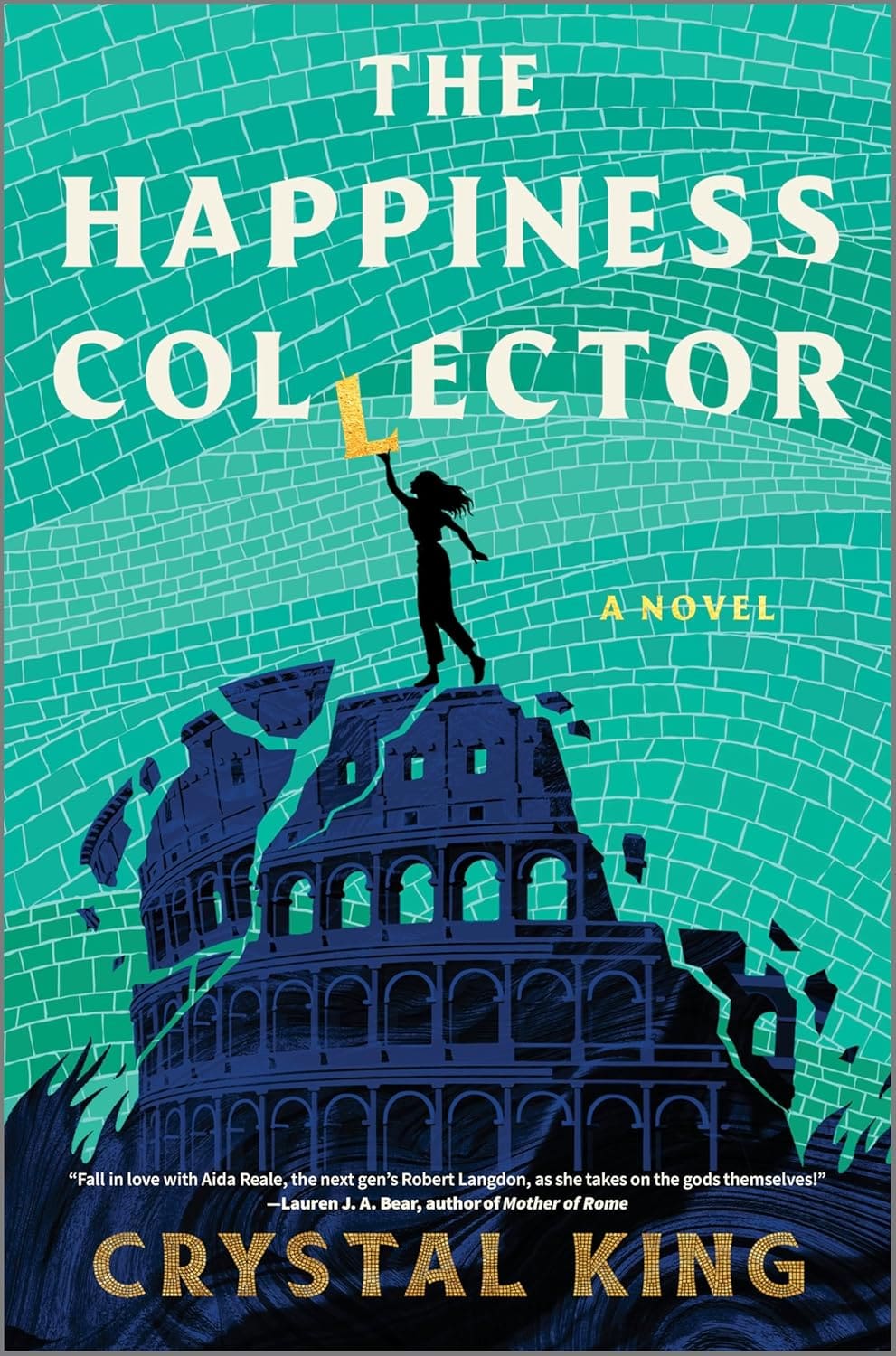




Synopsis:
After losing her book deal and her academic position, historian Aida Reale needs a new career, and fast. After all, she and her fiancé, Graham, have a wedding to pay for. So when a friend recommends her for an extremely high-paying position at a company called MODA, it’s almost too good to be true. Plus, she’ll get to live in Italy, in a gorgeous palazzo!
Aside from a snooty assistant, a daunting NDA and some very stringent rules about the use of personal technology, working for MODA is a dream come true—at least at first. But the more research Aida conducts for this elusive company, the more things feel off. Not only does her relationship with Graham suffer, but it seems like every site she visits either vanishes or is struck by tragedy soon after she’s been there.
It’s only after a mysterious woman approaches Aida and Luciano, her devastatingly handsome and equally concerned MODA colleague, that they learn the truth—they are just mortal pawns in a game between gods. Now Aida must find answers to the question she’s been avoiding: What’s really happening to all the happiness she’s been collecting…and can she stop the gods’ plans before it’s too late?
Review:
The concept behind Crystal King’s The Happiness Collector is intriguing and kept me reading even as the book meandered through its plot based in Greek and Roman Mythology pulled out of time and placed in the way of modern-day events. Overall, it isn’t the most original — think Percy Jackson for middle grade and young adult readers and many reimaginings of Greek myths in literary fiction over the last couple of decades. However, King highlights some of the lesser-known deities from the Greek Pantheon, showcasing an innate knowledge of the ancient legends.
Our main character, Aida, is at a low point in life when she’s offered a lucrative job halfway across the world in Rome, researching classical locations under the guise of discovering the “happiness” of each of them. But, of course, as a reader, we all know that it has to be too good to be true. The history teacher in me enjoyed the research and the dabbling into ancient time eras, but ultimately I struggled when the book didn’t get to the main plotline until about halfway through the book. By that point, I started having more issues with the time period.
When I first noticed that the book was initially set in the year 2019, I thought it was clever to keep it set in the modern day without getting into the messiness of Covid-19 and the Global Pandemic. I understand that books will need to tap into that time period and tell stories from it, but for me, it still feels almost too soon for some of it. So, you can imagine my disappointment when the third act of the book takes place almost completely in the heaviness of the pandemic from 2020 to 2022. I could see the appeal of setting this story in that time period and building the plot around it and using it as a plot point, but for me, it didn’t really work. Maybe in a decade or so, I’ll feel differently about it, but for now, maybe I’m still just too close to it.
The Happiness Collector just didn’t quite work for me, even as I liked Aida as a main character. It was just too obvious there was something more sinister happening without letting the audience in on the secret…and then once that happened, the action didn’t progress fast enough for my taste. I really enjoyed the Greek Mythology angle and advancing the Pantheon into the 21st century and think there was a lot that did work about King’s novel in spite of what I found lacking.
Thank you to Harlequin Trade Publishing for providing this book for review consideration via NetGalley. All opinions are my own.



Leave a Reply