
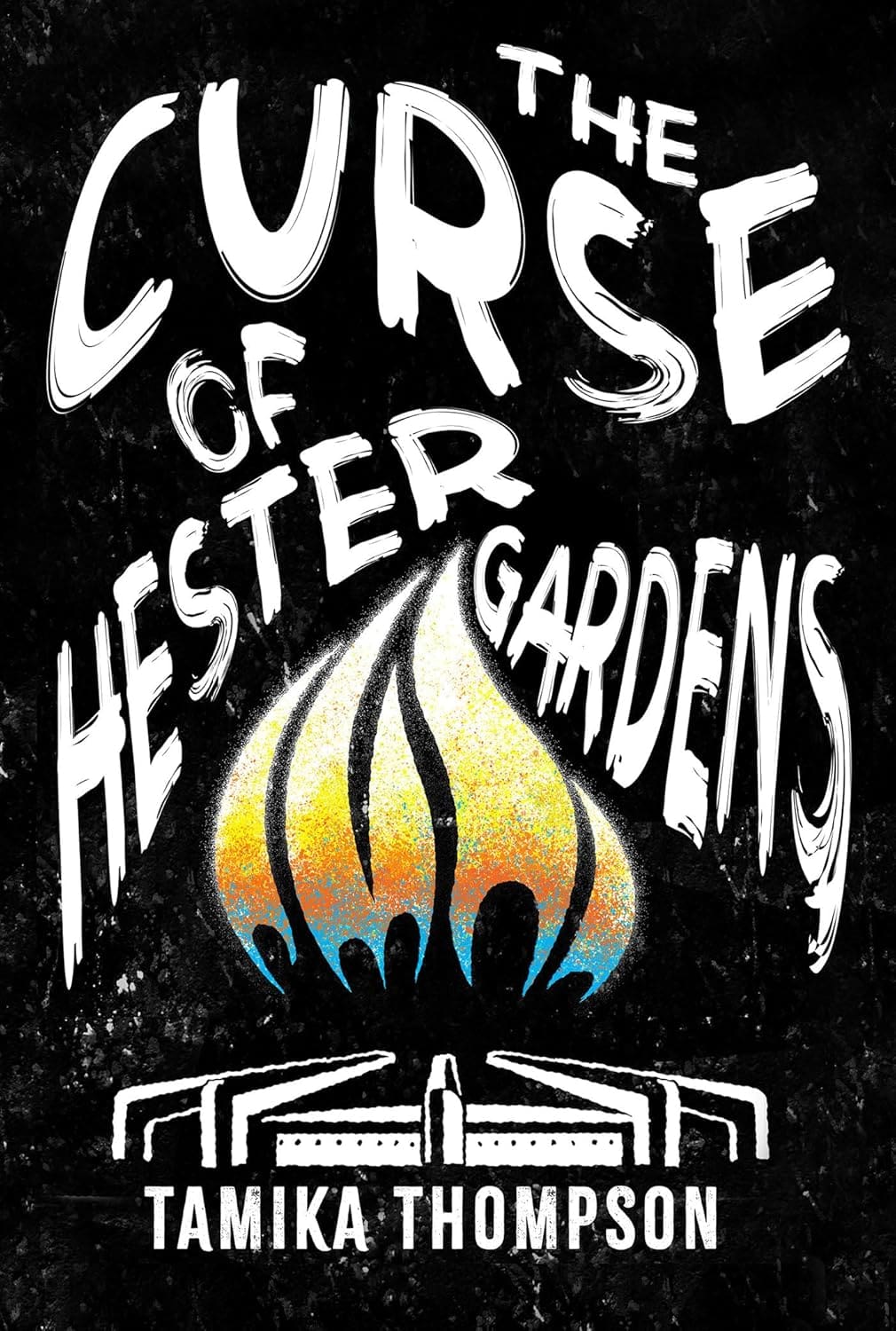







Synopsis:
Nona McKinley raised three boys in the Hester Gardens section of Medford, Michigan, an impoverished community divided by those who follow their faith in God and those who turn to crime to survive. With her drug dealer husband behind bars and her eldest son shot to death at eighteen, Nona has devoted herself to ensuring her other children escape their brother’s fate.
Her second son Marcus is on the right path. He’s a valedictorian heading to an Ivy League school. He can get out.
But then, strange things start happening to Nona and other residents: mysterious footsteps are heard when she’s alone, people have phantom encounters in the streets, unattended appliances go off at all hours. Even more concerning is the state of Nona’s living sons. Her youngest, Lance, is hanging around with a bad crowd, and Marcus becomes moody and secretive. Sometimes he even seems to act like a different person entirely.
Nona has her secrets too. Her affair with the married church pastor has been weighing on her conscience, but that’s not the only guilt haunting her. She fears that someone—or something— is seeking revenge for an act she made in a moment of weakness to protect her family. And now everyone in Hester Gardens must pay the price . .
Review:
Far removed from windswept moors or crumbling manors, Tamika Thompson’s trad-pub debut brings the gothic to a public housing project in Michigan, in a chilling examination of gun violence and the supernatural in tandem. With various passages that feel now burnt behind my eyeballs (one of them a grisly nod to Herbert’s “The Rats,”) by far the scariest aspect of Thompson’s latest are the systemic failures of housing, healthcare and education within the project, the exploitation of residents by a hypocritical and exploitative institution, and of course, the rampant gun and gang violence that such an environment fosters. A stunningly written, viscerally scary, and deeply emotive novel, “The Curse of Hester Gardens,” is out March 31st from Erewhon Books.
Nona is a grieving single mother following the arrest of her husband Vance and the violent death of her eldest Kendall. Perhaps one of her only consolations is that her middle child Marcus, a valedictorian, is headed to an Ivy-league school and is making it out of the gardens. However, Lance, her youngest, is beginning to mix with the wrong crowds, already doing odd jobs for the Hester Boys. Worse still, there has been a sudden, sickening change in Marcus’ behaviour- he is involved in a couple of fights, and seems to have all but given up on attending Brown in the Summer. As community tensions continue to rise, and the Gardens continue to crumble, Nona becomes convinced that she is being watched, judged, and haunted. She is sure of it, and sure as well that this is not random or abstract or freakish- it’s a punishment.
Let me begin by letting you know, with all due solemnity, that this is a bleak novel, probably the most emotionally punishing I have read all year. It’s grim and miserable, and even those terms feel insufficient, because Thompson deals not in half-measures, but full, unflinching immersion, as we’ll discuss in just a second. What keeps “The Curse of Hester Gardens,” from tipping into unremitting, airless and unreadable however- is its characters. Thompson puts them through an almost biblical catalogue of suffering, loss and despair, don’t get me wrong, and yet amidst the violence and tragedy there are moments of care, connection and community. The character of Peter for example is violent almost indiscriminately, and yet his devastating back-story, his own trauma, and his tenderness toward his son and grandmother left me with a picture of him that is far more tragic than it is monstrous. At the same time, Nona, who of course, we want to cry for at about every given point, feels naïve at times, close-minded at others. None of Thompson’s characters feel like real antagonists, nor are they flat, perfect symbols of suffering- they are flawed, fallible, affecting people within it.
Just about the only real antagonists in this novel are institutions. Not the gang members, not the ghosts. A clear example would be the private company that has allowed rubbish to pile up and rot. Another would be the predatory, mega-church-esque pastor who lines his pockets with tithes taken from those who need his charity. He’d make a great televangelist. Whilst Nona does use her religion as a balm, and finds it very difficult to consider spirits outside of it, I did find this novel to quite rightly critique organised religion, especially in the context of capitalism. And of course, America more broadly. Why must project housing exist to begin with, when other areas in the same state exude wealth, in a country so adept at generating it? Whilst this is a gothic novel, the horror is largely systemic and infrastructural, ergo, far closer to reality, and thus, far scarier.
The word claustrophobic is thrown around all too recklessly as an all-purpose adjective for anything faintly tense- I’m guilty too honestly- but let me tell you that this novel is thick and insidious and will cling to your lungs, it’s cloying, and stifling, and all the other synonyms for claustrophobic, earned the hard way. From that sour reek of overflowing trash left to rot, swell and split, to even the lack of air conditioning in Nona’s house- “The Curse of Hester Gardens,” is a visceral read, that immerses you fully in the everyday unpleasantry of the project, which serves almost as a microcosm for a lot that is wrong in today’s America.
This novel is gruelling, all consuming, and really nothing short of phenomenal.




Leave a Reply