
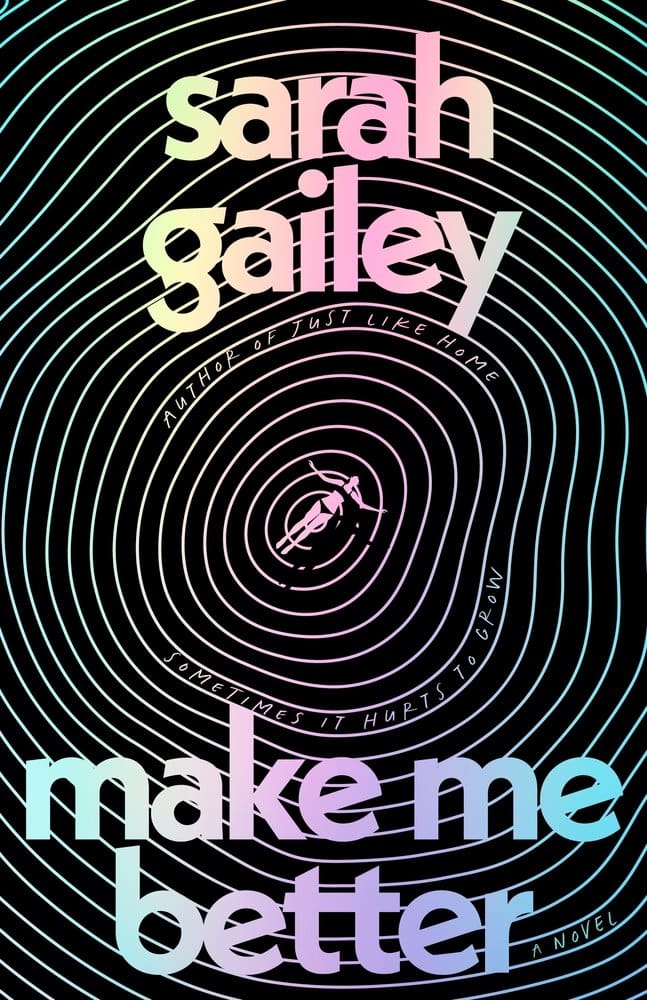





Synopsis:
Celia is so tired of being alone. All she wants is to have a family—to belong to someone. That’s why she’s going to Kindred Cove for the annual Salt Festival held by the secluded community that lives there. They promise that healing is possible. They promise that transformation is inevitable. There is no grief at Kindred Cove, because there is no suffering. Nothing is ever lost.
Celia knows that, at that mysterious island surrounded by that impossible, ever-growing reef — she will find herself.
She’s ready to be healed. She’s ready to be transformed.
She’s ready to believe.
Review:
Make Me Better, Sarah Gailey’s upcoming cult novel is a whirlwind of a book. We follow many characters through various timelines, all of them revolving Kindred Cove, an island that houses what appears to be a hippy-dippy cult. Of course, its benign appearance masks a nefarious secret.
Our entryway into Kindred Cove is Celia, a woman with no family, no meaningful human connections, and seemingly no inner reserves. Celia believes a baby will fix her, will give her the built-in family and friend who will have no choice but to love her. After several miscarriages, the already fragile Celia is at the end of her rope.
Then she meets Adelaide.
Adelaide might be something like a friend, but she offers something more than friendship. She is the doorway to Kindred Cove, a place that appears to offer Celia everything she desires: community and purpose.
Reading Make Me Better is less about following the plot, which is as inevitable as any Greek tragedy, and is instead all about experiencing an ongoing disorientation and mounting sense of dread. Three hundred pages into the novel, I knew what was happening but still had no idea what was really happening. The reader knows Celia is in over her head. We know that Kindred Cove hides dangerous secrets. But up until the very final reveal, we can’t really guess the actual nature of the horror.
And there is horror of many kinds. I closed the book after several reading sessions with a sigh and an, “Okay then,” and picked up the book the next night with mild trepidation.
This narrative high wire act is impressive enough, but the real triumph of Make Me Better is Celia. Gailey takes an essentially passive character and makes her passivity central to both her character and to the plot. I wanted to hate Celia, but I never quite managed it, even as she played out her quest to its necessary conclusions.
In the end, Make Me Better covers a dizzying array of themes, from motherhood, sex, religion, and the self-help industrial complex, to the bedrock need for human belonging and purpose and the way that need can be twisted into the foulest sorts of manipulations.
It’s impossible to talk about Make Me Better without placing it within its immediate context: the rising tide of fascism throughout the West. Viewed in that light, the book reads as a kind of modern day 1984, where our obsession with self-actualization leads us to trade Big Brother for a voluntary surveillance state and the final subservience of the self. It turns out, Gailey seems to tell us, that humans will accept the most chilling horrors for any chance simply to belong. Looking at the news, it’s hard to disagree.


Leave a Reply