
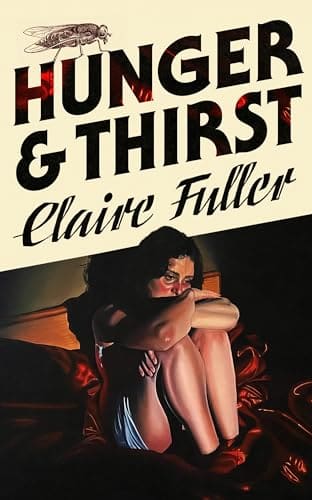







Synopsis:
1987: After a childhood trauma and years in and out of the care system, sixteen-year-old Ursula finds herself with a new job in the postroom of a local art school, a bed in a halfway house, and―delightfully― some new friends, including wild-child, Sue. When Ursula is invited to join a squat at The Underwood, a mysterious house whose owners met a terrible end, she can’t resist the promise of a readymade, hodgepodge family.
But as Sue’s behaviour and demands become more extreme, Ursula who has always been hungry―for food―and more importantly for love, acceptance and belonging, carries out her friend’s terrible dare. It’s a decision that will haunt her for decades.
Thirty-six years later, Ursula is a renowned, reclusive sculptor living under a pseudonym in London when her identity is exposed by true-crime documentary-maker who is digging into an unsolved disappearance. But it is not only the filmmaker who has discovered Ursula’s whereabouts, and as her past catches up with her present, Ursula must work out whether the monsters are within her or without.
Review:
A grotty, grungy novel that you will have to swipe grime off of the pages of, and swat lazy loops of humming blue-bottles away from, Claire Fuller’s “Hunger and Thirst,” is one of the grimmest coming-of-age, or rather, coming apart, stories I have ever read. Everything a discerning horror reader could want knotted into one tight and ugly tangle, Fuller’s latest is a grotesque blend of the modern gothic and social horror- it’s a murder mystery, a possession story, a haunted house novel, all spanning three decades and change and told by an unreliable narrator. Fuller has packed “Hunger and Thirst,” with languid menace, jarring scenes and disturbing passages that genuinely freaked me the fuck out. Despite my discomfort, it’s unputdownable, propulsive, and I absolutely devoured it, flies, cadavers and all. “Hunger and Thirst,” is out May 7th from Fig Tree in the UK and June 2nd from Tin House in the US- I would advise you pick it up.
We follow 16 year old Ursula who in 1987, after years in care, has secured a place in a half-way house and a job in the post-room of an art school. It’s in this position she first meets Sue, a deeply ambitious, Hollywood-yearning wild child who quickly takes our narrator under her wing. Ursula is hosted by her family, Sue drives her around in her brother’s car, and all but forces her prick of a boyfriend Vince to invite her to live in the squat he has secured- the Underwood on Barrow Road. It’s that year spent at the Underwood that will change Ursula’s life forever, for the worse, so immensely that today, in spite of her pseudonym, documentarian Emma Zahini is relentless in her pursuit of Ursula and answers.
Many early reviews have called “Hunger and Thirst,” dull, and whilst I personally could not disagree more (I refer you to my earlier, uncomprehensive list of gothic horror, social horror, murder mystery, possession, a haunted house, and an unreliable narrator) it does open at a measured pace, it is a slow-burn, and personally, I actually rather loved it for that. Fuller creates some real intrigue by telling us about Emma Zahini’s forthcoming true crime doc, and allows us to linger with that implication whilst really, properly, thoroughly introducing us to her cast- and when the novel does tighten its grip, it does so wrapped around your throat.
Ursula is a messy protagonist who we get to watch settle into herself by degrees . We do not neatly adore her, and we certainly don’t love every decision she makes, in fact some of them made my hairline recede, but that makes her feel all the more three-dimensional. Her staunch feminism alongside a definite cruel streak makes her beyond compelling. Sue is a fully-formed, fully-convinced force of personality, and at times is really rather unlikeable, inconsiderate and dismissive, her (outward) self-assurance from the get-go quite the juxtaposition to Ursula’s initial timidity. Her drive and humour and her absolute no nonsense make her though, despite her less admirable qualities, equally compelling. Vince is a real piece of work, but still never flattened into straight-forward antagonism- with a complex history of his own. Raymond is so very decent and makes for the perfect will they won’t they, I sure hope they do, love interest. Even minor characters such as Ursula’s careworker Joy are fully fleshed out by Fuller. The fact that we know these characters so well makes what follows all the more brain-fucky and depressing- and what does follow, the second half of this novel is truly the antithesis of boring- instead, I would argue, the rather scarce sort of horror that genuinely scares- it’s a thrill.
“Hunger and Thirst,” has a rich commentary alongside its sublime character work. Ursula exists not in some nostalgic haze but the decidedly unromantic reality of 1980s Britain. Her formative years are full of missed opportunities and closed doors- she deals with poverty, austerity, the failures of the care system. It acknowledges huge ambition and how double-edged it can be when you want more than your circumstances allow. It’s about art, its importance but also its exclusivity. It’s, again, staunchly feminist. It’s about guilt, responsibility and how it might just catch up with you, morality, perspective and psychology. It’s about adolescence in all its aching intensity, teenage girlhood, loneliness and neglect, friendship, sex and love. As grimey as this novel feels, it’s shot through with something luminous- almost as beautiful as it grotesque.
A psychological slow burn that rocked me to my core, “Hunger and Thirst,” is my first read from Fuller, and I’m not just intrigued but rather halfway down the rabbit hole. Eerie, skilfully-written, character-driven, this is really everything I want a horror book to be.


Leave a Reply