
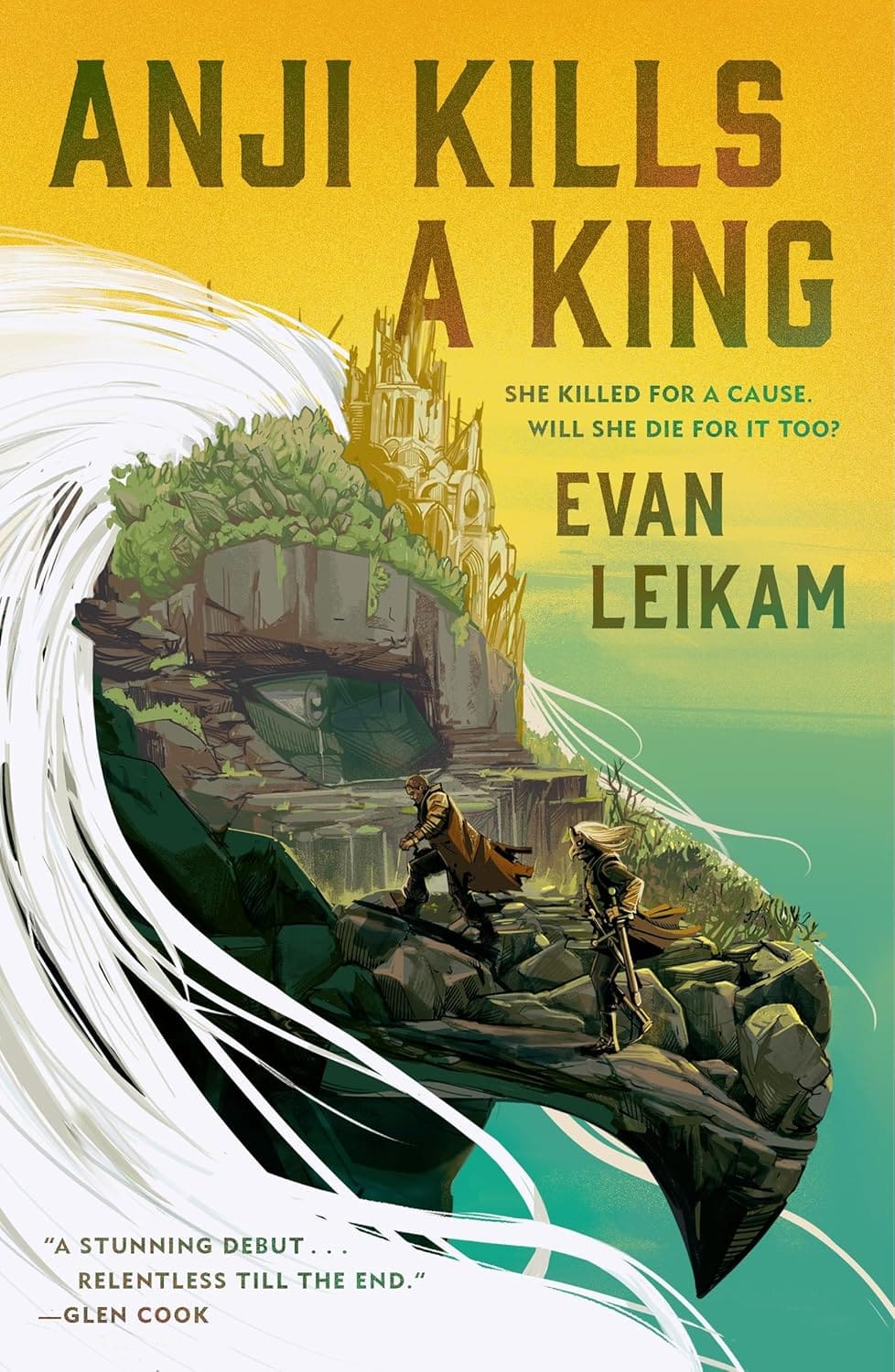




Synopsis
Anji works as a castle servant, cleaning laundry for a king she hates. So when a rare opportunity presents itself, she seizes the chance to cut his throat. Then she runs for her life. In her wake, the kingdom is thrown into disarray, while a bounty bigger than anyone could imagine lands on her head.
On her heels are the fabled mercenaries of the Menagerie, whose animal-shaped masks are magical relics rumored to give them superhuman powers. It’s the Hawk who finds Anji a surly, aging swordswoman who has her own reasons for keeping Anji alive and out of the hands of her fellow bounty hunters, if only long enough to collect the reward herself.
With the rest of the Menagerie on their trail, so begins an alliance as tenuous as it is temporary—and a race against death that will decide Anji’s fate, and may change the course of a kingdom.
Review
Anji Kills a King wastes no time earning its title. The opening scene drops the reader straight into the moment of regicide, with Anji literally stabbing the king in the first lines, and the story never loosens its grip from there. That immediate, violent start sets the tone for a novel that is driven by consequence, emotion, and character rather than spectacle for its own sake.
One of the book’s greatest strengths is its emotional impact. Evan Leikam does an excellent job of placing the reader inside Anji’s head. When she is scared, defiant, furious, or drunk, you feel it alongside her. About three-quarters of the way through the novel, the prose hits with an unexpected surge of emotional weight, punching well above its apparent weight class and elevating the story in a way that genuinely surprised me. There is also a major twist that comes out of nowhere—jarring, but interesting—and once it lands, it reframes much of what came before it in a compelling way.
The character work is especially strong. Anji and Hawk are both layered, engaging characters who slowly reveal themselves over the course of the story. Anji begins as a simple wash-woman, but that surface-level identity quickly gives way to a much richer personal history shaped by hardship, violence, and hard choices. She is unapologetic about who she is, and that self-assurance grates against Hawk in ways that are consistently interesting to watch.
Hawk, meanwhile, is an absolute badass and a joy to follow. Her motivations remain deliberately obscured for much of the story, and each action feels like another puzzle piece falling into place. As the story progresses, the relationship between Anji and Hawk evolves organically, changing step by tiny step rather than through sudden, forced turns. Watching that progression unfold is deeply satisfying.
Plot-wise, the novel is refreshingly confident. There is no slow buildup or extended setup—the inciting incident happens immediately, and the rest of the book explores the fallout of that single act. It’s a unique and original premise, and after decades of reading fantasy, that sense of originality is something I don’t take lightly.
The prose is gritty and grounded, serving the story well. While it doesn’t rely on flashy or overly sharp lines, it is consistently solid and effective, particularly when it comes to conveying mood and internal states.
Worldbuilding is another quiet strength. The world is already in a state of transition even before the king’s death, which allows Leikam to introduce fascinating elements naturally: drug-crazed monsters, fanatical religions and cults, and a magic system that is intriguing without being overwhelming. The depth is there, but it never distracts from the narrative. The reader is given exactly what they need, exactly when they need it.
Overall, Anji Kills a King is a sharp, character-driven fantasy that blends emotional intensity, strong relationships, and original plotting into a compelling whole. It’s a confident debut that trusts its characters and its readers—and that trust pays off.


Leave a Reply