
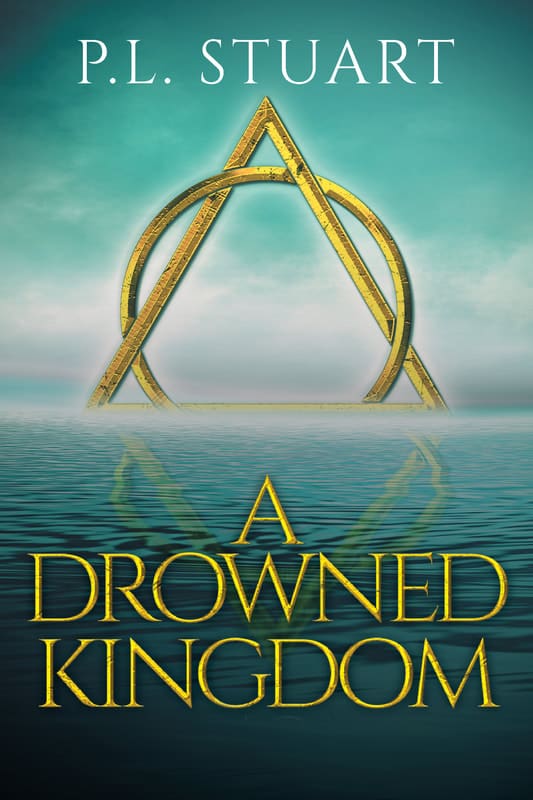



Synopsis
Once Second Prince of the mightiest kingdom in the known world, Othrun now leads the last survivors of his exiled people into an uncertain future far across the Shimmering Sea from their ancestral home, now lost beneath the waves. With his Single God binding his knights to chivalric oaths, intent on wiping out idolatry and pagan worship, they will have to carve out a new kingdom on this mysterious continent―a continent that has for centuries been ravaged by warlords competing for supremacy and mages channeling the mystic powers of the elements―and unite the continent under godly rule.
With a troubled past, a cursed sword, and a mysterious spirit guiding him, Othrun means to be that ruler, and conquer all. But with kingdoms fated on the edge of spears, alliances and pagan magic, betrayal, doubt, and dangers await him at every turn. Othrun will be forced to confront the truths of all he believes in on his journey to become a king, and a legend.
When one kingdom drowns, a new one must rise in its place. So begins the saga of that kingdom, and the man who would rule it all.
Review
Let me start by saying something that sounds like a contradiction: this book’s biggest structural risk is also one of its greatest strengths.
Part 1 of A Drowned Kingdom is roughly 90% narrative summary. On paper, that shouldn’t work. In practice, it works beautifully, and for two reasons. First, our narrator—Othrun—is genuinely entertaining company. He’s flawed, occasionally self-righteous, and refreshingly honest about his own weaknesses, at least in the privacy of his own mind. He’s the kind of character who earns your investment not because he’s noble but because he’s human. Second, Stewart’s prose is, dare I say, scrumptious. It’s the kind of writing where you settle into the rhythm and just enjoy the ride, even when you’re being told rather than shown. Are there disadvantages? Sure, there’s a slight emotional disconnect from events when they’re filtered through so much summary. But I was having too good a time to care much.
And then Part 2 hits, and the story shifts into more concrete, scene-driven prose. The transition feels earned and natural, and from there, Stewart doesn’t look back. That first duel on the beach? Absolutely electric. The action writing is immaculate, and the buildup leading into it is just as good. And without spoiling anything, there’s a battle speech later in the book that had me ready to run through a wall. I was so hyped.
This is a medieval political fantasy with a lot of characters, and Stewart handles the crowd with real skill. Through Othrun’s narration, side characters are subtly reintroduced each time they appear—a small thing, but it makes navigating a dense cast feel effortless rather than exhausting. And these aren’t cardboard placeholders, either. The side characters are fleshed out with the same care as Othrun himself, which is saying something given how well-drawn he is.
The plot is complex and politically heavy but always logical, which makes it genuinely fun to follow rather than a chore to untangle. The ending is more of a launchpad for the next book than a tidy conclusion, and normally that would bother me—but this one earned it. I’m not frustrated. I’m excited.
The worldbuilding deserves its own praise. This is a low/soft magic setting where magic functions as a mysterious, almost religious force rather than a system to be mastered. The many cultures Stewart has built are plentiful, deep, and remarkably consistent. You can tell the world was thought through long before the first word was written.
A Drowned Kingdom is a book that takes real risks with its storytelling approach and pulls them off with confidence and craft. Highly recommended for anyone who loves character-driven political fantasy with gorgeous prose and a world that feels lived in.

Leave a Reply