
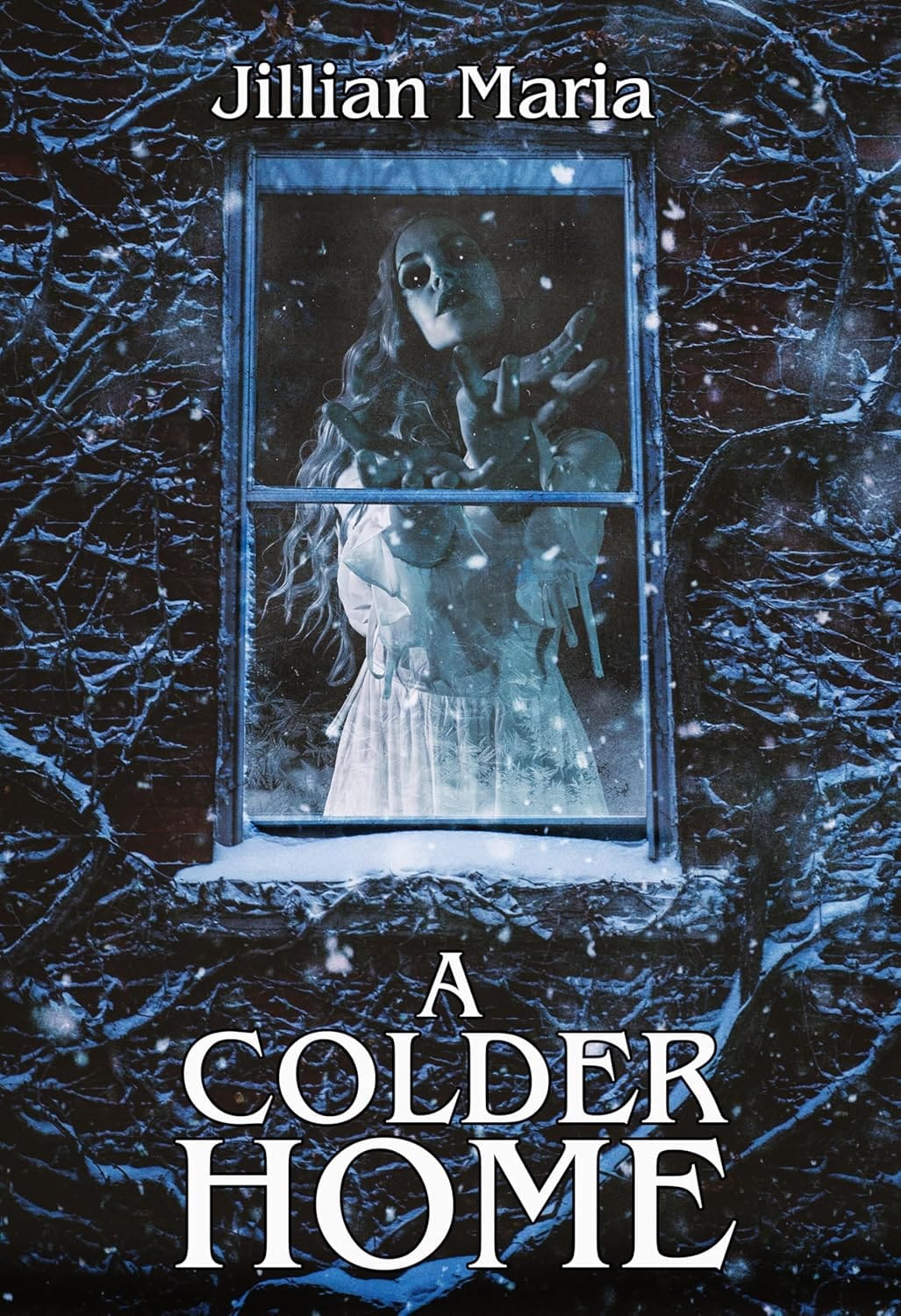





Low heating bills, high death bills
Synopsis
Amateur cinematographer Cleo Moss hasn’t tried to make a film since her father’s death three years ago. Her cousin Noah, a director, is convinced that her latest script is the perfect opportunity to try again, but Cleo is less sure. Those reservations grow when a blizzard nearly runs them off the road on their way to the shoot, and when they discover that the house they’re filming in has a tragic past to rival Cleo’s own horror-filled writing. By the time she starts seeing ghostly shadows out of the corner of her eye, she’s convinced that the production is doomed.
At first, filming moves forward in spite of an unreliable camera battery and Noah’s surprise casting of Isobel, Cleo’s not-so-former crush. But as the worsening snow traps cast and crew in the house overnight, the strange shadows escalate into horrifying, dangerous specters. While the rest of her friends fight to find a way out of this nightmare, Cleo can’t help but be drawn to the ghosts she captures in her viewfinder—just as she can’t help noticing how similar their story is to her own past…
Review
Of the many niche genres in the wild world of horror, a film crew filming a horror movie in a house that turns out to actually be haunted is a real doozy, an erstwhile classic that rarely fails to deliver. Wind it up and let’s go, I’ve brought popcorn to this mixed metaphor. But with A Colder Home by Jillian Maria, a new self-published horror from an author who’s mainly written in fantasy to this point, we get not just the usual thrills and meta spills of ghosts in the script and ghosts in the bricks, but a lot more besides. And there’s few things I like more than a horror tale with more layers than a wedding cake designed by Escher; luckily A Colder Home’s lofty ambitions do not make it collapse like one, instead producing a fun, chilling but innovative read.
Plot wise, it concerns a bunch of youngsters, aged sixteen to mid-twenties, who gather at a stranger’s house in the middle of a blizzard with one aim in mind: to film a horror movie. Amateur cinematographer Cleo is a little reluctant; she’s not filmed for a while due to recent life events, but the director and her cousin Noah is there to cheer her on. But when the blizzard worsens and the group are trapped in the house, and it appears they’re not alone, it becomes clear that it’s not just the production that’s doomed, but possibly the crew themselves. (That’s my line, by the way, not the author’s, who thankfully is not as cheesy as me.)
One thing that makes this book work so well is that Maria writes her characters compellingly, the realism of the dialogue shining through. Cleo is a great protagonist, at once shy and crippled by self doubt yet also willing to see where her camera and her art takes her, even if it’s to very strange places. Her friction with Noah, the director, who is trying to prise her old artistic self out of her, is interesting, but it’s the slow burn sapphic romance between her and her old school crush—who she at first assumes could never be interested in her— that’s the emotional heart of this book. The scenes of them talking and gently flirting are as compelling as the creepy goings on they are sandwiched between. I really cared for them and their budding relationship, and it’s key to the excellent ending.
Maria also has a lot of fun with the meta concepts of filming a haunted house movie in a haunted house; her chapter epigraphs are snapshots of scenes from the script which we are invited to compare with the plot, and she explores how the ghosts start to play a role in the film, being affected by the camera itself. She’s not the first to do this kind of meta jiggery-pokery obviously, but what makes this stand out is how she uses it to explore concepts about art itself: are the artist themselves offering positive contributions, or hurting the thing they’re trying to do, and themselves? Such questions are tied to Cleo’s traumatic past, suggesting, perhaps, that overcoming her fear of reflecting on it and overcoming her fear of freely embracing her art might be one and the same. This is deep meta territory, and Maria feels supremely comfortable exploring it; it’s exciting to see such work in an author completely new to me.
But if you’re reading all the above and thinking, yes but where are the scares, then be reassured they are there, lingering in the scene, and sometimes very much in the foreground. There are a number of chilling moments reminiscent of Korean horror cinema as terrifying long-haired wraiths appear and reality itself warps. Things stay fairly calm though for a while, lulling you into a false sense of security, and making me wonder if Maria could stick the landing. I needn’t have worried, as the finale is, in stark contrast to the slow burn mix of meta and terror of the rest of the book, all-out insanity of The Fall of the House of Usher ending kind, a chilling denouement revved up to the max. And then it ends, frankly, perfectly, with one of my favourite last lines of recent times.
A Colder Home is a gem of a wintry chiller: a genuinely innovative example of the “film crew in haunted house” genre that plays with your expectations, goes meta-deep, and then surfaces for air in time for one of the most disturbing endings you’ll read this year. Come for the chills, stay for the message, shudder at the finale.

Leave a Reply