
Blurb
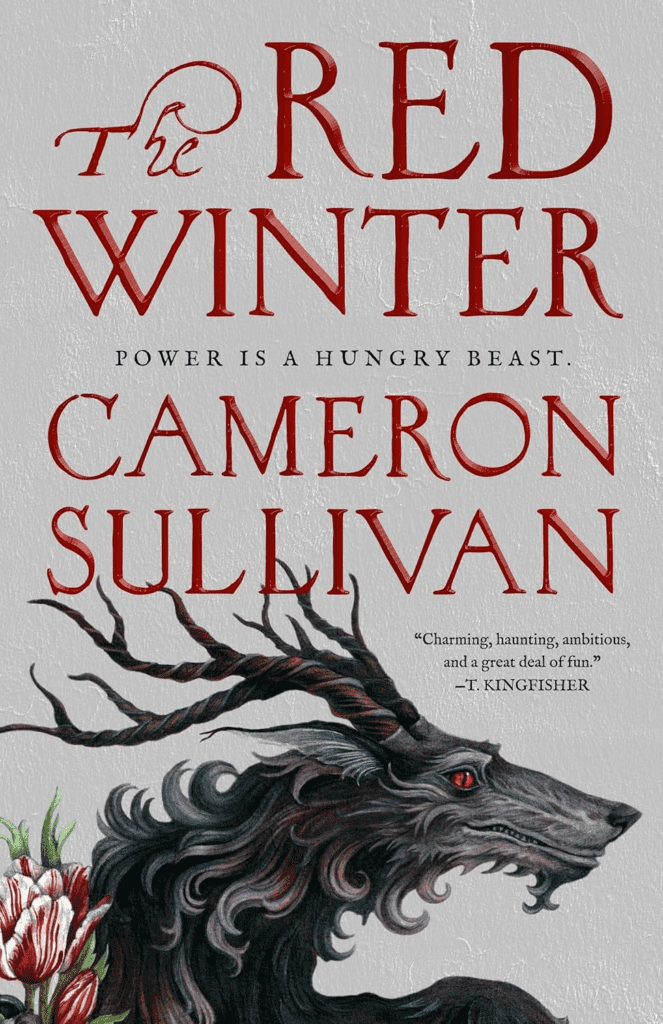
A devastating love story. A bewitching twist on history. A blood-drenched hunt for purpose, power, and redemption.
In 1785, Professor Sebastian Grave receives the news he fears most: the terrible Beast of Gévaudan has returned, and the French countryside runs red in its wake.
Sebastian knows the Beast. A monster-slayer with centuries of experience, he joined the hunt for the creature twenty years ago and watched it slaughter its way through a long and bloody winter. Even with the help of his indwelling demon, Sarmodel – who takes payment in living hearts – it nearly cost him his life to bring the monster down.
Now, two decades later, Sebastian has been recalled to the hunt by Antoine Avenel d’Ocerne, an estranged lover who shares a dark history with the Beast and a terrible secret with Sebastian. Drawn by both the chance to finish the Beast for good and the promise of a reconciliation with Antoine, Sebastian cannot refuse.
Excerpt
The Western Alps
1785
Jacques’s fever lasted for three days. I wrapped him in my warmest clothes and made a padded nest for him in the wagon. My own belongings I loaded onto the draft horse, who only farted in response. I saddled Aherin for myself.
Our pace shifted markedly from Jacques’s frantic bolt for the border to a convalescent crawl. My companion had brief periods of wakefulness in which I fed him bread soaked in broth and a little wine.
“Lorette,” he said to me between mouthfuls. “Darling Lorette. Thank you.”
“You are most welcome, young sir,” I responded, shaking my head. “And have a care—your wife’s name is Eloise.”
The fever made him erratic and I had to watch him at night. He got up occasionally, calling for Henri and Gerard, his faithless companions. Once, as I was inscribing a new set of bandages, I caught him staring at me across the fire with the hunting in his hand. And each night he limped slowly from his bedroll to stand by Aherin, whispering close to the horse’s ear and weeping softly.
His delirium unsettled me. His illness took away his bristly formality, and sometimes it was not Jacques but his father I saw sweating and shaking in his blankets. His silhouette by the fire. The uneven set of his shoulders. The knot of muscle in his jaw when he drank. I began to see shadows of Antoine in his every movement, and there were times I could barely stand to look at him.
It was only as we climbed higher into the Alps that Jacques began to return to himself.
“Professor?” His voice made me start, weak as it was. I slowed Aherin to walk beside the wagon.
“I am here, sir. Are you warm enough?” By now we were high enough to encounter pockets of snow among the bracken. I had bundled Jacques in as much of our bedding as I could fit in the wagon and he looked out at me like a sickly blond weasel.
“Yes.” He strained to sit up. “Where are we?”
“On the road to the pass,” I replied. “We are still some way from the mountains. How is your arm?”
“Better. It pains me still, but the fire is gone. Your doing, no doubt.”
This was as close to gratitude as he would come. “You are an easy patient, young sir. And you are too proud to die in a charlatan’s wagon.”
His condition was, in fact, quite worrisome. The burn was healing well, and the deep shot wound was already improving. I had found no more fragments in the flesh and made sure the wound was scrupulously clean, but still Jacques’s fever persisted. Sarmodel had no advice to offer, so I put it down to the boy’s general poor health and my inexperience with bullet wounds.1
“I expected you to leave me behind,” he said after a silence. His voice was distant, as though he were simply thinking aloud.
“My apologies, sir,” I replied. “I could find nobody to nurse an ill-tempered Occitan nobleman.” 2
To my surprise, he laughed. It was a thin, panting effort that left him exhausted. “I fear your estimation of me must have improved little, Professor.”
“If you seek to earn my esteem, you need only stay alive long enough for me to return you to your lord father,” I said. I threw down a piece of cheese from my saddlebag. “Here, eat.”
“It is soiled.” He sniffed at the cheese, which was dusted in black crumbs. “What is this? Gunpowder?”
“It is indeed. It will do you no harm. Eat.” 3
He seemed about to argue, but then took a mouthful with nothing more than a grimace. I waited for him to finish it all and—then passed him a water flask. His eyes glinted back at me as the horses clip-clopped over the stones and the wagon squeaked underneath him.
“Tell me more of yourself,” he said suddenly.
“Myself? Surely you have heard enough about me from your father, young sir.” “My father said only that I must provide you escort,” he replied. “He told me little beyond where to find you. In truth, he had never spoken your name before.”
It stung to hear it said so bluntly. “He told you nothing of the Red Winter?”
“Only that he vanquished the Beast at the Bow and Brace, with the help of men in his employ. I had always assumed he meant the Normans sent by the king.”
“Who do you—the Ennevals?” I laughed. “No, sir, they were not party to any ‘vanquishing.’ The one at the inn had lost his mind, and the other was fewmets by then. The Normans! Is that how the story is told in Gévaudan?”
Jacques was not laughing. “In Gévaudan,” he replied quietly, “it is not a story. It hides among us, a sickness that has been growing day by day. It is too many orphans now fearing for their own children, wondering why the king’s hunters were permitted to strip the baronies and leave nothing behind. It is neighbors committing murder over the price of bread, and animals devouring each other in the fields.”
How interesting. Sarmodel’s sudden attention was like bared steel.
“I am sorry, sir,” I said, and meant it. But while I regretted my laughter, I knew what had so attracted my demonic Guest’s interest. The woeful circumstances Jacques described were exactly the sort of discord I had feared. “I was surprised that your father did not say more about it, or me; that is all.”
“Then tell me of him!” said Jacques, with a fire that I did not expect. “If you must slither out of my every inquiry about you, at least tell me how you knew my father.”
The hollow under his jaw, below the earlobe, just on the line where his stubble gave way to soft skin. That was where he liked to be kissed. I would watch it all morning as we rode, seeing the muscles move beneath the skin as he talked or grinned or swallowed wine from his flask, thinking about the sudden gasp he would make as I placed my lips on it. . . .
“He was very different to you, sir. He sponsored me in the hunt. I do not know what else—”
“Tell me the truth! Tell me the truth about the Red Winter, as he never has. I deserve as much!” He was breathing too hard and color was rising in his face.
“Please, young sir,” I said. “You must try not to exert yourself. And if I am cautious with my words, I have reason. Believe me when I say that the victims of the Red Winter are in many ways more fortunate than those who lived to remember it.” The truth was the very last thing Jacques wanted, no matter what he thought. But was it fair to keep it from him? I took a deep breath and let it out slowly. “But you are right—Ocerne will be yours one day, and you should know what happened.”
“I thank you.” Jacques slumped back into his nest of bedding, exhausted anew. Only his eyes lived, red-rimmed and burning as he watched me.
“It began . . . it began twenty years ago. It was much the same then as now: reports of a wild animal taking people from the villages. The Baron d’Ocerne—your grandfather—posted a number of bounties for the creature. Like many others, I decided to lend my skills to the hunt, and went to Château d’Ocerne to assign myself . . .”
1. A deficiency I have had rich opportunity to remedy in the intervening centuries. When the Vatican implemented entry-level ballistics training, I knew it was time to update my skill set—and not a moment too soon. The Arcane arms race made the Cold War look like a heated round of cribbage, and I’ve mined more silver slugs from Livia’s backside than I care to count.
2. This was shamefully close to the truth. I had indeed considered leaving Jacques at an inn somewhere so I could make the rest of the journey in blessed solitude. I decided against it on the basis that I was fairly certain he would die. Please also see previous references to my crippling lack of funds.
3. The gunpowder was composed of several of the raw elements that fueled my alchemical treatments.




Leave a Reply